Mandelson's Emails to Epstein on Gordon Brown Revealed
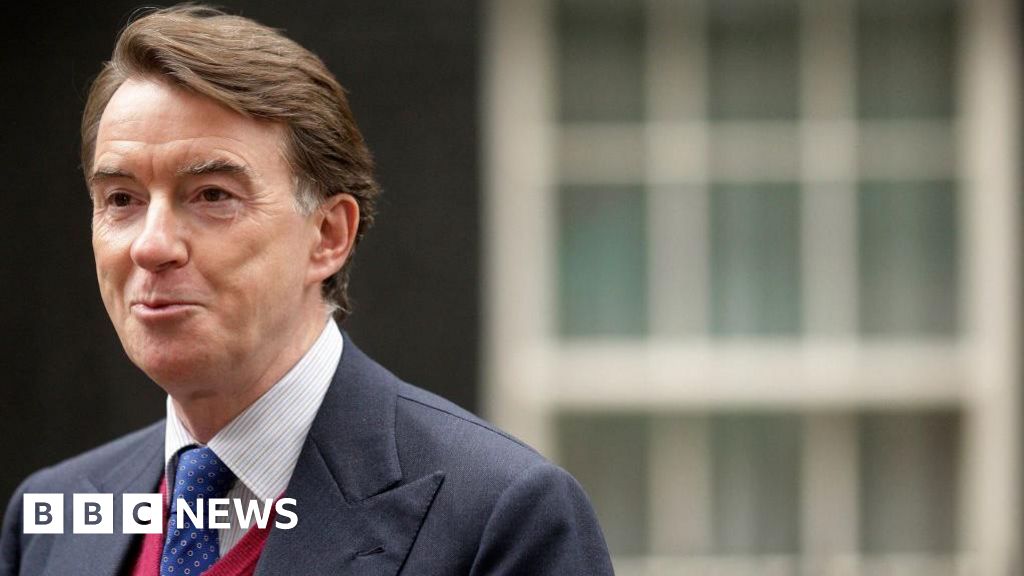
'Finally got him to go today': Mandelson's emails to Epstein on Gordon BrownImage Credit: BBC News
Key Points
- •LONDON – Newly released emails have exposed the unfiltered thoughts of Lord Peter Mandelson, one of New Labour’s principal architects, revealing his candid communications with the disgraced financier Jeffrey Epstein about managing then-Prime Minister Gordon Brown during a period of intense political turmoil. The correspondence, sent in the critical months leading up to the 2010 general election, paints a stark picture of the power dynamics and personal ambitions at the heart of a government grappling with economic crisis and its own impending electoral defeat.
- •Candid Self-Assessment: On 6 February 2010, Mandelson wrote to Epstein: "If I continue as now people will say I am one of the few (only) big figures. And I have to deliver a reasonable campaign that only he [expletive]'s up. And that I perform well in the campaign itself. That I was bigger than the lot of them."
- •The Political Landscape: The Labour Party was trailing badly in the polls behind a resurgent Conservative Party led by David Cameron. Brown's leadership was frequently questioned, with internal plots and public gaffes eroding his authority.
- •Mandelson's Return: In a dramatic move in October 2008, Brown brought his old rival, Peter Mandelson, back into government from his post as EU Trade Commissioner. Mandelson, a master of political strategy nicknamed the "Prince of Darkness," was seen as the one person who could potentially stabilize the government and mastermind a path to an unlikely election victory.
- •The Epstein Connection: Jeffrey Epstein, a wealthy financier, cultivated a vast network of powerful individuals across politics, academia, and royalty. His 2008 conviction in the United States, however, had already made him a deeply controversial figure. The continued contact from a senior UK minister is a central and disturbing element of this story.
'Finally got him to go today': Mandelson's emails to Epstein on Gordon Brown
LONDON – Newly released emails have exposed the unfiltered thoughts of Lord Peter Mandelson, one of New Labour’s principal architects, revealing his candid communications with the disgraced financier Jeffrey Epstein about managing then-Prime Minister Gordon Brown during a period of intense political turmoil. The correspondence, sent in the critical months leading up to the 2010 general election, paints a stark picture of the power dynamics and personal ambitions at the heart of a government grappling with economic crisis and its own impending electoral defeat.
The emails, obtained by BBC News, show Lord Mandelson, who was serving as Business Secretary, confiding in Epstein about his strategy for the election campaign and his own central role within the Labour administration. In one striking message from February 2010, Mandelson outlines his perceived importance and his critical view of the Prime Minister's capabilities, providing a raw, behind-the-scenes glimpse into the final days of the New Labour era.
The Heart of the Matter
The communications reveal a senior cabinet minister strategizing with a convicted sex offender about the governance of the United Kingdom. At the time of these emails, Epstein had already served a prison sentence in Florida for soliciting a minor for prostitution, a fact that raises profound questions about the judgment of maintaining such a correspondence.
One email from Lord Mandelson to Epstein, referencing his efforts to steer the Prime Minister, bluntly states: "Finally got him to go today." While the specific context is not detailed, the timing suggests it related to a crucial decision in the run-up to the election, likely the election date itself or a key policy announcement.
In another, more revealing email, Mandelson lays bare his personal ambition and his belief that he was the indispensable figure in the government.
- Candid Self-Assessment: On 6 February 2010, Mandelson wrote to Epstein: "If I continue as now people will say I am one of the few (only) big figures. And I have to deliver a reasonable campaign that only he [expletive]'s up. And that I perform well in the campaign itself. That I was bigger than the lot of them."
This message underscores the deep-seated rivalry and tension between Mandelson and Brown, a defining feature of New Labour politics. It suggests Mandelson saw his primary role as not just supporting the Prime Minister, but preventing him from derailing the campaign, positioning himself as the superior political operator.
Context: A Government Under Siege
To fully grasp the significance of these emails, it is essential to understand the political and economic climate of 2009-2010. Gordon Brown's premiership was defined by the 2008 global financial crisis. While his initial response was praised internationally, the subsequent economic fallout, rising national debt, and deep recessions savaged his government's popularity.
-
The Political Landscape: The Labour Party was trailing badly in the polls behind a resurgent Conservative Party led by David Cameron. Brown's leadership was frequently questioned, with internal plots and public gaffes eroding his authority.
-
Mandelson's Return: In a dramatic move in October 2008, Brown brought his old rival, Peter Mandelson, back into government from his post as EU Trade Commissioner. Mandelson, a master of political strategy nicknamed the "Prince of Darkness," was seen as the one person who could potentially stabilize the government and mastermind a path to an unlikely election victory.
-
The Epstein Connection: Jeffrey Epstein, a wealthy financier, cultivated a vast network of powerful individuals across politics, academia, and royalty. His 2008 conviction in the United States, however, had already made him a deeply controversial figure. The continued contact from a senior UK minister is a central and disturbing element of this story.
Anatomy of the Communications
The emails are not merely social pleasantries; they function as a political diary, with Mandelson using Epstein as a sounding board. The correspondence highlights several key themes.
-
Political Strategy: The emails show Mandelson detailing his day-to-day management of the government's political messaging and campaign preparations. His comment about getting Brown "to go today" is indicative of his hands-on, and at times controlling, approach.
-
Personal Ambition: The assertion that he was "bigger than the lot of them" confirms long-held beliefs about Mandelson's view of his own talents relative to his colleagues, including the Prime Minister. It showcases a desire not just for the party to succeed, but for his own role in that process to be recognised as preeminent.
-
A Question of Judgment: The correspondence took place after Epstein's conviction. Lawyers for Lord Mandelson have stated that their contact was "infrequent" and that he was "unaware of the extent of Epstein's criminal wrongdoing." However, the fact that any advisory communication occurred with a known sex offender raises serious questions about the vetting processes and personal judgment at the highest levels of government.
Implications and Unanswered Questions
The revelations have reignited scrutiny of the nexus of power, influence, and money that characterised an era. While the events took place over a decade ago, their exposure has significant modern-day implications.
The emails provide a damning, primary-source account of the internal dysfunction within the Brown government. They confirm the narrative of a Prime Minister beleaguered not only by external crises but also by the machinations of his most senior colleagues.
For Lord Mandelson, the correspondence complicates his legacy as a brilliant political strategist, tying his name more closely to the toxic legacy of Jeffrey Epstein. It forces a re-evaluation of his role, casting his return to government in a more self-serving light.
Ultimately, this story is a stark reminder of the importance of transparency and accountability in public life. The key unanswered question remains: why did a senior British minister believe it was appropriate to confide his political strategies and personal ambitions in a convicted criminal? As more documents from Epstein's vast digital archive potentially come to light, the full scope of his influence within the corridors of power may yet to be fully understood.
Source: BBC News
Related Articles
Nationwide Protests Against ICE Enforcement Erupt in U.S.
Thousands are protesting ICE after the DOJ declined to investigate a fatal agent-involved shooting in Minneapolis, fueling a national movement and public anger.
Venezuela Amnesty Bill Could Free Political Prisoners
Learn about Venezuela's proposed amnesty bill to release political prisoners. The move could signal a major political shift and affect future economic sanctions
Pokémon Cancels Yasukuni Shrine Event After Backlash
The Pokémon Company has canceled an event at Tokyo's controversial Yasukuni Shrine after facing international backlash from China and South Korea.
US to Lose Measles Elimination Status: What It Means
The U.S. is poised to lose its measles elimination status due to escalating outbreaks. Learn what this downgrade means for public health and the economy.