Mandelson-Epstein Emails Reveal JP Morgan Business Pitch
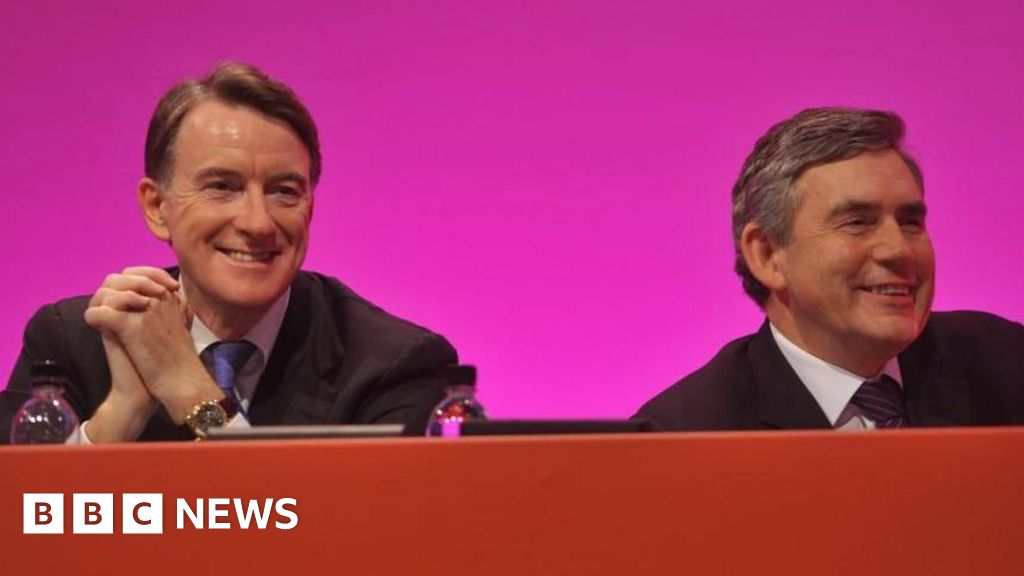
Mandelson-Epstein emails at a glanceImage Credit: BBC News
Key Points
- •By a Senior Financial Correspondent
- •The Ask: Lord Mandelson's email outlined his new venture, Global Counsel, and expressed a desire to discuss potential business opportunities with Mr. Staley, who was then the head of JP Morgan's investment bank.
- •The Conduit: The use of Epstein as the channel for this approach is a critical element. At the time, Epstein was a convicted sex offender, yet he maintained a network that provided access to the highest echelons of finance and politics. The email suggests Mandelson viewed Epstein as a direct and effective route to a key decision-maker at the American banking giant.
- •The Asset: The sale involved the government's remaining stake in the Student Loans Company book from the 1998-1999 academic year. This was part of a broader government strategy to divest state assets to generate revenue and transfer risk to the private sector.
- •The Buyer: JP Morgan, one of the world's largest investment banks, secured the deal for a sum of $1.7 billion (approximately £1.2 billion at the exchange rate of the time).
Mandelson-Epstein Emails at a Glance
By a Senior Financial Correspondent
Newly revealed emails have cast a sharp spotlight on the intersection of government, global finance, and private influence, linking former UK Business Secretary Lord Peter Mandelson to the disgraced financier Jeffrey Epstein. The correspondence shows Lord Mandelson seeking to generate business for his new consultancy from a senior JP Morgan executive just months after his government department oversaw the multi-billion-dollar sale of a state asset to the very same bank. The revelations raise significant questions about the "revolving door" between public office and the private sector.
The Christmas Day Approach
The central focus of the scrutiny is an email sent by Lord Mandelson on 25 December 2010. Having left his cabinet position following the May 2010 general election, he was in the process of establishing his strategic advisory firm, Global Counsel.
The email was sent to Jeffrey Epstein, who was known to act as a powerful, if controversial, intermediary for high-profile figures. The communication's purpose was explicit: to leverage Epstein's connections to secure work from a top executive at JP Morgan, Jes Staley.
-
The Ask: Lord Mandelson's email outlined his new venture, Global Counsel, and expressed a desire to discuss potential business opportunities with Mr. Staley, who was then the head of JP Morgan's investment bank.
-
The Conduit: The use of Epstein as the channel for this approach is a critical element. At the time, Epstein was a convicted sex offender, yet he maintained a network that provided access to the highest echelons of finance and politics. The email suggests Mandelson viewed Epstein as a direct and effective route to a key decision-maker at the American banking giant.
Background: The £1.2bn Student Loan Sale
To understand the full context of the email, one must look back just ten months earlier. Lord Mandelson, a key architect of the New Labour project, was serving as Secretary of State for Business, Innovation and Skills in Prime Minister Gordon Brown's government.
On 16 February 2010, his department was instrumental in a major government transaction. The government announced it had reached an agreement to sell a significant portion of the UK's student loan book—an asset created in the late 1990s—to a private buyer.
-
The Asset: The sale involved the government's remaining stake in the Student Loans Company book from the 1998-1999 academic year. This was part of a broader government strategy to divest state assets to generate revenue and transfer risk to the private sector.
-
The Buyer: JP Morgan, one of the world's largest investment banks, secured the deal for a sum of $1.7 billion (approximately £1.2 billion at the exchange rate of the time).
-
Government Role: As Business Secretary, Lord Mandelson’s department held ultimate responsibility for the policy and financial strategy surrounding such asset sales. While not personally signing the final contract, his position placed him at the apex of the decision-making framework that approved the transaction with JP Morgan.
A Timeline Under Scrutiny
The chronology of events is crucial to understanding the questions now being raised about propriety and influence.
-
16 February 2010: The UK government, with Lord Mandelson as Business Secretary, announces the sale of the student loan book to JP Morgan.
-
May 2010: The Labour Party loses the general election. Lord Mandelson formally leaves government office.
-
Late 2010: Lord Mandelson co-founds Global Counsel, a consultancy firm aimed at advising corporations on political and regulatory risk.
-
25 December 2010: Lord Mandelson emails Jeffrey Epstein to request an introduction and business discussion with JP Morgan's Jes Staley.
This sequence—from overseeing a major state deal benefiting a bank to seeking private work from the same bank's leadership within a year—is at the heart of the current controversy.
Scrutiny Over Public and Private Interests
The revelations do not suggest any illegal activity. However, they have reignited a long-standing debate in British public life about the appropriate boundaries for former ministers. The core issue is the "revolving door" phenomenon, where senior public officials transition into lucrative private sector roles that may intersect with their former government responsibilities.
Critics argue this practice creates, at a minimum, the appearance of a conflict of interest. It raises concerns that decisions made while in office could be influenced by the prospect of future employment, or that former ministers could unfairly monetise the contacts and privileged knowledge gained during their time in public service.
-
The Revolving Door: This term describes the movement of individuals between positions as legislators or regulators and roles in the industries affected by that legislation and regulation. The Advisory Committee on Business Appointments (ACOBA) is the UK body that provides advice on such appointments, but its powers are limited.
-
The Epstein Factor: The use of Jeffrey Epstein as an intermediary adds a deeply troubling dimension to the affair. It highlights the financier's role as a gatekeeper to power and raises questions about why prominent figures continued to associate with him long after his initial conviction for sex crimes.
Implications and What Happens Next
The publication of these emails is likely to have several consequences.
-
Reputational Impact: The association, however indirect, with Jeffrey Epstein is damaging for any public figure. For Lord Mandelson and his firm, Global Counsel, it invites unwelcome scrutiny of their business development practices.
-
Regulatory Focus: The case will likely add pressure on the government to strengthen the rules governing the post-public careers of former ministers. Calls to give the watchdog, ACOBA, more robust enforcement powers may intensify.
-
Further Disclosures: These emails are part of a larger cache of documents related to Jeffrey Epstein's activities, obtained through litigation against JP Morgan. As more of this material is unsealed and reported, it is probable that further details will emerge, potentially implicating other figures in finance, politics, and academia.
For now, the Mandelson-Epstein correspondence serves as a stark case study in the opaque world of elite networking, where the lines between public service and private gain can become uncomfortably blurred. The focus will remain on the timeline of events and the judgment exercised by one of Britain's most prominent political figures.
Source: BBC News
Related Articles
Nationwide Protests Against ICE Enforcement Erupt in U.S.
Thousands are protesting ICE after the DOJ declined to investigate a fatal agent-involved shooting in Minneapolis, fueling a national movement and public anger.
Venezuela Amnesty Bill Could Free Political Prisoners
Learn about Venezuela's proposed amnesty bill to release political prisoners. The move could signal a major political shift and affect future economic sanctions
Pokémon Cancels Yasukuni Shrine Event After Backlash
The Pokémon Company has canceled an event at Tokyo's controversial Yasukuni Shrine after facing international backlash from China and South Korea.
US to Lose Measles Elimination Status: What It Means
The U.S. is poised to lose its measles elimination status due to escalating outbreaks. Learn what this downgrade means for public health and the economy.