Michael Carrick Hints at Desire for Permanent Man Utd Job
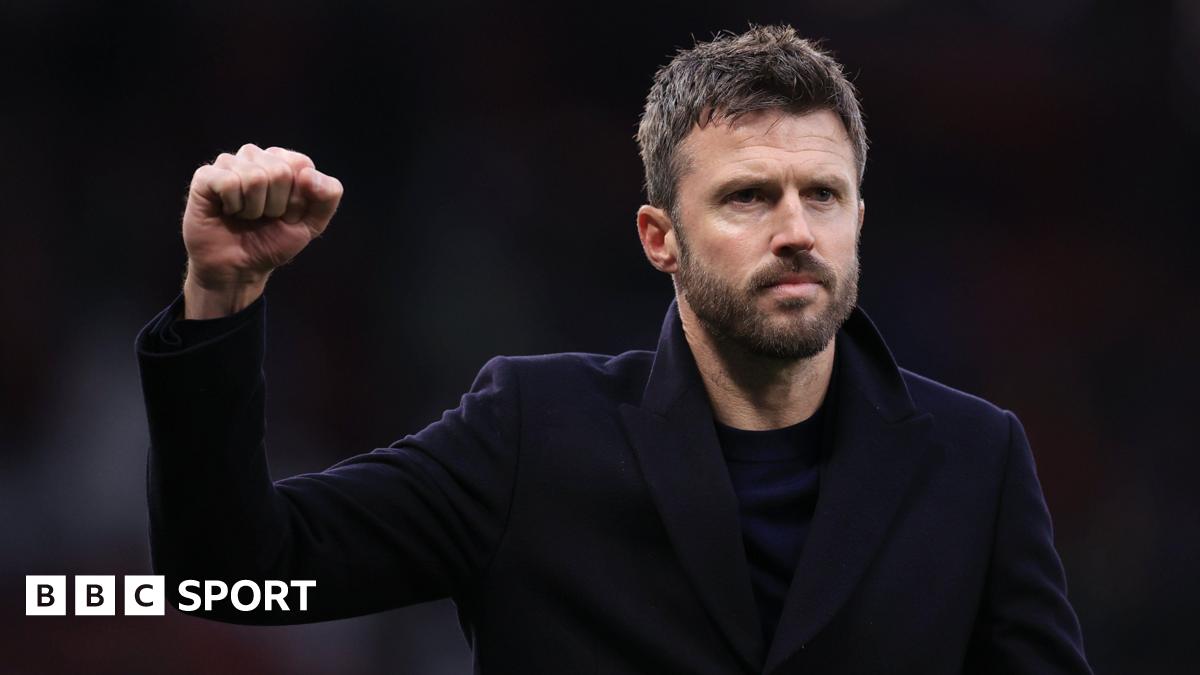
Michael Carrick: Man Utd interim boss hints he wants to stay full timeImage Credit: BBC News
Key Points
- •MANCHESTER, UK – Interim Manchester United manager Michael Carrick, in a notable shift from his previously reserved public stance, has offered the first clear indication that he would be interested in taking the job on a permanent basis. The move introduces a new and compelling dynamic into the club’s ongoing search for a long-term strategic leader, potentially positioning an internal candidate against a field of high-profile external targets.
- •Internal Knowledge: As a decorated former player and a member of the coaching staff under previous regimes, Carrick possesses an unparalleled understanding of the club’s culture, squad dynamics, and operational structure. This would ensure a seamless transition and minimise the disruption that often accompanies an external appointment.
- •Stabilising Influence: In the turbulent period following Amorim's departure, Carrick has been credited with bringing a sense of calm and tactical clarity. Should he continue to deliver positive results and improved performances, his case for the permanent role will strengthen organically.
- •Financial Prudence: Appointing Carrick would be a financially efficient move, avoiding the significant compensation packages and transfer fees often required to secure a top-tier European manager and their accompanying staff. This capital could then be redirected towards squad investment.
- •A Cautionary Precedent: The board will be acutely aware of the parallels to Ole Gunnar Solskjær's appointment. A successful interim spell as a club legend led to a permanent contract, a decision that ultimately yielded mixed results and ended with his dismissal. This history will loom large in any final decision, serving as a reminder that short-term success does not always guarantee a sustainable long-term project.
Carrick Signals Ambition for Permanent Role, Adding Complexity to United's Managerial Search
MANCHESTER, UK – Interim Manchester United manager Michael Carrick, in a notable shift from his previously reserved public stance, has offered the first clear indication that he would be interested in taking the job on a permanent basis. The move introduces a new and compelling dynamic into the club’s ongoing search for a long-term strategic leader, potentially positioning an internal candidate against a field of high-profile external targets.
Since his appointment as the temporary successor to Ruben Amorim on January 13th, Carrick has meticulously cultivated an image of a loyal company man, focused solely on stabilising the team and deflecting all questions about his personal ambitions. His approach has been a stark contrast to more media-forward managers, prioritising internal cohesion over public pronouncements.
This makes his recent comments, delivered during a press conference ostensibly about the team's upcoming fixtures, all the more significant. When questioned about his involvement in the club's long-term planning for the summer and beyond, Carrick's carefully chosen words suggested a man who now sees himself as a viable contender.
"Nothing's changed, to be honest," he began, before elaborating. "I'm fully aware of the role I'm doing here and the responsibility I've got. We want to be successful, and I want the club to be successful beyond the end of the season - if that's me, if that's somebody else."
The phrase "if that's me" is the crucial departure from his previous script. For the first time, Carrick has publicly placed himself in the running, moving from caretaker to candidate in the space of a single sentence.
The Board's Developing Dilemma
Carrick's subtle but deliberate signal of intent presents a complex strategic question for the Manchester United board and its ownership. The club had initially indicated it would conduct a thorough and exhaustive search for an elite, world-class manager at the end of the season. Carrick's performance and newfound ambition now force them to weigh the merits of continuity against a complete strategic reset.
His candidacy is built on several key pillars:
-
Internal Knowledge: As a decorated former player and a member of the coaching staff under previous regimes, Carrick possesses an unparalleled understanding of the club’s culture, squad dynamics, and operational structure. This would ensure a seamless transition and minimise the disruption that often accompanies an external appointment.
-
Stabilising Influence: In the turbulent period following Amorim's departure, Carrick has been credited with bringing a sense of calm and tactical clarity. Should he continue to deliver positive results and improved performances, his case for the permanent role will strengthen organically.
-
Financial Prudence: Appointing Carrick would be a financially efficient move, avoiding the significant compensation packages and transfer fees often required to secure a top-tier European manager and their accompanying staff. This capital could then be redirected towards squad investment.
-
A Cautionary Precedent: The board will be acutely aware of the parallels to Ole Gunnar Solskjær's appointment. A successful interim spell as a club legend led to a permanent contract, a decision that ultimately yielded mixed results and ended with his dismissal. This history will loom large in any final decision, serving as a reminder that short-term success does not always guarantee a sustainable long-term project.
The Strategic Context
Carrick's comments do not exist in a vacuum. They come as the club's leadership, helmed by its football department, continues to vet a list of established managers from across Europe. The profile for the ideal candidate is understood to be someone with a clear, modern tactical philosophy, a track record of winning major trophies, and the stature to command a dressing room of global superstars.
Carrick was not initially considered a primary contender for the permanent role. He was seen as a "safe pair of hands," a bridge to the club's next chapter. However, by maintaining stability and now voicing his ambition, he has forced his way into the conversation.
He further bolstered his case by speaking like a long-term strategist, cautioning against reactive decision-making. "Results over a short period of time don't change that," he said, referring to the club's long-term vision. "If they have changed there is something wrong. It can't be so knee-jerk whether it's really good or whether there's a few issues we need to solve."
This language demonstrates an alignment with the board's stated desire for a more methodical and patient approach to building sustainable success.
What Happens Next
The spotlight now intensifies not only on Carrick's on-pitch results but also on the Manchester United board. His performance in the coming weeks and months will serve as a real-time audition for the permanent position.
-
Performance as a Metric: Every match will be scrutinised. Consistent victories, particularly against top-level opposition, would make his candidacy increasingly difficult to ignore. Conversely, a dip in form would likely see the focus shift firmly back to external candidates.
-
The Board's Process: The club is expected to stick to its formal process of interviewing multiple candidates. Carrick’s declaration ensures he will be evaluated seriously within that process, rather than being seen merely as a placeholder.
-
Market Perception: The final decision will send a powerful message to investors, sponsors, and the global fanbase. Appointing a high-profile external manager would signal a major statement of intent and ambition. Opting for Carrick would be framed as a vote for stability, cultural continuity, and faith in an emerging coaching talent from within.
Ultimately, Michael Carrick has changed the narrative. The search for Manchester United's next manager is no longer just an external recruitment process; it now includes a compelling internal option with deep roots at Old Trafford. The decision the board makes will define the club's strategic direction for years to come.
Source: BBC News
Related Articles
Nationwide Protests Against ICE Enforcement Erupt in U.S.
Thousands are protesting ICE after the DOJ declined to investigate a fatal agent-involved shooting in Minneapolis, fueling a national movement and public anger.
Venezuela Amnesty Bill Could Free Political Prisoners
Learn about Venezuela's proposed amnesty bill to release political prisoners. The move could signal a major political shift and affect future economic sanctions
Pokémon Cancels Yasukuni Shrine Event After Backlash
The Pokémon Company has canceled an event at Tokyo's controversial Yasukuni Shrine after facing international backlash from China and South Korea.
US to Lose Measles Elimination Status: What It Means
The U.S. is poised to lose its measles elimination status due to escalating outbreaks. Learn what this downgrade means for public health and the economy.