Minnesota Businesses Close to Protest ICE Operations
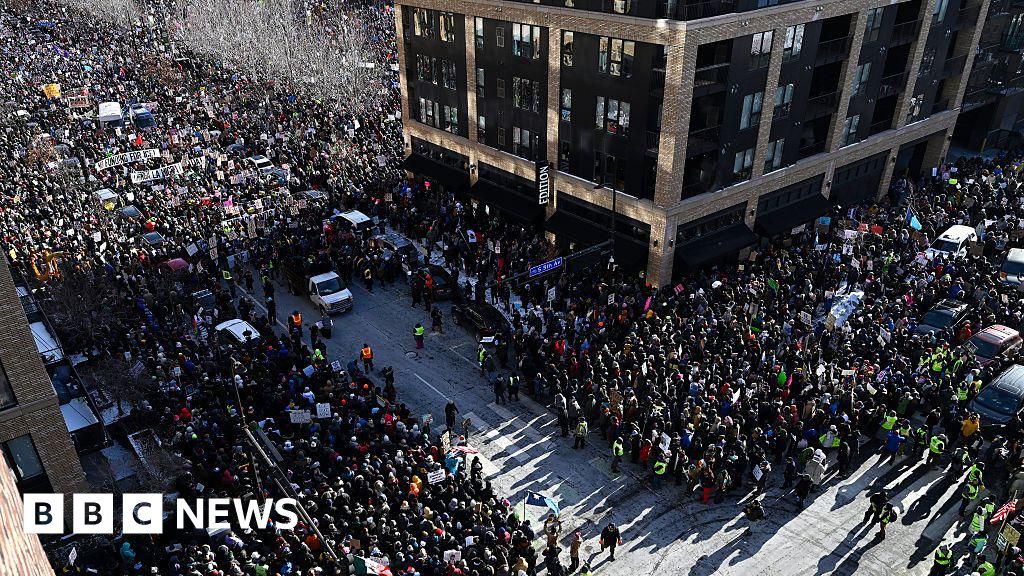
Hundreds of Minnesota businesses close to protest ICE presenceImage Credit: BBC News
Key Points
- •MINNEAPOLIS — A sweeping economic strike paralyzed segments of the Minnesota economy on Friday as hundreds of small businesses shuttered their doors and thousands of protesters braved sub-zero temperatures to denounce a sustained federal immigration crackdown. The demonstrations, aimed at U.S. Immigration and Customs Enforcement (ICE), represent a significant escalation in local resistance to “Operation Metro Surge,” a federal initiative that has deployed thousands of officers to the state over the last six weeks.
- •The Scale: Hundreds of businesses—ranging from restaurants and tattoo parlors to toy stores—participated in the "Day Without Immigrants" style strike.
- •The Human Cost: Tensions reached a breaking point following the death of 37-year-old Minneapolis resident Renee Good during an encounter with federal authorities earlier this month.
- •The Economic Blow: Business owners report revenue losses exceeding 30% as both staff and customers remain home to avoid potential detention.
- •Detentions of Minors: Public outcry intensified this week after school officials in Columbia Heights confirmed that four students, aged five to 17, were detained.
Economic Freeze: Minnesota Businesses Shutter to Protest Intensified ICE Operations
MINNEAPOLIS — A sweeping economic strike paralyzed segments of the Minnesota economy on Friday as hundreds of small businesses shuttered their doors and thousands of protesters braved sub-zero temperatures to denounce a sustained federal immigration crackdown. The demonstrations, aimed at U.S. Immigration and Customs Enforcement (ICE), represent a significant escalation in local resistance to “Operation Metro Surge,” a federal initiative that has deployed thousands of officers to the state over the last six weeks.
The Big Picture
What began as a federal public safety operation has evolved into a localized economic crisis. While the Trump administration characterizes the surge as a targeted effort to deport high-risk criminals, local business owners and community leaders report a climate of fear that is suppressing consumer spending and disrupting labor markets.
- The Scale: Hundreds of businesses—ranging from restaurants and tattoo parlors to toy stores—participated in the "Day Without Immigrants" style strike.
- The Human Cost: Tensions reached a breaking point following the death of 37-year-old Minneapolis resident Renee Good during an encounter with federal authorities earlier this month.
- The Economic Blow: Business owners report revenue losses exceeding 30% as both staff and customers remain home to avoid potential detention.
Why It Matters
The standoff in Minnesota serves as a microcosm of the national debate over federal overreach versus local sovereignty. For the Twin Cities, the presence of thousands of federal agents has created an environment where even legal residents and U.S. citizens report being afraid to conduct daily errands.
The Catalyst: "Operation Metro Surge"
The administration maintains that the deployment is a necessary response to illegal immigration and criminal activity. However, critics and local officials argue the operation lacks transparency and has resulted in the detention of non-criminals and minors.
- Detentions of Minors: Public outcry intensified this week after school officials in Columbia Heights confirmed that four students, aged five to 17, were detained.
- Incidents of Concern: A two-year-old child was reportedly detained on Thursday while traveling with her undocumented father in South Minneapolis.
- Clergy Involvement: The moral weight of the protest was underscored by the arrest of approximately 100 clergy members at the Minneapolis-St. Paul International Airport. The group was calling on commercial airlines to refuse the transport of ICE detainees.
The Economic Fallout
For many Minnesota entrepreneurs, the decision to close was not merely political—it was a reaction to a collapsing local economy. Corey Lamb, owner of Harriet Grove Botanicals, noted that the immigration raids represent a systemic threat to the Midwest’s interconnected business web.
"When those individuals are struggling because they're afraid of being detained or disappeared, it has an effect not only morally but economically on what's going on here," Lamb told the BBC.
A Costly Solidarity
The strike comes at a high price for a hospitality sector already battling a harsh winter. Kim Bartmann, who owns six restaurants in Minneapolis including Barbette and Gigi’s Café, shuttered four locations on Friday despite the financial strain.
- Revenue Decline: Bartmann reported a 30% drop in sales over the last three weeks directly attributed to the ICE presence.
- Labor Shortages: Even employees with legal work authorization are reportedly "terrified to leave their homes," leading to reduced operating hours across the city.
- The Dilemma: Business owners face a "double-edged sword"—the immediate loss of daily revenue versus the long-term risk of a community too afraid to participate in the economy.
Protests Amid the Polar Vortex
Despite temperatures plummeting to -10°F (-23°C), the physical demonstrations saw high turnout. Protesters marched through downtown Minneapolis, eventually seeking refuge and a platform at the city’s NBA arena.
- The Venue: The Minnesota Timberwolves’ home court served as an indoor rally point, where music and chanting replaced the usual sounds of professional basketball.
- The Demands: Organizers, backed by national groups like Faith in Action, are calling for immediate Congressional oversight. Bishop Dwayne Royster emphasized that the goal is to remove ICE presence not just from Minnesota, but to curb what he described as "extreme overreach" nationwide.
Context: The Death of Renee Good
The current unrest cannot be separated from the death of Renee Good in early January. Her death served as a flashpoint, turning a policy debate into a visceral local movement. Local officials have joined activists in condemning the tactics used during the operation, suggesting that the federal presence has undermined public trust in law enforcement.
What’s Next
The situation in Minnesota appears to be a stalemate between federal directives and local resistance. As "Operation Metro Surge" continues into its second month, the following developments are expected:
- Legal Challenges: Local advocacy groups are likely to file injunctions based on the detention of minors and the reported harassment of U.S. citizens.
- Corporate Pressure: The arrests of clergy at the airport signal a new strategy of targeting the logistics of deportation, specifically by putting pressure on private airlines.
- Economic Shift: If the 30% revenue drops reported by restaurateurs persist, the Twin Cities may face a wave of permanent business closures, potentially forcing the state government to intervene.
The Bottom Line: Minnesota has become a high-stakes testing ground for federal immigration enforcement. While the administration views this as a security success, the shuttered storefronts and empty cafes of Minneapolis suggest a mounting economic and social toll that the city may struggle to recoup.
Source: BBC News
Related Articles
Nationwide Protests Against ICE Enforcement Erupt in U.S.
Thousands are protesting ICE after the DOJ declined to investigate a fatal agent-involved shooting in Minneapolis, fueling a national movement and public anger.
Venezuela Amnesty Bill Could Free Political Prisoners
Learn about Venezuela's proposed amnesty bill to release political prisoners. The move could signal a major political shift and affect future economic sanctions
Pokémon Cancels Yasukuni Shrine Event After Backlash
The Pokémon Company has canceled an event at Tokyo's controversial Yasukuni Shrine after facing international backlash from China and South Korea.
US to Lose Measles Elimination Status: What It Means
The U.S. is poised to lose its measles elimination status due to escalating outbreaks. Learn what this downgrade means for public health and the economy.