Moradabad Honour Killing: Interfaith Couple Murdered
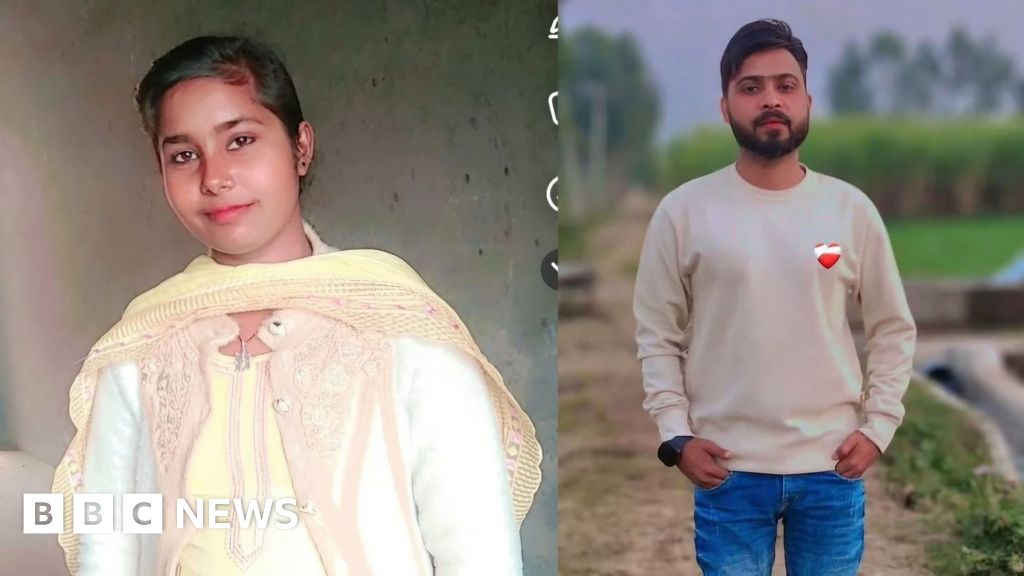
Moradabad honour killing: An Indian village grapples with interfaith couple's killingImage Credit: BBC News
Key Points
- •MORADABAD, INDIA – A quiet farming village in northern India has become the epicentre of a national tragedy, after a young interfaith couple were found murdered in what police are investigating as a brutal "honour killing." The deaths of Muskan Saini, a Hindu woman, and her Muslim partner, Shabab Ahmed, have cast a harsh spotlight on the deep-seated religious and social fissures that continue to plague parts of the country, leaving a community in shock and two families destroyed.
- •The Father's Account: Ganpat Saini stated that he and his wife were not present at the family home during the incident. He explained that they were sleeping in a shed on the outskirts of the village, a common practice for them to guard their livestock and crops from stray animals during the night.
- •A Declaration of Grief: Despite the circumstances and the arrest of his sons, Mr. Saini added that he was grieving for his daughter, a statement that adds a layer of complexity to the family's public position.
- •Primary Suspects: Muskan's two brothers have been arrested and are the primary suspects in the double homicide. Police are working to ascertain whether other family members were complicit or had knowledge of the plan.
- •Motive: Authorities have cited the family's "displeasure" with the interfaith relationship as the principal motive. In many conservative rural communities, relationships outside one's caste or religion are considered a transgression against family and community honour.
Moradabad honour killing: An Indian village grapples with interfaith couple's killing
MORADABAD, INDIA – A quiet farming village in northern India has become the epicentre of a national tragedy, after a young interfaith couple were found murdered in what police are investigating as a brutal "honour killing." The deaths of Muskan Saini, a Hindu woman, and her Muslim partner, Shabab Ahmed, have cast a harsh spotlight on the deep-seated religious and social fissures that continue to plague parts of the country, leaving a community in shock and two families destroyed.
The investigation has taken a sharp turn as suspicion falls squarely on the woman's own family, with her brothers now in custody. Amid the swirling allegations, the victim's father has come forward to deny any involvement, claiming he was miles away when his daughter was killed.
The Brutal Discovery in Ratupura
The village of Ratupura, in Uttar Pradesh's Moradabad district, awoke to horror when the bodies of Muskan, 19, and Shabab, 24, were discovered. Their relationship, which crossed the religious divide, was reportedly a source of significant tension with Muskan's family.
Initial reports from law enforcement suggest the couple was attacked and killed inside the Saini family home. The nature of the crime immediately led investigators to suspect a so-called "honour killing," a form of extrajudicial punishment carried out by family members to "restore" a family's reputation perceived to have been damaged by a relative's actions.
A Father's Grief and a Father's Alibi
In a key development, the victim's father, Ganpat Saini, has publicly distanced himself and his wife from the crime. Speaking to the BBC, he provided an alibi for the night of the murders and expressed sorrow over the loss of his daughter.
- The Father's Account: Ganpat Saini stated that he and his wife were not present at the family home during the incident. He explained that they were sleeping in a shed on the outskirts of the village, a common practice for them to guard their livestock and crops from stray animals during the night.
- A Declaration of Grief: Despite the circumstances and the arrest of his sons, Mr. Saini added that he was grieving for his daughter, a statement that adds a layer of complexity to the family's public position.
This testimony is now a critical piece of evidence for investigators as they work to determine the timeline of events and the roles of each family member.
The Police Investigation Unfolds
Local law enforcement has moved swiftly, focusing their investigation on Muskan’s immediate family. The preliminary findings point to a premeditated act driven by staunch opposition to her relationship with Shabab.
- Primary Suspects: Muskan's two brothers have been arrested and are the primary suspects in the double homicide. Police are working to ascertain whether other family members were complicit or had knowledge of the plan.
- Motive: Authorities have cited the family's "displeasure" with the interfaith relationship as the principal motive. In many conservative rural communities, relationships outside one's caste or religion are considered a transgression against family and community honour.
- Legal Charges: The accused are expected to face charges under Section 302 of the Indian Penal Code (IPC) for murder, and potentially Section 120B for criminal conspiracy, if investigators can prove the killings were planned.
A Killing in the Shadow of 'Honour'
The Moradabad tragedy is not an isolated incident but a stark example of a persistent and violent social problem in India. Honour killings, though illegal and condemned by authorities, continue to be reported, particularly in northern states like Uttar Pradesh, Haryana, and Punjab.
- What is an 'Honour Killing'?: An extrajudicial murder, typically of a woman, by family or community members. The perpetrators justify their actions by claiming the victim brought shame or dishonour upon them, often by choosing a partner against their family's wishes, refusing an arranged marriage, or being a victim of sexual assault.
- The Social Fabric: These killings are often rooted in rigid patriarchal structures and the power of unelected village councils (khap panchayats), which can issue illegal but socially powerful edicts against couples who defy tradition.
- National Statistics: While often underreported, the National Crime Records Bureau (NCRB) officially recorded dozens of cases of honour killings in recent years. Activists argue the true number is significantly higher, with many murders disguised as suicides or accidents.
Interfaith Love in a Polarised Nation
This case also resonates with a broader, politically charged debate in India surrounding interfaith relationships, particularly between Hindu women and Muslim men.
The rise of Hindu nationalist politics has amplified tensions, with right-wing groups promoting the conspiracy theory of "love jihad," which alleges a plot by Muslim men to convert Hindu women through marriage.
Several states governed by the Bharatiya Janata Party (BJP) have enacted controversial anti-conversion laws, which critics say are designed to police interfaith couples and restrict individual liberty. While these laws are not directly linked to the Moradabad case, they contribute to a social climate where such relationships are viewed with suspicion and hostility.
A Village Divided and a Nation Watching
Back in Ratupura, a heavy silence has fallen. Neighbours are reluctant to speak, caught between fear of retribution and the shock of the violence. The incident has left the village grappling with its own complicity and the brutal consequences of intolerance.
The case now moves to the courts, where the Indian justice system will be tested. For human rights activists and social reformers, the Moradabad killings are a grim reminder of the urgent need for both stronger legal protections and deep-rooted social change to protect the right of individuals to choose their own partners.
- What's Next: The accused will face trial for murder. The legal proceedings will be closely watched by national media and rights organisations. The case is expected to reignite calls for a specific, standalone law against honour killings, which advocates have long demanded to ensure swifter and more stringent punishment for perpetrators and conspirators.
Source: BBC News
Related Articles
Nationwide Protests Against ICE Enforcement Erupt in U.S.
Thousands are protesting ICE after the DOJ declined to investigate a fatal agent-involved shooting in Minneapolis, fueling a national movement and public anger.
Venezuela Amnesty Bill Could Free Political Prisoners
Learn about Venezuela's proposed amnesty bill to release political prisoners. The move could signal a major political shift and affect future economic sanctions
Pokémon Cancels Yasukuni Shrine Event After Backlash
The Pokémon Company has canceled an event at Tokyo's controversial Yasukuni Shrine after facing international backlash from China and South Korea.
US to Lose Measles Elimination Status: What It Means
The U.S. is poised to lose its measles elimination status due to escalating outbreaks. Learn what this downgrade means for public health and the economy.