Nebraska Starts Medicaid Work Requirements Amid Fears
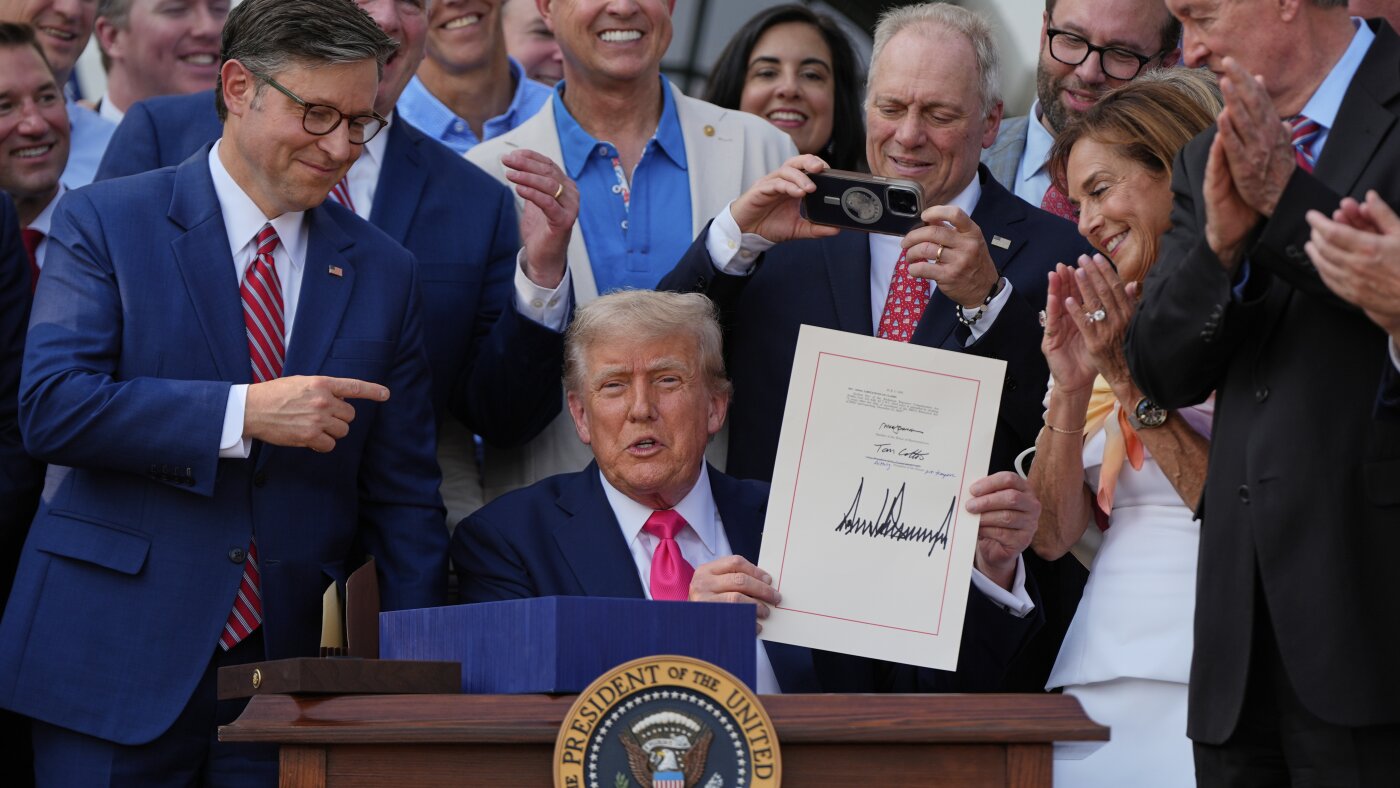
It's Day 1 of Medicaid work requirements in Nebraska. People are worriedImage Credit: NPR Politics
Key Points
- •OMAHA, NE – Nebraska today becomes the first state in the nation to implement federally mandated work requirements for its Medicaid program, a move that state officials describe as a smooth transition but one that has enrollees, healthcare providers, and advocates deeply concerned about potential mass coverage losses. The new rules, which officially take effect May 1, represent the first real-world test of a controversial policy that will eventually reshape public health coverage for millions of low-income Americans.
- •The National Mandate: The law requires adults in expanded Medicaid programs to prove they are working, volunteering, attending school, or participating in job training for at least 80 hours per month.
- •Projected Impact: The nonpartisan Congressional Budget Office estimates that, once fully implemented nationwide, the work requirements will cause 4.8 million people to lose their health coverage over the next decade.
- •Medicaid Expansion's Reach: According to KFF, a health information nonprofit, over 20 million people gained health insurance through the ACA's expansion, which made adults with incomes up to 138% of the federal poverty level (currently $22,025 for an individual) eligible for Medicaid.
- •Affected Population: Approximately 70,000 Medicaid enrollees in Nebraska are subject to the new requirements, according to the state's Department of Health and Human Services (DHHS).
It's Day 1 of Medicaid Work Requirements in Nebraska. Here's What's at Stake.
OMAHA, NE – Nebraska today becomes the first state in the nation to implement federally mandated work requirements for its Medicaid program, a move that state officials describe as a smooth transition but one that has enrollees, healthcare providers, and advocates deeply concerned about potential mass coverage losses. The new rules, which officially take effect May 1, represent the first real-world test of a controversial policy that will eventually reshape public health coverage for millions of low-income Americans.
The anxiety is palpable for people like Schmeeka Simpson. The 46-year-old Omaha resident works three jobs—as a patient navigator, an administrative assistant, and at a local Dunkin'—none of which offer health insurance. She has relied on Medicaid since 2014 and now fears a bureaucratic misstep could leave her uninsured.
"Adding more barriers won't make the program work any better," Simpson said, recalling a past incident where technical problems caused her to temporarily lose food assistance. She worries a similar fate awaits her health coverage.
Why It Matters: A National Precedent
Nebraska's program is the inaugural rollout of a key provision in the "One Big Beautiful Bill Act," signed into law by President Donald Trump last July. The law sets a 2027 deadline for the 42 states (and the District of Columbia) that expanded Medicaid under the Affordable Care Act to enforce work requirements.
- The National Mandate: The law requires adults in expanded Medicaid programs to prove they are working, volunteering, attending school, or participating in job training for at least 80 hours per month.
- Projected Impact: The nonpartisan Congressional Budget Office estimates that, once fully implemented nationwide, the work requirements will cause 4.8 million people to lose their health coverage over the next decade.
- Medicaid Expansion's Reach: According to KFF, a health information nonprofit, over 20 million people gained health insurance through the ACA's expansion, which made adults with incomes up to 138% of the federal poverty level (currently $22,025 for an individual) eligible for Medicaid.
Nebraska's Test Case
While the federal deadline is years away, the law permitted states to launch their programs early. As the first to do so, Nebraska's experience will be closely monitored as a blueprint—or a cautionary tale—for the rest of the country.
- Affected Population: Approximately 70,000 Medicaid enrollees in Nebraska are subject to the new requirements, according to the state's Department of Health and Human Services (DHHS).
- Key Exemptions: Individuals can be exempted from the rules if they meet certain criteria, such as caring for a child under 13, looking after a disabled parent, or having one of thousands of state-specified health conditions that prevent employment.
- State's Approach: Nebraska DHHS spokesperson Collin Spilinek stated that the state will use existing data from state and national databases to automatically verify compliance. He estimates that about 72% of affected enrollees will not need to take any action to maintain their coverage. Those whose status cannot be automatically confirmed will be notified to complete an online form.
State and Federal Officials Project Confidence
Officials in both Lincoln and Washington, D.C., are framing the rollout as a manageable process focused on compliance, not disenrollment.
"Our top priority is making sure members clearly understand changes to the program and how to maintain their coverage," said Drew Gonshorowski, Nebraska's Medicaid director, in an April statement. State officials have emphasized their efforts to make the system as user-friendly as possible to prevent people from losing coverage for purely administrative reasons.
The effort has earned praise at the federal level. In a brief interview on April 28, Centers for Medicare & Medicaid Services (CMS) Administrator Mehmet Oz applauded Nebraska for its early implementation. He acknowledged the state is still "working out the kinks," but expressed optimism, adding, "my hope is by the end of this year they will get into a more sophisticated place."
Anxiety on the Ground
Despite official assurances, a chorus of skepticism is rising from those who work directly with the affected populations and the healthcare system that supports them. The primary fear is not that people are unwilling to work, but that the administrative burden of proving it will cause eligible individuals to fall through the cracks.
- Hospital Concerns: Jeremy Nordquist, President and CEO of the Nebraska Hospital Association, warned of significant financial and operational strain. "There is a lot of concern on many different levels," he said, noting that an increase in uninsured patients will directly impact hospitals' bottom lines through uncompensated care.
- The Awareness Gap: Nordquist also highlighted a critical communication challenge. "Many enrollees are unaware of the changes and might not realize they have to act to stay insured," he said.
- Administrative Capacity: A key point of contention is the state's decision not to hire additional staff to manage the new requirements. Nordquist finds this concerning. "The fact that they say they do not need additional resources raises questions" about whether "they will be able to pull this off without future headaches," he stated.
Health policy analysts and advocates for the poor echo these fears, predicting that thousands of Nebraskans will lose not only their coverage but also their access to essential health services and protection from crippling medical debt.
What to Watch
The coming months in Nebraska will serve as a high-stakes stress test. The central question is whether a state government can implement a complex verification system for tens of thousands of people—many of whom have limited internet access or face other socioeconomic barriers—without inadvertently disenrolling a significant number of eligible citizens.
The performance of Nebraska's data-matching technology, the clarity of its communication with enrollees, and the capacity of its existing staff will be under intense scrutiny. For the 41 other states and Washington, D.C., preparing for their own rollouts, the lessons from Nebraska's Day 1 and beyond will be invaluable. The nation is watching to see if the "kinks" are minor adjustments or fundamental flaws in a policy that stands to affect millions.
Source: NPR Politics
Related Articles
Nationwide Protests Against ICE Enforcement Erupt in U.S.
Thousands are protesting ICE after the DOJ declined to investigate a fatal agent-involved shooting in Minneapolis, fueling a national movement and public anger.
Venezuela Amnesty Bill Could Free Political Prisoners
Learn about Venezuela's proposed amnesty bill to release political prisoners. The move could signal a major political shift and affect future economic sanctions
Pokémon Cancels Yasukuni Shrine Event After Backlash
The Pokémon Company has canceled an event at Tokyo's controversial Yasukuni Shrine after facing international backlash from China and South Korea.
US to Lose Measles Elimination Status: What It Means
The U.S. is poised to lose its measles elimination status due to escalating outbreaks. Learn what this downgrade means for public health and the economy.