Netflix's Reed Hastings Steps Down as Co-CEO After 25 Years
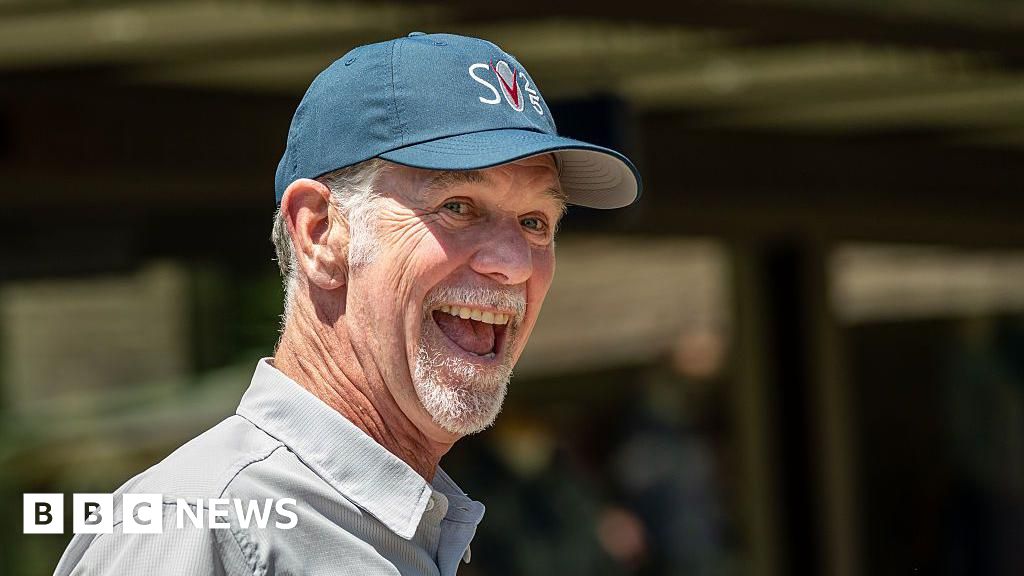
Netflix co-founder Reed Hastings to step down as chairmanImage Credit: BBC Business (Finance)
Key Points
- •LONDON – Reed Hastings, the visionary entrepreneur who revolutionized home entertainment by transforming a DVD-by-mail service into a global streaming behemoth, is stepping down from his role as co-Chief Executive Officer of Netflix. The company announced he will transition to the role of Executive Chairman in a long-planned succession move that marks the end of an era for the digital media giant.
- •The DVD-by-Mail Model: Hastings' initial innovation used the internet as a platform to manage a logistics business, mailing its signature red envelopes to millions of homes and eliminating the concept of late fees.
- •The Shift to Streaming: In 2007, recognizing the inevitable decline of physical media, Hastings launched the "Watch Instantly" service. This move laid the foundation for the on-demand viewing culture that now dominates global media consumption.
- •The Original Content Gamble: With the 2013 debut of House of Cards, Netflix, under the content leadership of Sarandos, transformed from a licensed content aggregator into a full-fledged studio. This billion-dollar bet on original programming created a new model for the industry and established Netflix as a creative powerhouse.
- •Aggressive Global Expansion: Hastings oversaw a rapid and ambitious international rollout, launching the service in over 190 countries and creating a truly global entertainment network.
Netflix co-founder Reed Hastings to step down as chairman
LONDON – Reed Hastings, the visionary entrepreneur who revolutionized home entertainment by transforming a DVD-by-mail service into a global streaming behemoth, is stepping down from his role as co-Chief Executive Officer of Netflix. The company announced he will transition to the role of Executive Chairman in a long-planned succession move that marks the end of an era for the digital media giant.
Greg Peters, formerly the company's Chief Operating Officer, has been promoted to co-CEO, and will now lead Netflix alongside Ted Sarandos. The move solidifies a new leadership structure as the company navigates a fiercely competitive market and pivots its strategy toward new avenues for growth.
The transition, announced in conjunction with the company's fourth-quarter earnings report, is framed by Netflix as the culmination of a decade of succession planning. Hastings, who has led the company for 25 years, expressed confidence in the new duo, noting their proven partnership and complementary skills.
An Architect of Disruption
Reed Hastings' tenure at the helm of Netflix is a quintessential story of Silicon Valley disruption. He co-founded the company in 1997, directly challenging the dominance of brick-and-mortar rental chains like Blockbuster and fundamentally altering consumer behavior.
His leadership was defined by a series of bold, strategic pivots that consistently kept the company ahead of the curve, even when those moves were initially met with skepticism from Wall Street and subscribers.
-
The DVD-by-Mail Model: Hastings' initial innovation used the internet as a platform to manage a logistics business, mailing its signature red envelopes to millions of homes and eliminating the concept of late fees.
-
The Shift to Streaming: In 2007, recognizing the inevitable decline of physical media, Hastings launched the "Watch Instantly" service. This move laid the foundation for the on-demand viewing culture that now dominates global media consumption.
-
The Original Content Gamble: With the 2013 debut of House of Cards, Netflix, under the content leadership of Sarandos, transformed from a licensed content aggregator into a full-fledged studio. This billion-dollar bet on original programming created a new model for the industry and established Netflix as a creative powerhouse.
-
Aggressive Global Expansion: Hastings oversaw a rapid and ambitious international rollout, launching the service in over 190 countries and creating a truly global entertainment network.
The New Guard: Product and Content United
The elevation of Greg Peters to co-CEO alongside Ted Sarandos creates a leadership dyad that mirrors the two core pillars of Netflix's business: technology and content.
Ted Sarandos: The Content King
Sarandos, a Hollywood veteran, has long been the face of Netflix's creative operations. As Chief Content Officer and later co-CEO, he was the architect of the company's original content strategy, building relationships with top-tier talent and overseeing a slate that has garnered hundreds of Emmy Awards and numerous Oscars. He remains the company's creative soul, responsible for its multi-billion dollar content budget.
Greg Peters: The Product and Tech Strategist
Peters comes from the product and technology side of the business. As Chief Product Officer and then COO, he was instrumental in driving key strategic initiatives that are now central to the company's future. His leadership was critical in the development and launch of the lower-priced, ad-supported subscription tier—a monumental shift in Netflix's business model. He also oversaw the company's push into video games. His new role places technology and business model innovation at the very top of the corporate structure.
A Strategic Pivot Amidst Fierce Competition
The leadership transition comes at a critical juncture. After years of seemingly unstoppable subscriber growth, Netflix has faced significant headwinds from a crowded field of competitors, including Disney+, Max, and Amazon Prime Video. The company's recent focus has been on re-accelerating revenue growth and exploring new monetization strategies.
The company's earnings report, which beat subscriber growth expectations, provided a positive backdrop for the announcement. However, the strategic direction outlined by leadership signals a clear recognition that the old playbook is no longer sufficient.
Speaking on the company's future, co-CEO Ted Sarandos indicated a multi-pronged approach. He noted that following a period of industry consolidation, which included a reported but failed bid for Warner Bros., Netflix's focus would be on internal growth and diversification rather than large-scale acquisitions.
Sarandos said Netflix would "continue to strengthen [its] core offering" but was also pushing aggressively into new areas.
-
Live and Interactive Content: The company is building up its capabilities for live events, following experiments with comedy specials and reunion shows. This includes exploring live music specials and video podcasts to drive engagement.
-
Expanding Gaming: Netflix is significantly expanding its games offering. The strategy includes not only growing its library of mobile games accessible through the main app but also developing a new, dedicated kids gaming app. This push aims to increase the value of a Netflix subscription and capture more user screen time.
-
The Pursuit of Live Sports: While still in the early stages, the company is actively building its presence in live sporting events. This represents a potentially massive, albeit expensive, new frontier for the streaming service as it looks to compete for audiences accustomed to traditional broadcast television.
The Road Ahead
For investors, the departure of a founding CEO often signals uncertainty. However, Netflix has choreographed this transition as a formalization of a power structure that was already in place. Hastings' move to Executive Chairman ensures his experience remains accessible, while empowering the Sarandos-Peters duo to execute on a new, more complex strategy.
The market's muted reaction to the news, overshadowed by strong subscriber numbers, suggests Wall Street views the move as a stable and logical evolution.
The ultimate test for the new leadership will be their ability to navigate this new era. They must defend their core streaming business against powerful rivals while successfully executing on ambitious and capital-intensive new ventures in gaming and live events. The question now is whether this new structure can deliver the next wave of growth that defined Reed Hastings' remarkable 25-year run.
Source: BBC Business (Finance)
Related Articles
Nationwide Protests Against ICE Enforcement Erupt in U.S.
Thousands are protesting ICE after the DOJ declined to investigate a fatal agent-involved shooting in Minneapolis, fueling a national movement and public anger.
Venezuela Amnesty Bill Could Free Political Prisoners
Learn about Venezuela's proposed amnesty bill to release political prisoners. The move could signal a major political shift and affect future economic sanctions
Pokémon Cancels Yasukuni Shrine Event After Backlash
The Pokémon Company has canceled an event at Tokyo's controversial Yasukuni Shrine after facing international backlash from China and South Korea.
US to Lose Measles Elimination Status: What It Means
The U.S. is poised to lose its measles elimination status due to escalating outbreaks. Learn what this downgrade means for public health and the economy.