EU's New Border System: Warning of Long Airport Queues
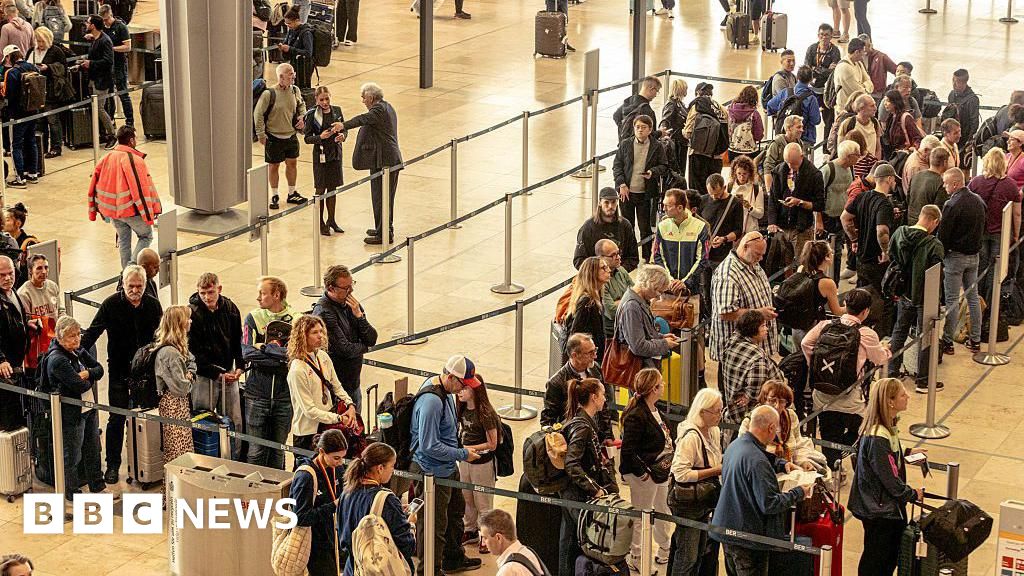
Warning of long airport queues under new EU border control systemImage Credit: BBC Business (Finance)
Key Points
- •A multi-billion-dollar travel industry is bracing for "significant and sustained" disruption as the European Union prepares to launch its long-delayed, high-tech border control system. Industry leaders are issuing stark warnings that without urgent action, airports across Europe could face gridlock, with processing times for non-EU travellers, including UK citizens, potentially doubling and threatening severe economic fallout for the aviation and tourism sectors.
- •Processing Time Explosion: Airports Council International (ACI) Europe has warned that passenger processing times at external EU borders could increase by 50% to 100% compared to the current system. For a family of four, this could turn a brief passport check into a lengthy ordeal.
- •First-Time Traveller Surge: The initial implementation period is seen as the highest-risk phase. Millions of travellers, including the vast majority of UK holidaymakers and business travellers, will be "first-timers" under the new system, creating an immediate and massive bottleneck.
- •Infrastructure and Space: Many airports, especially older ones, were not designed for the physical space required for EES kiosks. The process of retrofitting terminals is complex and costly, and many operators are reportedly behind schedule, raising questions about their capacity to handle the new requirements from day one.
- •Automated Registration: The system replaces the manual stamping of passports, which is considered inefficient and less secure. It will electronically log a traveller's name, travel document, and date and place of entry and exit.
Warning of long airport queues under new EU border control system
A multi-billion-dollar travel industry is bracing for "significant and sustained" disruption as the European Union prepares to launch its long-delayed, high-tech border control system. Industry leaders are issuing stark warnings that without urgent action, airports across Europe could face gridlock, with processing times for non-EU travellers, including UK citizens, potentially doubling and threatening severe economic fallout for the aviation and tourism sectors.
The new Entry/Exit System (EES), scheduled to go live in late 2024, replaces manual passport stamping with an automated process requiring biometric data collection. While designed to enhance security, airlines and airports fear a lack of preparedness, inadequate infrastructure, and low public awareness will create a perfect storm for travel chaos at a scale that could dwarf recent disruptions.
The Looming Bottleneck
The core of the concern lies in the fundamental change to border crossing procedures. Every non-EU national entering the Schengen Area for the first time under EES will need to register fingerprints and a facial image. This one-time registration is expected to add several minutes to each passenger's processing time.
Analysis from industry bodies suggests this could have a dramatic cascading effect, particularly at peak times and at space-constrained ports and terminals.
-
Processing Time Explosion: Airports Council International (ACI) Europe has warned that passenger processing times at external EU borders could increase by 50% to 100% compared to the current system. For a family of four, this could turn a brief passport check into a lengthy ordeal.
-
First-Time Traveller Surge: The initial implementation period is seen as the highest-risk phase. Millions of travellers, including the vast majority of UK holidaymakers and business travellers, will be "first-timers" under the new system, creating an immediate and massive bottleneck.
-
Infrastructure and Space: Many airports, especially older ones, were not designed for the physical space required for EES kiosks. The process of retrofitting terminals is complex and costly, and many operators are reportedly behind schedule, raising questions about their capacity to handle the new requirements from day one.
What is the Entry/Exit System (EES)?
The EES is a cornerstone of the EU's "Smart Borders" package, aimed at modernising and securing the external frontiers of the 27-nation Schengen Area. It is an automated IT system that will register travellers from third-countries each time they cross an EU external border.
Key Functions of the EES:
-
Automated Registration: The system replaces the manual stamping of passports, which is considered inefficient and less secure. It will electronically log a traveller's name, travel document, and date and place of entry and exit.
-
Biometric Data: For first-time entrants, the system will capture four fingerprints and a facial image. This data will be stored for three years, after which it will be automatically deleted. Subsequent entries during this period should, in theory, be faster.
-
Security and Immigration Control: By accurately tracking entries and exits, the EES is designed to help border guards identify travellers who have no right to enter, detect those using fraudulent documents, and pinpoint "over-stayers" who have exceeded their permitted 90-day stay.
The system applies to all non-EU nationals travelling for a short stay, a group that now includes over 60 million UK citizens following Brexit, making the UK-EU travel corridor a primary area of concern.
The Economic Stakes Are High
The warnings from the travel industry are rooted in significant financial risk. Disruptions at airports are not merely an inconvenience; they carry substantial direct and indirect costs that can ripple through the economy.
-
Airline Operations: Extended delays on the ground can lead to missed flight slots, crew exceeding their regulated working hours, and aircraft being out of position for their next rotation. These disruptions result in increased fuel burn, passenger compensation payouts under EU261 regulations, and significant operational recovery costs.
-
Airport Viability: While airports must invest heavily in new EES infrastructure—a significant capital expenditure—they also face the risk of their operations grinding to a halt. Congestion at border control can quickly back up into security, check-in, and even landside areas, paralysing the entire airport ecosystem.
-
Tourism and Business Travel: A negative travel experience can be a powerful deterrent. Industry leaders fear that reports of chaotic queues could discourage tourism, impacting a sector vital to the economies of many EU member states. For the UK, seamless access to European markets is critical for business travel, and friction at the border represents a new, non-tariff barrier to trade.
Urgent Calls for Mitigation
With the launch date approaching, a coalition of industry bodies, including Airlines for Europe (A4E) and ACI, is amplifying its calls for action from the European Commission and member states. Their focus has shifted from requesting further delays to demanding robust mitigation strategies.
Industry Demands:
-
Massive Public Awareness Campaign: A coordinated, multi-lingual information campaign is deemed essential to ensure travellers know what to expect. This includes advising them to arrive at airports earlier and explaining the registration process.
-
Pre-Registration Solutions: The industry is strongly advocating for the widespread availability of a mobile app that would allow travellers to pre-register some data before arriving at the border, potentially speeding up the process at the kiosk. The success of this depends on its functionality and adoption rate.
-
Resource and Staffing: National authorities are being urged to ensure border points are fully staffed and equipped to manage the transition. This includes having sufficient trained personnel on hand to assist travellers and troubleshoot technical issues with the new kiosks.
The Path Forward
The European Commission remains firm that the EES is essential for the security of the Schengen Area and has highlighted the multiple delays that have already given member states and industry stakeholders years to prepare. The system was originally slated for a 2022 launch.
Compounding the issue is the planned 2025 launch of another system, the European Travel Information and Authorisation System (ETIAS). This is a separate pre-travel authorisation scheme, similar to the U.S. ESTA, which will require non-EU visitors to apply and pay for permission to travel in advance.
The combination of EES at the border and ETIAS before departure represents the most significant overhaul of European travel rules in a generation. As the clock ticks down, the focus for airlines, airports, and millions of travellers is whether the promised benefits of a "smarter" border will be realised smoothly, or if they will first have to navigate a period of unprecedented travel turmoil.
Source: BBC Business (Finance)
Related Articles
Nationwide Protests Against ICE Enforcement Erupt in U.S.
Thousands are protesting ICE after the DOJ declined to investigate a fatal agent-involved shooting in Minneapolis, fueling a national movement and public anger.
Venezuela Amnesty Bill Could Free Political Prisoners
Learn about Venezuela's proposed amnesty bill to release political prisoners. The move could signal a major political shift and affect future economic sanctions
Pokémon Cancels Yasukuni Shrine Event After Backlash
The Pokémon Company has canceled an event at Tokyo's controversial Yasukuni Shrine after facing international backlash from China and South Korea.
US to Lose Measles Elimination Status: What It Means
The U.S. is poised to lose its measles elimination status due to escalating outbreaks. Learn what this downgrade means for public health and the economy.