New START Treaty Expiration Risks New Nuclear Arms Race
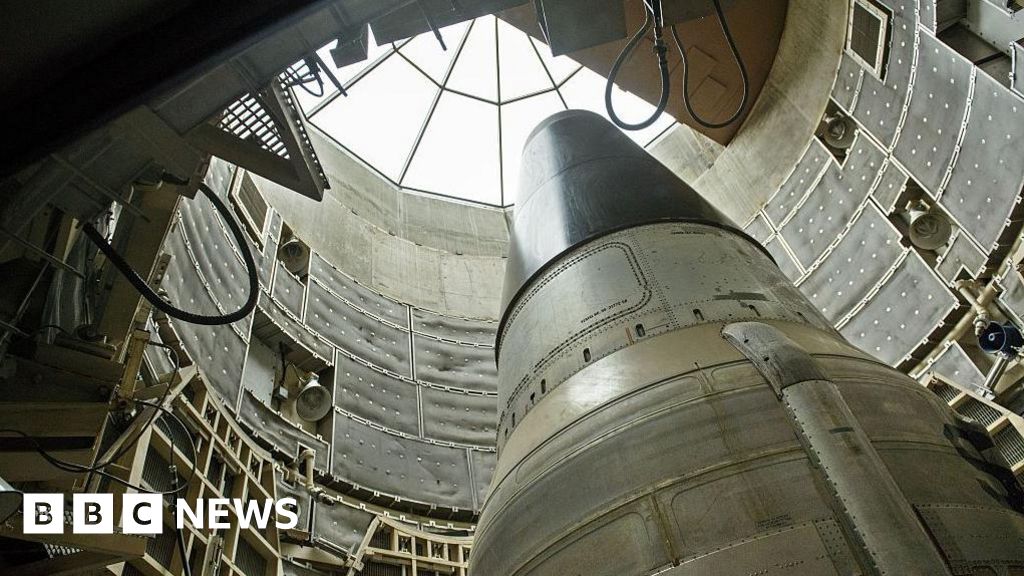
New Start: US-Russia nuclear weapons treaty due to expire raising fears of arms raceImage Credit: BBC News
Key Points
- •Washington D.C. – The world is quietly approaching a strategic precipice. The New START treaty, the last remaining pillar of nuclear arms control between the United States and Russia, is set to expire in February 2026. With no replacement being negotiated and diplomatic channels frozen, global security experts are sounding the alarm over the potential for a new, unconstrained nuclear arms race for the first time in over half a century.
- •Key Limits: The treaty caps each country at 1,550 deployed strategic nuclear warheads. These are warheads placed on intercontinental ballistic missiles (ICBMs), submarine-launched ballistic missiles (SLBMs), and heavy bombers equipped for nuclear armaments.
- •Delivery Systems: It also limits the number of deployed delivery vehicles—missiles and bombers—to 700, with a combined total of 800 deployed and non-deployed launchers.
- •Verification Regime: Crucially, New START established a robust verification and transparency regime. This includes on-site inspections, data exchanges, and notifications about missile tests and strategic movements, allowing each side to monitor the other's compliance and nuclear posture.
- •Russia's Position: The Kremlin has explicitly linked the future of any arms control dialogue to the broader security landscape, demanding the West cease its military support for Ukraine. Russian officials argue that they cannot allow U.S. inspectors onto their strategic sites while Washington is actively aiding an adversary in a conflict Moscow deems existential.
New Start: US-Russia nuclear weapons treaty due to expire raising fears of arms race
Washington D.C. – The world is quietly approaching a strategic precipice. The New START treaty, the last remaining pillar of nuclear arms control between the United States and Russia, is set to expire in February 2026. With no replacement being negotiated and diplomatic channels frozen, global security experts are sounding the alarm over the potential for a new, unconstrained nuclear arms race for the first time in over half a century.
The treaty's looming expiration marks a dangerous end to decades of carefully constructed agreements designed to provide predictability and transparency between the world's two largest nuclear powers. Its collapse would thrust the world into an era of strategic uncertainty, where mistrust and miscalculation could have catastrophic consequences.
The Final Pillar of Arms Control
The New Strategic Arms Reduction Treaty (New START) was signed in 2010 by Presidents Barack Obama and Dmitry Medvedev. It was extended in 2021 for a final five-year period by Presidents Joe Biden and Vladimir Putin, setting the current 2026 deadline.
The treaty's purpose is to maintain strategic stability by limiting the number of deployed nuclear weapons and the systems that carry them.
-
Key Limits: The treaty caps each country at 1,550 deployed strategic nuclear warheads. These are warheads placed on intercontinental ballistic missiles (ICBMs), submarine-launched ballistic missiles (SLBMs), and heavy bombers equipped for nuclear armaments.
-
Delivery Systems: It also limits the number of deployed delivery vehicles—missiles and bombers—to 700, with a combined total of 800 deployed and non-deployed launchers.
-
Verification Regime: Crucially, New START established a robust verification and transparency regime. This includes on-site inspections, data exchanges, and notifications about missile tests and strategic movements, allowing each side to monitor the other's compliance and nuclear posture.
The Breakdown of Dialogue
The foundation of the treaty began to crumble in February 2023 when Russia announced it was "suspending" its participation. While Moscow stated it would continue to adhere to the central numerical limits, it halted all cooperation on the vital inspection and data-sharing provisions.
The breakdown stems from a complex intersection of geopolitical tensions, primarily the war in Ukraine.
The Current Stalemate
-
Russia's Position: The Kremlin has explicitly linked the future of any arms control dialogue to the broader security landscape, demanding the West cease its military support for Ukraine. Russian officials argue that they cannot allow U.S. inspectors onto their strategic sites while Washington is actively aiding an adversary in a conflict Moscow deems existential.
-
U.S. Stance: The Biden administration has called Russia's suspension "legally invalid" and a "strategic mistake." U.S. officials maintain they are ready to negotiate a follow-on agreement without preconditions and have repeatedly urged Moscow to return to full compliance to ensure stability.
-
The China Factor: A significant complication in any future negotiation is the rise of China's nuclear arsenal. The Pentagon projects that Beijing is on track to possess over 1,000 nuclear warheads by 2030. The U.S. has insisted that any new arms control framework must be trilateral, including China. Beijing has consistently rejected this, arguing its arsenal is far smaller than those of the U.S. and Russia and is purely for defensive purposes.
A World Without Guardrails
The expiration of New START without a successor would eliminate all legally binding, verifiable limits on U.S. and Russian nuclear forces. Analysts warn this would create a dangerous "security dilemma," where one nation's actions to increase its security are perceived as a threat by another, leading to a reactive spiral of armament.
The implications are profound and far-reaching:
-
End of Transparency: Without inspections and data exchanges, a "fog of war" would descend over the strategic nuclear balance. Both Washington and Moscow would lose critical insight into the size, composition, and readiness of the other's arsenal, forcing them to rely on national intelligence and worst-case assumptions.
-
An Unconstrained Arms Race: In a world without limits, both nations might feel compelled to "upload" their reserve warheads onto existing missiles or build new delivery systems. Such a race would not only heighten geopolitical risk but also divert hundreds of billions of dollars from national economies toward weapons programs, straining budgets and resources.
-
Lowered Nuclear Threshold: Increased uncertainty raises the risk of miscalculation during a crisis. A conventional conflict could escalate to the nuclear level more easily if leaders lack confidence in their understanding of an adversary's intentions or capabilities.
The End of an Era
The potential demise of New START is the culmination of a two-decade erosion of the post-Cold War arms control architecture.
This decline began with the U.S. withdrawal from the Anti-Ballistic Missile (ABM) Treaty in 2002. It was followed by the collapse of the Intermediate-Range Nuclear Forces (INF) Treaty in 2019, which banned ground-launched missiles with ranges between 500 and 5,500 kilometers, after the U.S. accused Russia of non-compliance.
With each dismantled treaty, the guardrails preventing unbridled competition have been removed, pushing the world closer to the nuclear brinkmanship that defined the Cold War.
Next Steps and Bleak Outlook
As the February 2026 deadline approaches, the path forward is unclear. Diplomatic engagement between the U.S. and Russia is at a historic low, and the fundamental disagreements over Ukraine and the inclusion of China present formidable obstacles.
Security analysts believe that informal "gentlemen's agreements" or parallel unilateral declarations of restraint are possible short-term measures. However, these lack the legal force and verification mechanisms of a formal treaty, providing only fragile and temporary stability.
Without a dramatic and unforeseen diplomatic breakthrough, the world is on a trajectory to enter a new, more complex, and dangerously unpredictable nuclear age. The clock is ticking, and the stakes for global security could not be higher.
Source: BBC News
Related Articles
Nationwide Protests Against ICE Enforcement Erupt in U.S.
Thousands are protesting ICE after the DOJ declined to investigate a fatal agent-involved shooting in Minneapolis, fueling a national movement and public anger.
Venezuela Amnesty Bill Could Free Political Prisoners
Learn about Venezuela's proposed amnesty bill to release political prisoners. The move could signal a major political shift and affect future economic sanctions
Pokémon Cancels Yasukuni Shrine Event After Backlash
The Pokémon Company has canceled an event at Tokyo's controversial Yasukuni Shrine after facing international backlash from China and South Korea.
US to Lose Measles Elimination Status: What It Means
The U.S. is poised to lose its measles elimination status due to escalating outbreaks. Learn what this downgrade means for public health and the economy.