Farage's By-Election Win & The £5M Donation Scandal
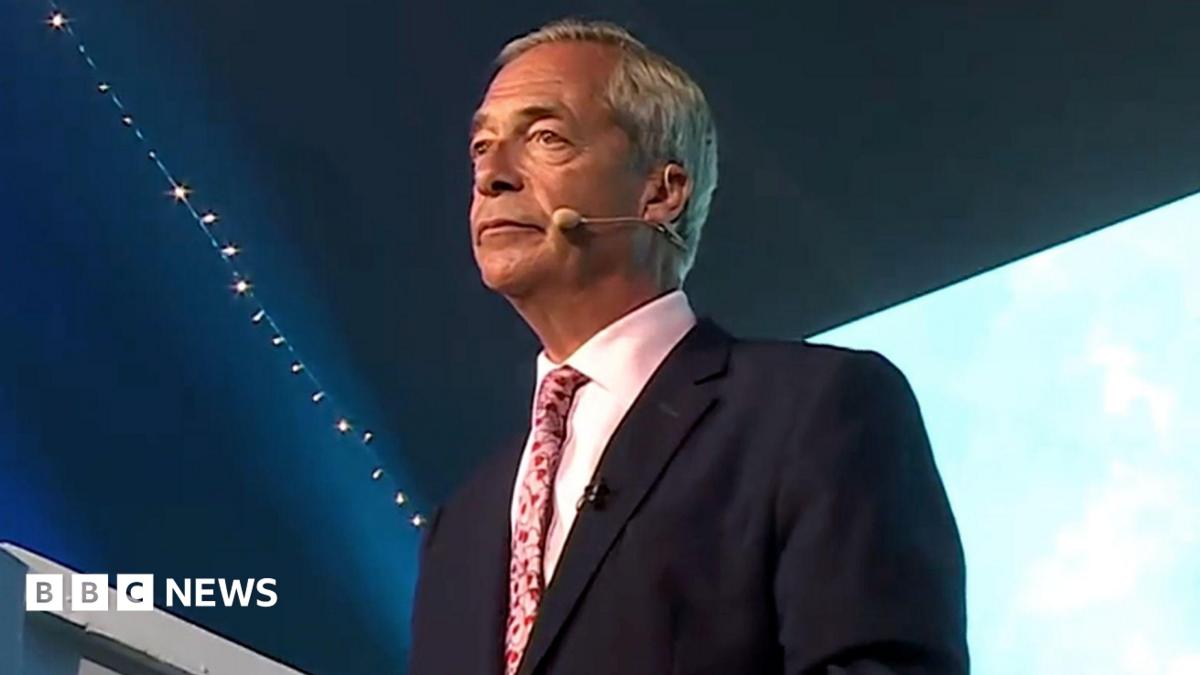
Where does this unorthodox by-election victory leave Nigel Farage?Image Credit: BBC News
Key Points
- •The Grievance Strategy: Mr. Farage and his allies argue that the focus on grievances is not a political tactic but a reflection of legitimate public anger over issues like immigration, institutional overreach, and economic stagnation. They believe this confrontational style energises their base and cuts through the noise of mainstream politics.
- •The Positive Alternative: Mr. Montgomerie and others contend that Reform is at its best when it presents a more positive, aspirational vision for Britain. They worry that a constant focus on being "inward looking" and grievance-driven limits the party's appeal beyond its core supporters and makes it vulnerable to accusations of negativity.
- •A Labour "Burnham Bounce": The Labour Party is showing renewed vigour, partly attributed to a "Burnham bounce" that has resonated with voters in key demographics. This has, for now, interrupted Reform's polling momentum and re-established Labour in a stronger position.
- •A More Competitive Conservative Party: After a prolonged period in the doldrums, the Conservatives appear more organised and "chipper" than they have in over a year. A more competitive Tory party directly squeezes the political space on the right, making it harder for Reform to peel off disaffected voters.
- •The Rise of a New Rival: The emergence of Restore Britain, a new political entity run by former Reform MP Rupert Lowe, presents another headache. While a nascent movement, it threatens to fragment the populist right-wing vote, potentially siphoning off activists and voters who feel Reform is either too focused on one individual or has strayed from its core mission.
Where does this unorthodox by-election victory leave Nigel Farage?
Nigel Farage has once again stormed the political parapet, securing a return to the heart of British politics with a dramatic by-election victory. Yet, the triumph was immediately engulfed by a significant financial controversy and simmering internal dissent, leaving the larger-than-life political figure at a critical crossroads. The win gives him a powerful platform in the House of Commons, but the storm clouds gathering around him raise profound questions about his strategic direction and the future of his party, Reform UK.
A Victory Mired in Controversy
While the electoral result provides a short-term boost, it is the revelation of a £5 million gift from billionaire businessman Christopher Harborne that has dominated the aftermath. The funds, received in the months before Mr. Farage became an MP, were not declared on the Register of Members' Interests, sparking a fierce debate.
Critics, including opposition MPs and parliamentary standards watchdogs, are unequivocal. They insist the rules are clear and apply to all members, arguing that such a substantial sum should have been registered transparently. The failure to do so, they claim, undermines the integrity of the parliamentary process.
Mr. Farage has mounted a robust defence, framing the issue not as a transgression but as a procedural matter and an attack by the establishment. Speaking on GB News before the result was declared, he offered a concession of sorts.
"If I made one sin, it's that I haven't filled in a piece of paper," he stated. "I've broken no law, I've broken no tax law, I've taken no public money... Maybe I haven't filled in a piece of paper. I'm confident I'm right - we'll see where we go."
He maintains that he sought and followed legal advice which indicated the sum did not require declaration. This narrative—pitting "the people's champion" against a system designed to entrap him—is a familiar and often effective strategy for Mr. Farage. From a position of political weakness, the controversy has allowed him to go on the offensive.
Cracks in the Reform Facade
The external pressure is being compounded by internal debate over strategy and tone. The "angry route," as one prominent figure puts it, is causing frustration within Reform UK's own ranks.
Tim Montgomerie, the influential founder of the ConservativeHome website who defected to Reform two years ago, openly criticised Mr. Farage's handling of the situation.
"When he goes down this angry route he doesn't help himself," Mr. Montgomerie told BBC Radio 4. While praising his political skill, he added: "It's very frustrating how he's behaved today. He needs to get a grip of this problem."
The core of the internal debate centres on the party's identity and path to growth.
-
The Grievance Strategy: Mr. Farage and his allies argue that the focus on grievances is not a political tactic but a reflection of legitimate public anger over issues like immigration, institutional overreach, and economic stagnation. They believe this confrontational style energises their base and cuts through the noise of mainstream politics.
-
The Positive Alternative: Mr. Montgomerie and others contend that Reform is at its best when it presents a more positive, aspirational vision for Britain. They worry that a constant focus on being "inward looking" and grievance-driven limits the party's appeal beyond its core supporters and makes it vulnerable to accusations of negativity.
A Shifting Political Landscape
The internal questions over strategy are particularly acute because the wider political environment is becoming more challenging for Reform. The by-election win cannot mask a more complex national picture where the party's momentum has stalled.
Recent months have seen a notable shift, with several factors disrupting Reform's long-standing position in the opinion polls.
-
A Labour "Burnham Bounce": The Labour Party is showing renewed vigour, partly attributed to a "Burnham bounce" that has resonated with voters in key demographics. This has, for now, interrupted Reform's polling momentum and re-established Labour in a stronger position.
-
A More Competitive Conservative Party: After a prolonged period in the doldrums, the Conservatives appear more organised and "chipper" than they have in over a year. A more competitive Tory party directly squeezes the political space on the right, making it harder for Reform to peel off disaffected voters.
-
The Rise of a New Rival: The emergence of Restore Britain, a new political entity run by former Reform MP Rupert Lowe, presents another headache. While a nascent movement, it threatens to fragment the populist right-wing vote, potentially siphoning off activists and voters who feel Reform is either too focused on one individual or has strayed from its core mission.
-
Shrinking Support: While no party currently enjoys overwhelming popularity, the data shows that Reform's support has "shrivelled a bit" from its recent highs. Their rivals are more upbeat, sensing an opportunity as the political season at Westminster prepares to resume.
The Road Ahead
As MPs prepare to return to the Commons, the landscape is set. Labour enters the new term with a spring in its step. The Conservatives are back in the fight. And Reform UK, despite its new voice in Parliament, finds itself punchy but under pressure from all sides.
For Nigel Farage, the path forward is uncertain. His victory grants him a formidable pulpit, but the financial investigation will cast a long shadow. He must decide whether to double down on the grievance narrative that has served him well, or heed the advice of figures like Montgomerie and pivot towards a broader, more positive platform.
The coming months will be fascinating. The outcome of any parliamentary probe, the direction of the national polls, and Mr. Farage's own strategic choices will determine whether this by-election victory was the start of a new chapter or merely a fleeting success in a changing political world.
Source: BBC News
Related Articles
Nationwide Protests Against ICE Enforcement Erupt in U.S.
Thousands are protesting ICE after the DOJ declined to investigate a fatal agent-involved shooting in Minneapolis, fueling a national movement and public anger.
Venezuela Amnesty Bill Could Free Political Prisoners
Learn about Venezuela's proposed amnesty bill to release political prisoners. The move could signal a major political shift and affect future economic sanctions
Pokémon Cancels Yasukuni Shrine Event After Backlash
The Pokémon Company has canceled an event at Tokyo's controversial Yasukuni Shrine after facing international backlash from China and South Korea.
US to Lose Measles Elimination Status: What It Means
The U.S. is poised to lose its measles elimination status due to escalating outbreaks. Learn what this downgrade means for public health and the economy.