Nigel Farage: Reform Gains Signal Historic Political Shift
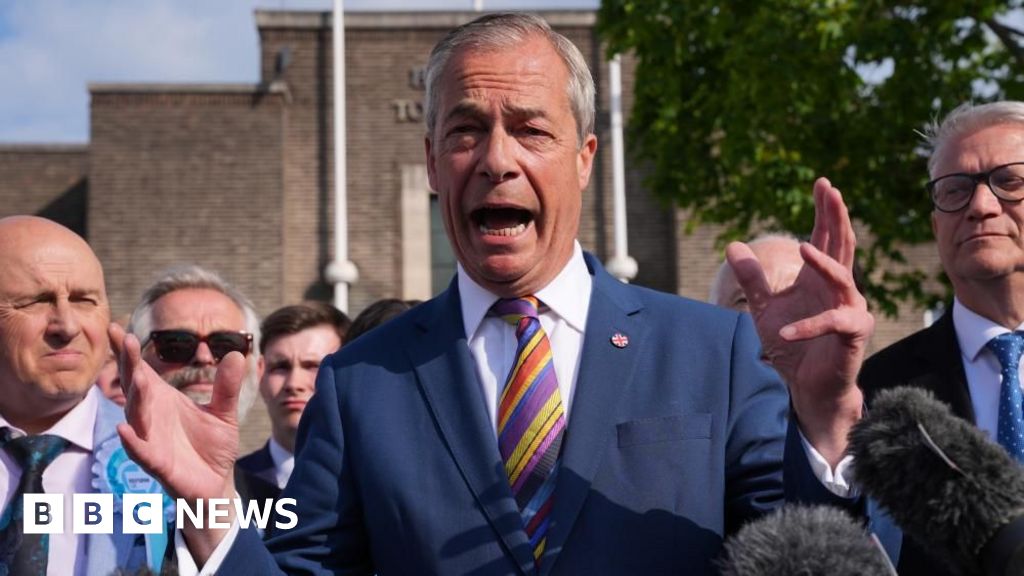
Nigel Farage: Reform election gains show historic shift in British politicsImage Credit: BBC News
Key Points
- •LONDON – Nigel Farage, the newly installed leader of Reform UK, has declared that his party's burgeoning support signals a "historic shift" in British politics, challenging the century-old dominance of the Conservative and Labour parties. In a statement that redefines his campaign's ambition, Farage argued that the political spectrum is no longer a simple left-right axis, positioning Reform to attract disillusioned voters from both traditional camps.
- •Post-Brexit Discontent: The 2016 vote to leave the EU fractured traditional party loyalties. Many voters who backed Brexit, particularly in former industrial areas, feel its promise has not been delivered by the Conservative government, especially on immigration and economic regeneration.
- •Economic Stagnation: Years of sluggish growth, followed by the inflation and cost-of-living crisis, have left many households feeling poorer and more insecure. Real wages have stagnated, and the perception is widespread that the economic system is failing ordinary people.
- •Public Service Strain: Confidence in core public services, most notably the National Health Service (NHS), is at a historic low. Record-breaking waiting lists and industrial action have contributed to a sense that the country is in a state of managed decline.
- •Key Issues: The primary levers are immigration, which the Conservatives promised to reduce but has hit record highs, and tax. Reform's platform of "zero net migration" and significant tax cuts is designed to appeal directly to disenchanted Tory voters.
Nigel Farage: Reform election gains show historic shift in British politics
LONDON – Nigel Farage, the newly installed leader of Reform UK, has declared that his party's burgeoning support signals a "historic shift" in British politics, challenging the century-old dominance of the Conservative and Labour parties. In a statement that redefines his campaign's ambition, Farage argued that the political spectrum is no longer a simple left-right axis, positioning Reform to attract disillusioned voters from both traditional camps.
This assertion sets the stage for a volatile election period, where the primary battle may not be for government, but for the soul of the British right and the allegiance of long-neglected working-class communities. For markets and businesses, it introduces a significant new vector of political and economic uncertainty.
Farage's "Seismic Shift" Declaration
At the heart of Farage's strategy is the belief that decades of political convention are breaking down. He articulated a vision of a political realignment driven by a widespread sense of betrayal among voters who feel abandoned by the establishment.
"We've been so used to thinking about politics in terms of left and right," Farage stated, "yet what Reform are able to do is to win in areas that have always been Conservative, but equally, we're proving in a big way that we could win in areas that Labour has dominated since the end of World War I."
This "pincer movement" strategy aims to dismantle the foundations of the two-party system by creating a new coalition of voters united by economic anxiety, cultural conservatism, and frustration with the status quo.
A Fractured Political Landscape
Farage's rhetoric is landing on fertile ground. The UK is grappling with a confluence of crises that have eroded public trust in mainstream political institutions. This provides a powerful tailwind for a populist insurgency.
-
Post-Brexit Discontent: The 2016 vote to leave the EU fractured traditional party loyalties. Many voters who backed Brexit, particularly in former industrial areas, feel its promise has not been delivered by the Conservative government, especially on immigration and economic regeneration.
-
Economic Stagnation: Years of sluggish growth, followed by the inflation and cost-of-living crisis, have left many households feeling poorer and more insecure. Real wages have stagnated, and the perception is widespread that the economic system is failing ordinary people.
-
Public Service Strain: Confidence in core public services, most notably the National Health Service (NHS), is at a historic low. Record-breaking waiting lists and industrial action have contributed to a sense that the country is in a state of managed decline.
Deconstructing the Two-Pronged Strategy
Reform UK's strategy is not a monolithic appeal but a carefully calibrated, two-pronged attack on the Conservative and Labour heartlands.
1. Targeting the Conservative Right
The most immediate threat posed by Reform is to the Conservative Party. Farage is directly targeting voters who backed Boris Johnson in 2019 but now feel politically homeless.
-
Key Issues: The primary levers are immigration, which the Conservatives promised to reduce but has hit record highs, and tax. Reform's platform of "zero net migration" and significant tax cuts is designed to appeal directly to disenchanted Tory voters.
-
The "Red Wall" Battleground: Reform's focus is on the "Red Wall" seats—traditionally Labour constituencies in the North and Midlands that the Conservatives won in 2019. Farage's argument is that these voters are culturally conservative and pro-Brexit, and their loyalty to the Tories was conditional on performance.
2. Targeting Traditional Labour Strongholds
Farage’s more ambitious claim is his ability to penetrate deep into Labour's historic territories. This move attempts to exploit a growing cultural and economic chasm between metropolitan, progressive Labour and its former working-class base.
-
Cultural Alienation: Reform is betting that voters in post-industrial towns feel that the modern Labour Party no longer represents their values on issues of patriotism, social change, and identity.
-
Economic Neglect: Farage's message suggests that for generations, Labour has taken these communities for granted, overseeing their economic decline without offering a credible path to renewal. He positions Reform as the only party speaking to their economic disenfranchisement.
From Rhetoric to Reality: The Electoral Calculus
While the rhetoric is powerful, the UK's electoral system presents a formidable barrier. The First-Past-the-Post (FPTP) system makes it exceptionally difficult for new parties to convert national vote share into parliamentary seats.
-
The FPTP Hurdle: A party can win millions of votes spread across the country but end up with few or no MPs. Reform's challenge is to concentrate its support in specific constituencies to have a chance of winning.
-
The Spoiler Effect: The more likely outcome is that Reform acts as a "spoiler" for the Conservatives. By splitting the right-of-centre vote, Reform could hand hundreds of seats to Labour, even in constituencies where Labour's own support has not significantly increased. Polling data consistently shows that a strong Reform performance is a key ingredient in a potential Labour supermajority.
The Bottom Line: A System Under Strain
Whether or not Nigel Farage's "historic shift" materializes in a significant number of seats for Reform UK, his campaign has already reshaped the election narrative and exposed deep fissures in the British electorate.
For financial markets and corporate Britain, the implications are profound. The rise of Reform injects a radical unpredictability into the political landscape.
-
Policy Uncertainty: The pressure from Reform is pulling the Conservative policy agenda further to the right on tax and immigration, creating uncertainty about the UK's future fiscal and regulatory framework.
-
Risk of Instability: While a Labour landslide currently seems the most probable outcome, the fragmentation of the right raises long-term questions about the stability of the two-party system that has defined British politics for a century. A parliament with a weak, fractured opposition is a source of instability in itself.
The upcoming general election will serve as the ultimate test of Farage's thesis. The immediate result may be a decimated Conservative party. The longer-term question is whether this is merely a protest vote or the beginning of a genuine, permanent realignment that will define British politics and its economic direction for years to come.
Source: BBC News
Related Articles
Nationwide Protests Against ICE Enforcement Erupt in U.S.
Thousands are protesting ICE after the DOJ declined to investigate a fatal agent-involved shooting in Minneapolis, fueling a national movement and public anger.
Venezuela Amnesty Bill Could Free Political Prisoners
Learn about Venezuela's proposed amnesty bill to release political prisoners. The move could signal a major political shift and affect future economic sanctions
Pokémon Cancels Yasukuni Shrine Event After Backlash
The Pokémon Company has canceled an event at Tokyo's controversial Yasukuni Shrine after facing international backlash from China and South Korea.
US to Lose Measles Elimination Status: What It Means
The U.S. is poised to lose its measles elimination status due to escalating outbreaks. Learn what this downgrade means for public health and the economy.