North Sea Tanker Crash: Solong Captain's Silence Seals Fate
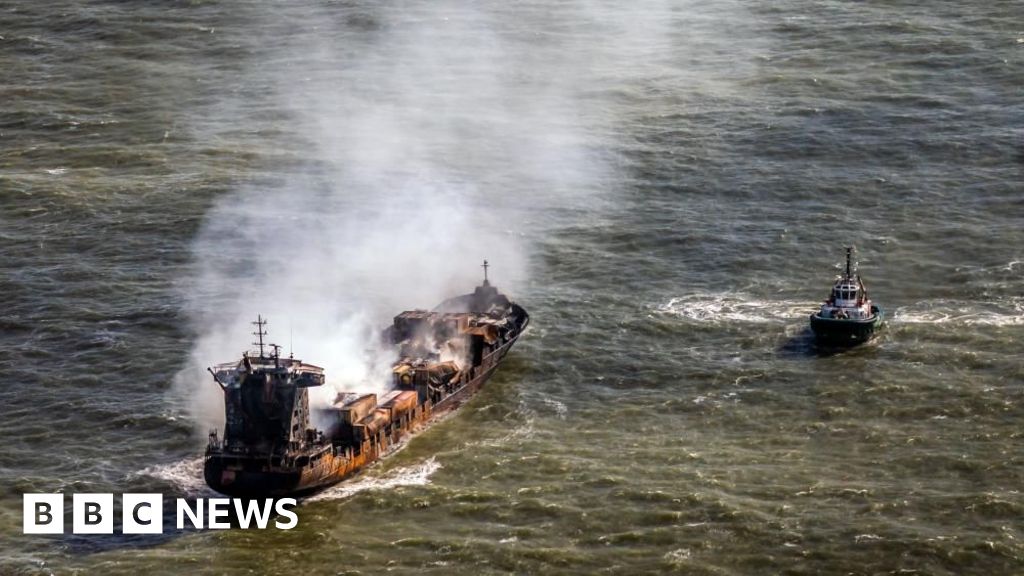
North Sea tanker crash: The deafening silence that implicated Solong captainImage Credit: BBC News
Key Points
- •LONDON – In a case that has sent ripples through the maritime insurance and shipping industries, it was a moment of profound inaction, captured on video, that proved the most damning evidence against the captain of the cargo ship Solong. The jury heard how Captain Vladimir Motin’s “deafening silence” in the moments following a catastrophic collision with a stationary tanker stood in stark contrast to the urgent, professional response on the vessel he struck, ultimately sealing his conviction.
- •Urgency on the Stena Immaculate: On the bridge of the anchored tanker, the VDR captured the sounds of alarms, shouted commands, and the immediate, coordinated response of a crew trained for emergencies. Officers were seen rushing to assess damage, initiate safety protocols, and make urgent radio calls, demonstrating a textbook reaction to an unforeseen crisis.
- •Silence on the Solong: In stark contrast, the VDR from the Solong revealed a scene of eerie calm. Following the loud, jarring impact, the bridge remained silent. No alarms were sounded by the crew, no orders were given by Captain Motin, and no immediate report was made. Investigators testified that this lack of response was "unprecedented" and indicated a complete failure of situational awareness and professional duty.
- •Improper Watchkeeping: Evidence suggested Captain Motin was the sole person on the bridge for an extended period, a violation of international maritime safety standards which often require a dedicated lookout in addition to the officer of the watch.
- •Over-reliance on Autopilot: The vessel remained on a fixed autopilot setting, with no manual intervention even as it closed in on the massive, stationary tanker.
North Sea tanker crash: The deafening silence that implicated Solong captain
LONDON – In a case that has sent ripples through the maritime insurance and shipping industries, it was a moment of profound inaction, captured on video, that proved the most damning evidence against the captain of the cargo ship Solong. The jury heard how Captain Vladimir Motin’s “deafening silence” in the moments following a catastrophic collision with a stationary tanker stood in stark contrast to the urgent, professional response on the vessel he struck, ultimately sealing his conviction.
The verdict concludes a closely watched trial examining the events of a clear afternoon in the North Sea, when the 90-meter general cargo ship Solong ploughed into the anchored 183-meter tanker Stena Immaculate. The incident raised critical questions about bridge manning, automation, and the fundamental duties of command at sea.
A Tale of Two Bridges
The prosecution's case hinged on voyage data recorder (VDR) footage from both vessels, which painted two vastly different pictures of crew conduct.
"The jury saw two very different reactions to the collision," Detective Chief Superintendent Craig Nicholson of the port authority police stated outside the courtroom. He described the footage as the pivotal element that allowed jurors to understand the negligence involved.
-
Urgency on the Stena Immaculate: On the bridge of the anchored tanker, the VDR captured the sounds of alarms, shouted commands, and the immediate, coordinated response of a crew trained for emergencies. Officers were seen rushing to assess damage, initiate safety protocols, and make urgent radio calls, demonstrating a textbook reaction to an unforeseen crisis.
-
Silence on the Solong: In stark contrast, the VDR from the Solong revealed a scene of eerie calm. Following the loud, jarring impact, the bridge remained silent. No alarms were sounded by the crew, no orders were given by Captain Motin, and no immediate report was made. Investigators testified that this lack of response was "unprecedented" and indicated a complete failure of situational awareness and professional duty.
The Collision Course
The incident occurred 14 nautical miles off the Humber estuary, a critical artery for UK trade and energy imports. The Stena Immaculate, a modern tanker operated by Stena Bulk, was laden with jet fuel and safely at anchor in a designated waiting area, visible for miles on radar and to the naked eye.
The Solong, carrying a cargo of timber and operated by a BVI-based firm, was on a direct course for the stationary tanker for over an hour. Analysis from the UK's Marine Accident Investigation Branch (MAIB) later confirmed that despite multiple automated and radio warnings, the Solong made no attempt to alter its course or speed.
Key Failures Presented in Court
The MAIB report, which formed a cornerstone of the prosecution, highlighted several critical safety breaches aboard the Solong:
-
Improper Watchkeeping: Evidence suggested Captain Motin was the sole person on the bridge for an extended period, a violation of international maritime safety standards which often require a dedicated lookout in addition to the officer of the watch.
-
Over-reliance on Autopilot: The vessel remained on a fixed autopilot setting, with no manual intervention even as it closed in on the massive, stationary tanker.
-
Ignored Alarms: The ship’s Bridge Navigational Watch Alarm System (BNWAS), designed to prevent an officer from falling asleep by requiring regular interaction, was found to have been either disabled or repeatedly reset without proper visual checks of the ship's path.
Financial and Industry Implications
While the collision thankfully resulted in no major oil spill or loss of life, the financial and regulatory fallout is substantial. The incident has become a case study for maritime insurers, regulators, and fleet owners globally.
The damage to the double-hulled Stena Immaculate ran into the tens of millions of dollars for repairs alone, triggering a complex insurance claim. The less-robust Solong sustained severe bow damage, rendering it inoperable.
-
Insurance Liability: The clear evidence of gross negligence places the liability squarely on the Solong's owners and their Protection & Indemnity (P&I) club. These mutual insurance associations face covering not only the physical damage to both vessels but also the significant costs of business interruption for Stena Bulk, whose asset was taken out of service for months.
-
Regulatory Scrutiny: The International Maritime Organization (IMO) and national bodies like the UK's Maritime and Coastguard Agency (MCA) are expected to review the incident closely. The case adds weight to the argument for stricter enforcement of watchkeeping standards and audits of how crews use and interact with automated navigation systems.
-
Supply Chain Integrity: The crash forced a temporary suspension of vessel movements near the busy Humber estuary, a stark reminder of how a single incident can disrupt vital supply chains. Port authorities are re-evaluating traffic management protocols in anchorage zones to mitigate future risks.
Next Steps
Captain Vladimir Motin was found guilty of conduct endangering ships, structures, or individuals under the Merchant Shipping Act. He is scheduled to be sentenced next month and faces a potential prison term.
For the wider shipping world, the verdict is a powerful affirmation that technology and automation are aids to, not replacements for, the vigilant, professional mariner. The deafening silence on the bridge of the Solong will echo as a cautionary tale in boardrooms and on bridges for years to come, a stark reminder of the immense responsibility that comes with command at sea and the catastrophic cost of its failure.
Source: BBC News
Related Articles
Nationwide Protests Against ICE Enforcement Erupt in U.S.
Thousands are protesting ICE after the DOJ declined to investigate a fatal agent-involved shooting in Minneapolis, fueling a national movement and public anger.
Venezuela Amnesty Bill Could Free Political Prisoners
Learn about Venezuela's proposed amnesty bill to release political prisoners. The move could signal a major political shift and affect future economic sanctions
Pokémon Cancels Yasukuni Shrine Event After Backlash
The Pokémon Company has canceled an event at Tokyo's controversial Yasukuni Shrine after facing international backlash from China and South Korea.
US to Lose Measles Elimination Status: What It Means
The U.S. is poised to lose its measles elimination status due to escalating outbreaks. Learn what this downgrade means for public health and the economy.