Norway's King Harald V Dies at 89; Son Becomes King
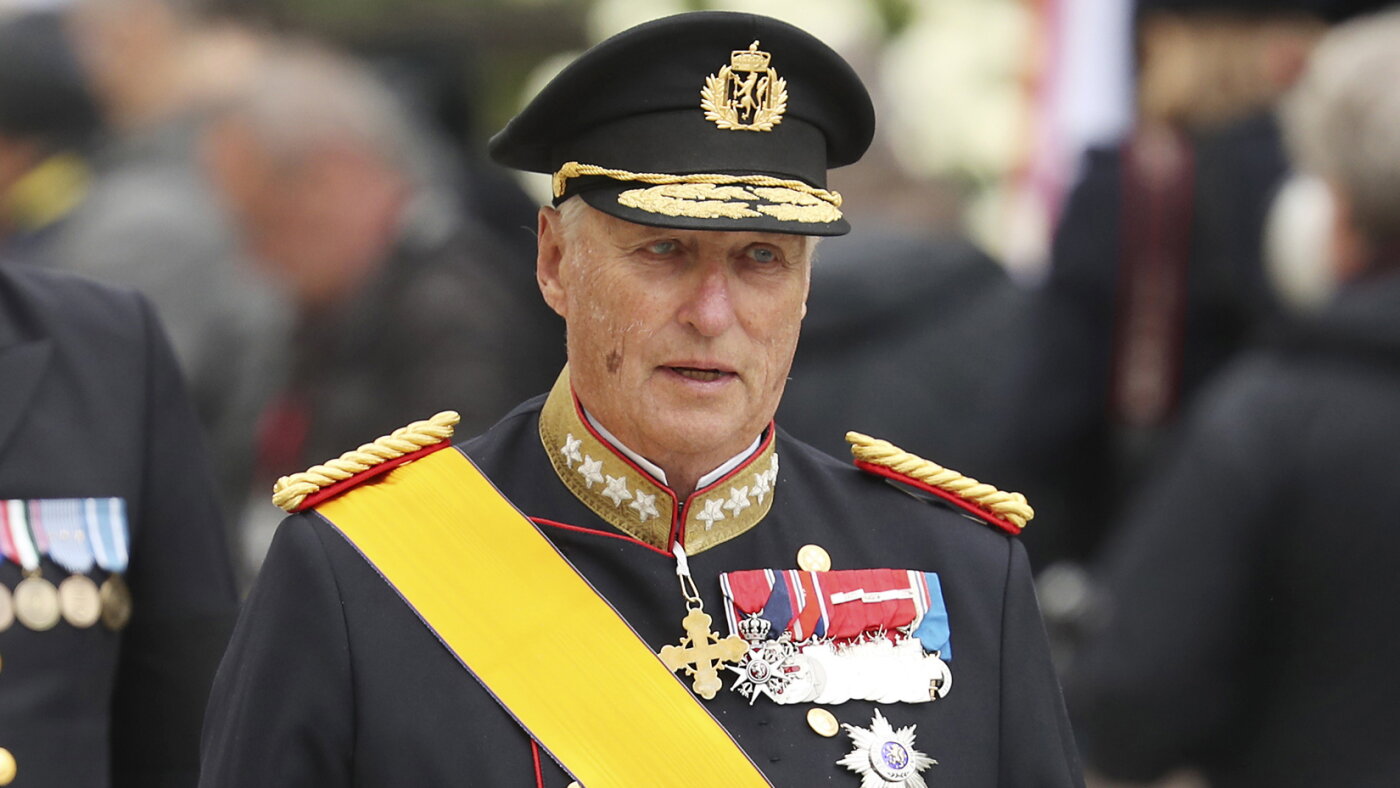
Norway's King Harald V dies at 89 and his son becomes King Haakon VIIIImage Credit: NPR Politics
Key Points
- •OSLO – King Harald V of Norway, the nation's steadfast monarch for over three decades and a unifying symbol who guided the country through an era of profound economic transformation, has died at the age of 89. His death marks the end of a reign that connected modern Norway with the crucible of World War II and saw the monarchy adapt to the 21st century.
- •Economic Stewardship: While political power rests with the elected parliament, King Harald's reign coincided with Norway's meteoric rise as an economic powerhouse. The prudent management of its North Sea oil revenues led to the creation of the Government Pension Fund Global, now the world's largest sovereign wealth fund, worth over $1.5 trillion. The King provided a symbol of continuity and national pride during this period of rapid change.
- •A Unifying Voice: The King’s ability to capture the national mood was never more evident than in the aftermath of the July 22, 2011, terror attacks by right-wing extremist Anders Behring Breivik. In a deeply emotional speech, he provided comfort and resolve to a traumatized nation. "I remain convinced that the belief in freedom is stronger than fear," he declared, reinforcing Norway's commitment to an open, democratic society.
- •Champion of Inclusivity: In 2016, King Harald delivered a landmark speech that went viral globally. Celebrating diversity, he stated, "Norwegians are girls who love girls, boys who love boys, and girls and boys who love each other." He spoke of Norwegians who believe in God, Allah, both, or neither, and embraced immigrants from across the world as integral to the nation's fabric. The speech was seen as a powerful endorsement of LGBTQ+ rights and multiculturalism, cementing his image as a truly modern monarch.
- •Born for the Throne: Born in 1937, he was the first Norwegian prince born on home soil in 567 years, a significant event for a monarchy that was itself only re-established in 1905 after the dissolution of its union with Sweden.
Norway's King Harald V Dies at 89; Son Ascends Throne as King Haakon VIII
OSLO – King Harald V of Norway, the nation's steadfast monarch for over three decades and a unifying symbol who guided the country through an era of profound economic transformation, has died at the age of 89. His death marks the end of a reign that connected modern Norway with the crucible of World War II and saw the monarchy adapt to the 21st century.
The Royal Palace announced he passed away at 6:35 a.m. Friday at the National Hospital in Oslo. As Europe's oldest reigning monarch, his steadfast refusal to abdicate, even amidst declining health, underscored a deep-seated commitment to his lifelong duty.
Upon his father's death, Crown Prince Haakon automatically ascended to the throne, becoming His Majesty King Haakon VIII.
In a nation where the monarchy's role is largely ceremonial, King Harald V commanded immense personal popularity and respect. He served as a figure of stability and national identity, presiding over a period where Norway's oil and gas wealth propelled it to the forefront of the global economy.
"A whole nation is in mourning and the people of Norway are left with a deep sense of gratitude for a long life in the service of Norway," Prime Minister Jonas Gahr Støre said in a statement. "For more than three decades as monarch, Harald V demonstrated an unwavering faith in the Norwegian people. He helped us to see the best in ourselves — and in one another."
Funeral arrangements have not yet been announced.
A Reign of Modernization and Unity
King Harald V ascended the throne on January 21, 1991, following the death of his father, King Olav V. He adopted the family motto, "All for Norway," a promise he fulfilled by skillfully navigating the monarchy's place within a progressive, democratic society.
His reign was defined by a quiet modernization of the royal house, ensuring its continued relevance. This began long before he was king, with his determination to marry a commoner, and continued with his public stances on inclusivity and tolerance.
-
Economic Stewardship: While political power rests with the elected parliament, King Harald's reign coincided with Norway's meteoric rise as an economic powerhouse. The prudent management of its North Sea oil revenues led to the creation of the Government Pension Fund Global, now the world's largest sovereign wealth fund, worth over $1.5 trillion. The King provided a symbol of continuity and national pride during this period of rapid change.
-
A Unifying Voice: The King’s ability to capture the national mood was never more evident than in the aftermath of the July 22, 2011, terror attacks by right-wing extremist Anders Behring Breivik. In a deeply emotional speech, he provided comfort and resolve to a traumatized nation. "I remain convinced that the belief in freedom is stronger than fear," he declared, reinforcing Norway's commitment to an open, democratic society.
-
Champion of Inclusivity: In 2016, King Harald delivered a landmark speech that went viral globally. Celebrating diversity, he stated, "Norwegians are girls who love girls, boys who love boys, and girls and boys who love each other." He spoke of Norwegians who believe in God, Allah, both, or neither, and embraced immigrants from across the world as integral to the nation's fabric. The speech was seen as a powerful endorsement of LGBTQ+ rights and multiculturalism, cementing his image as a truly modern monarch.
A Life Forged in Exile and Duty
Harald's life story was inextricably linked to the defining conflict of the 20th century.
-
Born for the Throne: Born in 1937, he was the first Norwegian prince born on home soil in 567 years, a significant event for a monarchy that was itself only re-established in 1905 after the dissolution of its union with Sweden.
-
A Wartime Childhood: He was just three years old when Nazi Germany invaded Norway in 1940. While his grandfather, King Haakon VII, and father, Crown Prince Olav, went into exile in London to lead the resistance, young Harald fled with his mother and sisters. They journeyed first to Sweden and then to the United States, where they lived near Washington, D.C., and were frequent guests of President Franklin D. Roosevelt at the White House.
-
A Royal Athlete: Like his father, an Olympic sailing champion, Harald was a passionate and accomplished sportsman. He represented Norway in sailing at three Olympic Games (1964, 1968, and 1972) and won a World Championship gold medal with his crew in 1987.
The Succession: A New Era Begins
The transition to the new monarch, King Haakon VIII, is expected to be seamless, marking the continuation of a well-prepared line.
King Haakon, 51, has been an active and visible member of the royal family for decades, undertaking official duties both at home and abroad. Educated at the University of California, Berkeley, and the London School of Economics, he is seen as a thoughtful and modern royal who shares his father's progressive values.
A key reform during King Harald's reign was the 1990 alteration of the Norwegian Constitution to introduce absolute primogeniture, allowing the first-born child to inherit the throne regardless of gender. The law was not applied retroactively, meaning Crown Prince Haakon retained his place ahead of his older sister, Princess Märtha Louise.
As Norway enters a period of official mourning, the nation reflects on the legacy of a king who was both a symbol of tradition and an agent of change. King Harald V successfully redefined what it means to be a monarch in the modern age, leaving behind a strong and popular institution for his successor. The challenge for King Haakon VIII will be to build on that foundation, ensuring the Norwegian monarchy remains a relevant and unifying force for generations to come.
Source: NPR Politics
Related Articles
Nationwide Protests Against ICE Enforcement Erupt in U.S.
Thousands are protesting ICE after the DOJ declined to investigate a fatal agent-involved shooting in Minneapolis, fueling a national movement and public anger.
Venezuela Amnesty Bill Could Free Political Prisoners
Learn about Venezuela's proposed amnesty bill to release political prisoners. The move could signal a major political shift and affect future economic sanctions
Pokémon Cancels Yasukuni Shrine Event After Backlash
The Pokémon Company has canceled an event at Tokyo's controversial Yasukuni Shrine after facing international backlash from China and South Korea.
US to Lose Measles Elimination Status: What It Means
The U.S. is poised to lose its measles elimination status due to escalating outbreaks. Learn what this downgrade means for public health and the economy.