How Olympic Figure Skaters Recover After a Fall on Ice
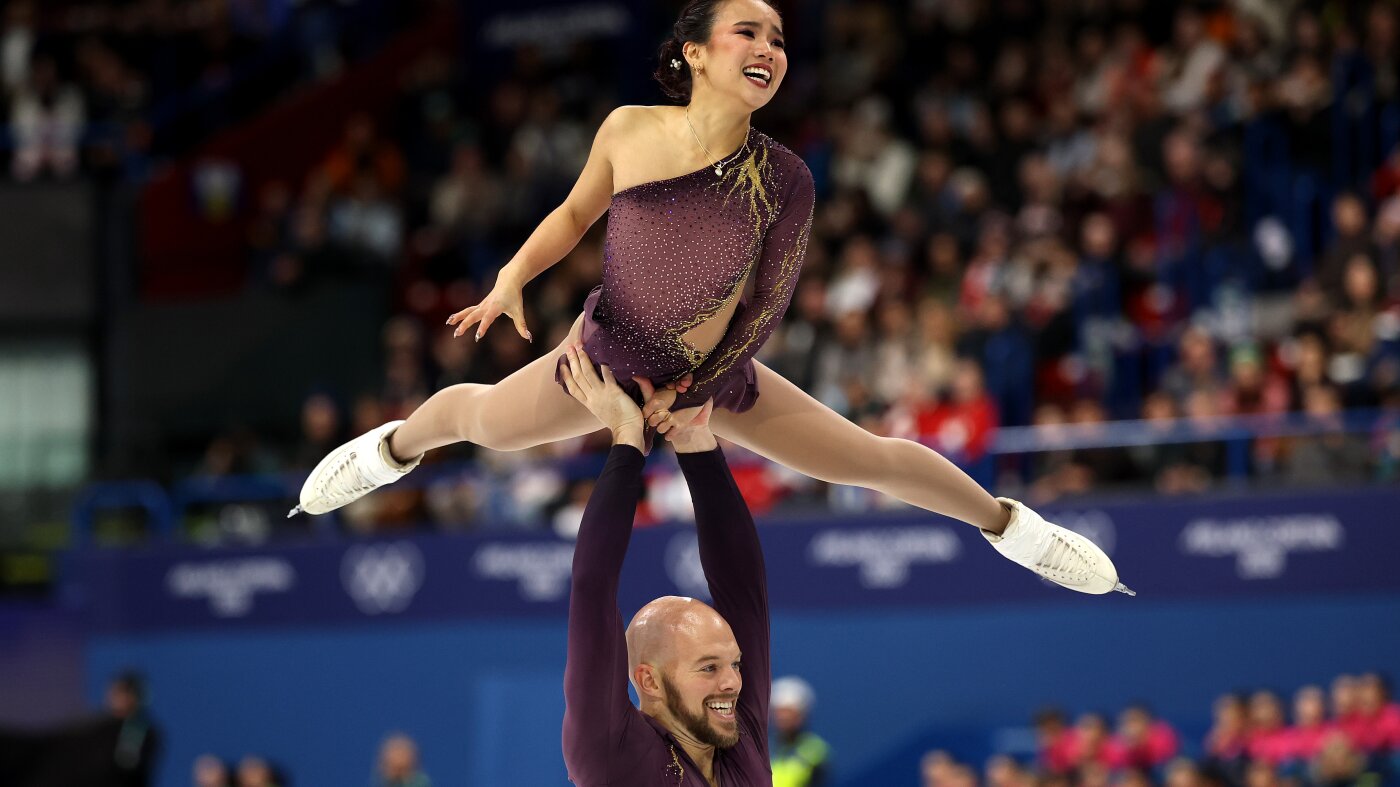
After the Fall: How Olympic figure skaters soar after stumbling on the iceImage Credit: NPR News
Key Points
- •MILAN – In the rarefied air of Olympic competition, where a lifetime of training is compressed into four minutes of high-stakes performance, perfection is the goal but failure is a constant shadow. For American pair skaters Ellie Kam and Danny O'Shea, that shadow materialized Friday on the ice in Milan. Mid-routine, a seamless blend of power and grace was broken by the hard, sudden sound of a fall. The moment, a potential catastrophe for their Olympic dreams, instead became a masterclass in professional resilience.
- •Intensive Preparation: "We focus [in training], so that if something does go wrong in competition, we don't have to question anything," Kam explained. This is the core of their resilience. It’s not just about practicing the routine to perfection, but about rehearsing the recovery from imperfection. This muscle memory, built over thousands of hours, automates the response to error, removing hesitation when it is most costly.
- •Real-Time Communication: "We definitely look at each other," O'Shea, 34, noted. "In that moment, it's a deep breath. It's like, all right, calm, one more thing, spin." This verbal and non-verbal communication acts as an immediate system reset. It acknowledges the error, purges the emotional response, and refocuses the team on the immediate next task, preventing one mistake from cascading into a total program failure.
- •Compartmentalization: "We put the past in the past, and stepped right into the next element," O'Shea stated. This psychological discipline is crucial. Elite performers train to mentally isolate a mistake, treating it as a sunk cost. Dwelling on the fall would compromise the execution of the remaining, and still valuable, elements of the program.
- •The Comeback: "When the music started again we didn't know where to start our elements," Zhang Dan said at the time. "Gradually... we became more and more clear in our minds how to do these elements." Despite the injury and the disorientation, they completed their program with poise and technical skill, earning a historic silver medal.
After the Fall: How Olympic figure skaters soar after stumbling on the ice
MILAN – In the rarefied air of Olympic competition, where a lifetime of training is compressed into four minutes of high-stakes performance, perfection is the goal but failure is a constant shadow. For American pair skaters Ellie Kam and Danny O'Shea, that shadow materialized Friday on the ice in Milan. Mid-routine, a seamless blend of power and grace was broken by the hard, sudden sound of a fall. The moment, a potential catastrophe for their Olympic dreams, instead became a masterclass in professional resilience.
What happens in the seconds after a fall—the physical shock, the sting of a thousandth of a point evaporating, the roar of the crowd turning to a gasp—separates the elite from the merely excellent. It is a lesson in crisis management executed at breathtaking speed, offering a powerful blueprint for performance under pressure in any field.
The Anatomy of an Instant Recovery
Kam and O'Shea’s response was not one of panic, but of process. Within a beat of k.d. Lang’s “Hallelujah” continuing its swell through the arena, Kam was back on her feet, re-engaging with O'Shea and flowing directly into the next element of their program. Their recovery was built on three pillars of elite performance.
-
Intensive Preparation: "We focus [in training], so that if something does go wrong in competition, we don't have to question anything," Kam explained. This is the core of their resilience. It’s not just about practicing the routine to perfection, but about rehearsing the recovery from imperfection. This muscle memory, built over thousands of hours, automates the response to error, removing hesitation when it is most costly.
-
Real-Time Communication: "We definitely look at each other," O'Shea, 34, noted. "In that moment, it's a deep breath. It's like, all right, calm, one more thing, spin." This verbal and non-verbal communication acts as an immediate system reset. It acknowledges the error, purges the emotional response, and refocuses the team on the immediate next task, preventing one mistake from cascading into a total program failure.
-
Compartmentalization: "We put the past in the past, and stepped right into the next element," O'Shea stated. This psychological discipline is crucial. Elite performers train to mentally isolate a mistake, treating it as a sunk cost. Dwelling on the fall would compromise the execution of the remaining, and still valuable, elements of the program.
The Strategic Calculus of Risk and Reward
Sometimes, a fall is not an unforced error but the consequence of a high-risk, high-reward strategy designed to seize victory. The history of the sport is filled with athletes who pushed the boundaries of what’s possible, understanding that a stumble was a potential cost of innovation.
The 2006 Winter Games in Torino provided one of the most dramatic examples. Chinese pair skaters Zhang Dan and Zhang Hao attempted a throw quadruple Salchow—a maneuver never before landed in a major competition. The gamble failed spectacularly. Zhang Dan was thrown high into the air but came down hard, her body collapsing into a painful split as her knee buckled.
After a tense delay where it seemed their competition was over, the pair stunningly returned to the ice.
-
The Comeback: "When the music started again we didn't know where to start our elements," Zhang Dan said at the time. "Gradually... we became more and more clear in our minds how to do these elements." Despite the injury and the disorientation, they completed their program with poise and technical skill, earning a historic silver medal.
-
The Takeaway: Their performance underscored a key principle: the initial plan had failed, but the ultimate objective—a medal—was still attainable. Their ability to recalibrate after a catastrophic failure and execute a new, modified plan under extreme duress is a testament to strategic thinking as much as physical courage.
The Psychology of Liberation Through Failure
For an athlete burdened by the expectation of perfection, a major error can, paradoxically, be liberating. This was the story of American Nathan Chen at the 2018 PyeongChang Olympics. After a disastrous short program where multiple falls left him in 17th place, his medal hopes appeared to be extinguished.
Freed from the pressure of contention, Chen approached his final free skate with a radically different mindset.
-
The 'Nothing to Lose' Mindset: "I already fell so many times, I might as well go out and throw everything down and see what happens," Chen told NPR. "Screw it, I have nothing to lose."
-
The Result: He proceeded to deliver the single greatest free skate in Olympic history, becoming the first skater to land six quadruple jumps. He won the free skate portion by a massive margin and vaulted from 17th place to 5th overall. Chen’s experience demonstrates how removing the fear of failure can unlock a performer’s maximum potential. The worst had already happened, allowing him to compete with an aggression and freedom he might not have otherwise accessed.
The Path Forward: Normalizing Minor Errors
Of course, the goal is to avoid major disasters and manage minor stumbles with such speed that they barely register. On Friday in Milan, 20-year-old American skater Alysa Liu did just that. After an awkward landing on a double axel, she could be seen grimacing for a split second before flawlessly executing her next jumps.
"I was like, whoopsies!" she said afterward with a laugh, dismissing the error. Her ability to instantly move on helped her secure a second-place finish in her segment and propelled the U.S. team into first place in the overall standings.
Even reigning champions are not immune. China’s Sui Wenjing and Han Cong, gold medalists from the 2022 Beijing Games, also suffered a surprising fall. "We just fell down, it's very strange," a perplexed Han Cong said, before immediately pivoting to the future: "We have time now to prepare for the next [event]."
Implications for High-Performance Teams
As the competition continues in Milan, the falls will inevitably come. But the key metric for success will not be the absence of error, but the quality of the response. The lessons from the ice are directly applicable to any high-stakes environment, from the trading floor to the corporate boardroom.
-
Strategic Resilience: The capacity to absorb a significant setback, recalibrate a strategy in real-time, and execute the next phase of a plan is the defining characteristic of a winning team. It requires a culture that trains for failure, not just success.
-
Leadership in Crisis: Like O'Shea talking his partner through a moment of crisis, leaders must provide the calm, clear, and forward-looking communication that allows a team to move past a mistake without losing focus on the ultimate goal.
The true spectacle at the Olympics is not the flawless, four-minute program. It is the human drama of seeing a plan fall apart and watching, in real-time, as discipline, training, and sheer force of will put it back together again. That is the performance that truly deserves a gold medal.
Source: NPR News
Related Articles
Nationwide Protests Against ICE Enforcement Erupt in U.S.
Thousands are protesting ICE after the DOJ declined to investigate a fatal agent-involved shooting in Minneapolis, fueling a national movement and public anger.
Venezuela Amnesty Bill Could Free Political Prisoners
Learn about Venezuela's proposed amnesty bill to release political prisoners. The move could signal a major political shift and affect future economic sanctions
Pokémon Cancels Yasukuni Shrine Event After Backlash
The Pokémon Company has canceled an event at Tokyo's controversial Yasukuni Shrine after facing international backlash from China and South Korea.
US to Lose Measles Elimination Status: What It Means
The U.S. is poised to lose its measles elimination status due to escalating outbreaks. Learn what this downgrade means for public health and the economy.