Pakistan Military Kills 92 Militants in Balochistan Op
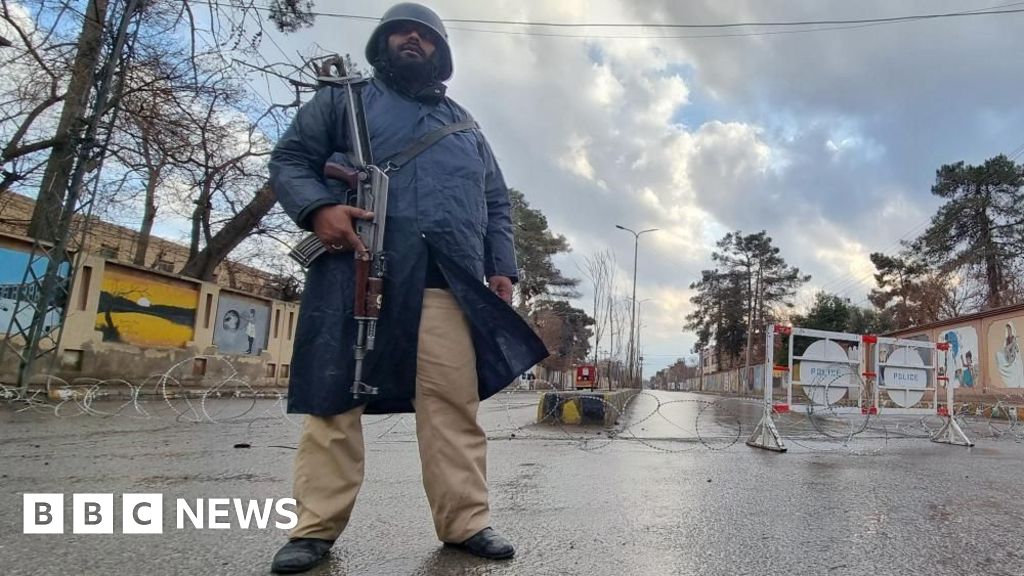
Pakistan military says 92 militants killed in BalochistanImage Credit: BBC News
Key Points
- •ISLAMABAD – A major Pakistani military operation in the restive Balochistan province has resulted in the deaths of 92 militants, according to a statement from the armed forces. The offensive highlights the escalating security challenges in a region critical to Pakistan's economic future, holding vast mineral wealth and the cornerstone of the multi-billion-dollar China-Pakistan Economic Corridor (CPEC).
- •The Operation: According to the ISPR, the operations were precise and aimed at dismantling the command-and-control structure of militant groups operating across the vast, arid terrain of Balochistan.
- •Official Statement: The military asserted that the operations were a direct response to a recent uptick in "terrorist activities" and were intended to "cripple the operational capacity" of the insurgents.
- •Casualties: While 92 militants were reported killed, officials have not released detailed figures on casualties sustained by security forces, a common practice in such announcements.
- •Geographic Significance: Covering nearly 44% of Pakistan's landmass, Balochistan shares long, porous borders with Iran and Afghanistan. Its coastline on the Arabian Sea is home to the strategically vital Gwadar Port.
Pakistan Military Says 92 Militants Killed in Balochistan
ISLAMABAD – A major Pakistani military operation in the restive Balochistan province has resulted in the deaths of 92 militants, according to a statement from the armed forces. The offensive highlights the escalating security challenges in a region critical to Pakistan's economic future, holding vast mineral wealth and the cornerstone of the multi-billion-dollar China-Pakistan Economic Corridor (CPEC).
The operation, conducted over several weeks, signals a hardened stance by the state against separatist insurgents who have long challenged Islamabad's authority. For investors and international partners, the violence underscores the persistent risk calculus associated with deploying capital in Pakistan's largest, yet most sparsely populated, province.
Security Operation Intensifies
The Pakistan military’s media wing, the Inter-Services Public Relations (ISPR), framed the recent actions as intelligence-based operations (IBOs) targeting hideouts of various banned Baloch militant organizations. These groups have been responsible for a string of attacks on security forces, state infrastructure, and, increasingly, projects linked to foreign investment.
The announcement comes as Pakistan seeks to reassure its key economic partner, China, and other potential investors of its ability to secure major development projects.
- The Operation: According to the ISPR, the operations were precise and aimed at dismantling the command-and-control structure of militant groups operating across the vast, arid terrain of Balochistan.
- Official Statement: The military asserted that the operations were a direct response to a recent uptick in "terrorist activities" and were intended to "cripple the operational capacity" of the insurgents.
- Casualties: While 92 militants were reported killed, officials have not released detailed figures on casualties sustained by security forces, a common practice in such announcements.
Why Balochistan is a Geopolitical Flashpoint
The conflict in Balochistan is rooted in a complex mix of geography, economics, and historical grievances. The province's strategic importance far outweighs its small population, making it a focal point for both internal conflict and regional power plays. Its stability is not just a domestic concern for Pakistan but a key variable in regional trade and energy politics.
The sheer scale of the province, combined with its challenging terrain, provides a natural advantage to insurgent groups engaging in guerrilla warfare.
- Geographic Significance: Covering nearly 44% of Pakistan's landmass, Balochistan shares long, porous borders with Iran and Afghanistan. Its coastline on the Arabian Sea is home to the strategically vital Gwadar Port.
- Resource Wealth: The province is Pakistan's richest in natural resources. It holds the country's largest natural gas reserves (notably the Sui gas fields), significant deposits of copper, gold, coal, and other minerals.
- The Demographics of Grievance: Despite its resource wealth, Balochistan is Pakistan's least developed province. Home to just 5% of the country's population, many ethnic Baloch feel they have been politically marginalized and economically exploited, receiving little benefit from the resources extracted from their land.
Billions in Investment at Risk
The long-running insurgency poses a direct threat to tens of billions of dollars in current and planned investments, which are central to Pakistan's strategy for economic revival. Militant groups have explicitly declared these economic projects as primary targets, viewing them as instruments of what they call "colonial exploitation" by the Pakistani state and foreign powers.
This dynamic places the Pakistani military in the dual role of fighting an insurgency while simultaneously acting as the primary security guarantor for massive infrastructure and mining projects.
- China-Pakistan Economic Corridor (CPEC): A flagship $62 billion infrastructure network under China's Belt and Road Initiative (BRI), CPEC's success hinges on Balochistan. The corridor's land and sea routes culminate at Gwadar Port.
- Gwadar Port: Developed with Chinese financing, Gwadar is envisioned as a deep-water commercial hub that would provide China with a critical trade link to the Arabian Sea, bypassing the congested Malacca Strait. Attacks on convoys and personnel along CPEC routes are frequent.
- Reko Diq Mine: The province is home to one of the world's largest undeveloped copper and gold deposits at Reko Diq. A landmark $7 billion agreement was recently revived with Canada's Barrick Gold to develop the mine, a deal contingent on long-term security and stability.
A Decades-Old Conflict
The current wave of violence is part of an insurgency that has ebbed and flowed for decades. Baloch nationalist groups demand greater autonomy, a larger share of the province's resource revenue, and an end to perceived human rights abuses.
These grievances have fueled several armed uprisings since Pakistan's creation in 1947. The modern insurgency, which gained momentum in the early 2000s, has become more sophisticated, with groups like the Baloch Liberation Army (BLA) and the Balochistan Liberation Front (BLF) carrying out high-profile attacks. The state, in turn, has responded with a heavy security presence and counter-insurgency operations that have drawn criticism from human rights organizations.
Implications and The Path Forward
The killing of 92 militants is a tactical victory for the Pakistani military, but the strategic challenge of resolving the Baloch conflict remains formidable. The government's approach appears to be a two-pronged strategy: suppress the insurgency with force while attempting to win over the population with development promises. The effectiveness of this model is the central question for the region's future.
- Investor Confidence: For foreign entities like Barrick Gold and Chinese state-owned enterprises, continued violence compounds the risk profile. The success of these ventures will depend heavily on the Pakistani state's ability to create a secure environment, a task that has proven difficult for over a generation.
- Pakistan's Strategy: The security-led approach, while potentially degrading militant capabilities in the short term, may not address the underlying political and economic grievances that fuel the insurgency. A sustainable solution will likely require a more robust political dialogue alongside security measures.
- Regional Dynamics: The conflict has a regional dimension, with Islamabad frequently accusing rival India of backing Baloch separatists to destabilize Pakistan—a charge New Delhi denies. The stability of Balochistan is also a concern for neighboring Iran, which faces its own low-level insurgency from its ethnic Baluch population.
Ultimately, the long-term economic viability of CPEC and the future of foreign investment in Pakistan's resource sector are inextricably linked to the resolution of the conflict in Balochistan. This latest military offensive marks another chapter in a long and complex struggle, with the outcome holding profound implications for Pakistan's stability and the geopolitical landscape of South and Central Asia.
Source: BBC News
Related Articles
Nationwide Protests Against ICE Enforcement Erupt in U.S.
Thousands are protesting ICE after the DOJ declined to investigate a fatal agent-involved shooting in Minneapolis, fueling a national movement and public anger.
Venezuela Amnesty Bill Could Free Political Prisoners
Learn about Venezuela's proposed amnesty bill to release political prisoners. The move could signal a major political shift and affect future economic sanctions
Pokémon Cancels Yasukuni Shrine Event After Backlash
The Pokémon Company has canceled an event at Tokyo's controversial Yasukuni Shrine after facing international backlash from China and South Korea.
US to Lose Measles Elimination Status: What It Means
The U.S. is poised to lose its measles elimination status due to escalating outbreaks. Learn what this downgrade means for public health and the economy.