Pakistani Brewery Resumes Beer Exports After 50-Year Ban
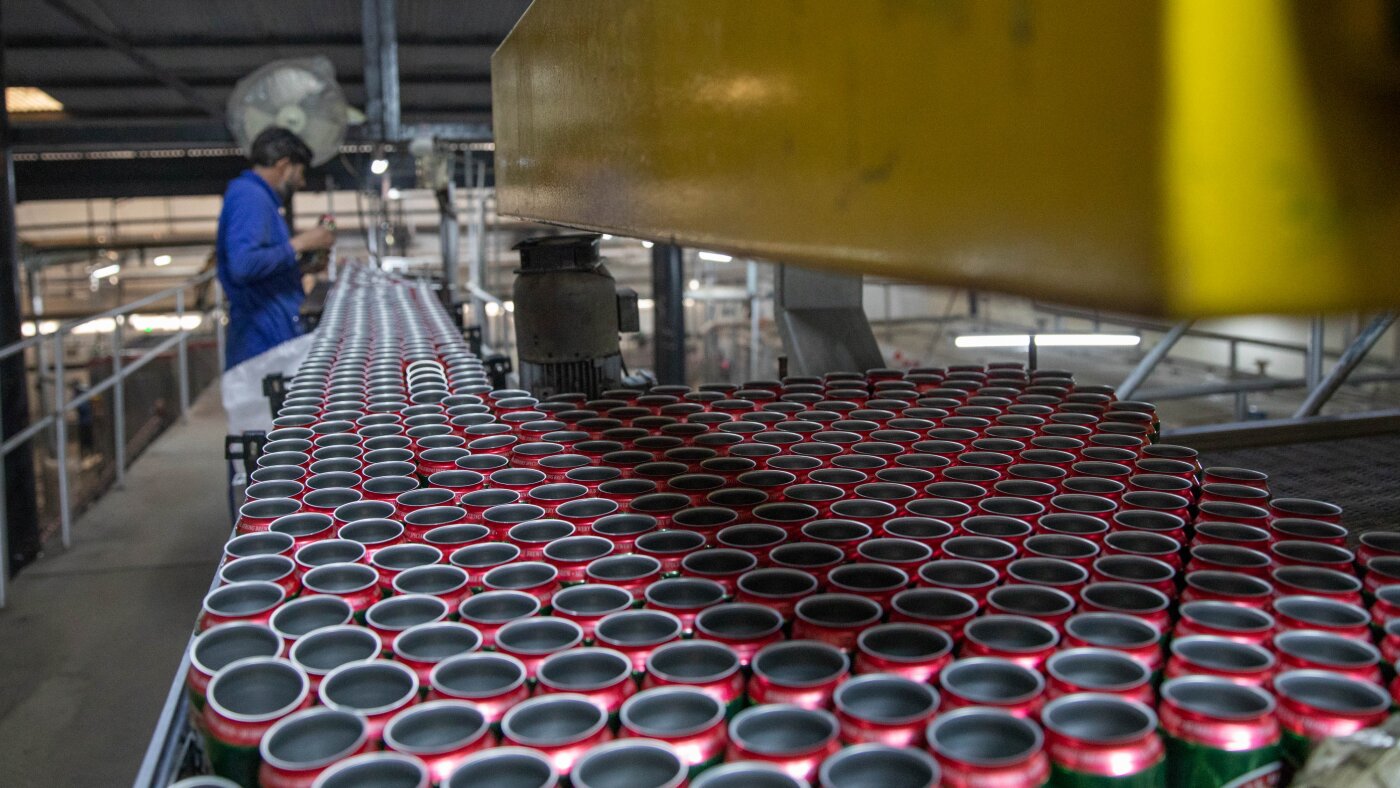
With decades-long restrictions lifted, a Pakistani brewery has started exporting beerImage Credit: NPR Business
Key Points
- •RAWALPINDI, Pakistan – In a landmark shift for one of Pakistan's most iconic and paradoxical companies, Murree Brewery has resumed international beer exports after a nearly 50-year government ban. The move, driven by Pakistan's pressing need for foreign exchange revenue, reopens global markets for a brand that has navigated a complex existence within an Islamic republic for generations. The first shipments of its flagship beer have already reached the United Kingdom, Portugal, and Japan, with ambitious plans for further expansion into North America.
- •The Core Driver: CEO Isphanyar Bhandara directly attributes the policy change to economic necessity. "The government benefits if we export," he stated, highlighting the mutual advantage of the arrangement. Pakistan's government is actively seeking ways to boost its foreign currency reserves, and exports are a primary vehicle for this.
- •Domestic Market Constraints: Murree’s official domestic market is severely limited. While Pakistan has a population of around 250 million, alcohol sales are legally restricted to the country's non-Muslim minority—approximately 9 million people, or less than 4% of the population—and foreign visitors with permits. This cap has naturally pushed the company to seek growth opportunities abroad.
- •The Policy Change: The breakthrough came via a 2022 amendment to Pakistan's export policy. The new rules permit the export of alcoholic beverages to countries that are not members of the Organisation of Islamic Cooperation (OIC), a 57-nation bloc. This provided the precise legal framework Murree had been lobbying for for decades.
- •The Prohibition Era: The most significant challenge came in 1977, when then-Prime Minister Zulfikar Ali Bhutto imposed a nationwide prohibition on alcohol for Muslims. This was later tightened by military dictator Gen. Muhammad Zia-ul-Haq, who introduced harsh Islamic punishments for drinking.
With decades-long restrictions lifted, a Pakistani brewery has started exporting beer
RAWALPINDI, Pakistan – In a landmark shift for one of Pakistan's most iconic and paradoxical companies, Murree Brewery has resumed international beer exports after a nearly 50-year government ban. The move, driven by Pakistan's pressing need for foreign exchange revenue, reopens global markets for a brand that has navigated a complex existence within an Islamic republic for generations. The first shipments of its flagship beer have already reached the United Kingdom, Portugal, and Japan, with ambitious plans for further expansion into North America.
This development marks a new chapter for the 19th-century brewery, which has survived colonial rule, partition, and strict domestic prohibition. For the first time since 1977, the sight of Murree's golden lager being prepared for overseas markets signals a pragmatic turn in national policy, prioritizing economic benefit over long-held restrictions.
A Strategic Pivot Driven by Economics
The decision to lift the export ban is a significant policy reversal, rooted firmly in Pakistan's current economic climate. The government stands to gain much-needed revenue from taxes and duties on these international sales, a point heavily emphasized by the company's leadership.
- The Core Driver: CEO Isphanyar Bhandara directly attributes the policy change to economic necessity. "The government benefits if we export," he stated, highlighting the mutual advantage of the arrangement. Pakistan's government is actively seeking ways to boost its foreign currency reserves, and exports are a primary vehicle for this.
- Domestic Market Constraints: Murree’s official domestic market is severely limited. While Pakistan has a population of around 250 million, alcohol sales are legally restricted to the country's non-Muslim minority—approximately 9 million people, or less than 4% of the population—and foreign visitors with permits. This cap has naturally pushed the company to seek growth opportunities abroad.
- The Policy Change: The breakthrough came via a 2022 amendment to Pakistan's export policy. The new rules permit the export of alcoholic beverages to countries that are not members of the Organisation of Islamic Cooperation (OIC), a 57-nation bloc. This provided the precise legal framework Murree had been lobbying for for decades.
A Storied History of Resilience
Murree Brewery is more than just a company; it's a piece of Pakistan's living history. Its ability to survive and now thrive is a testament to its unique position and the tenacity of its ownership.
Founded by the British during their colonial rule in the 19th century, the brewery was a fixture of pre-partition India. In 1947, the year of Pakistan's creation, it was acquired by the Bhandara family, who have steered the company through the nation's turbulent history ever since.
- The Prohibition Era: The most significant challenge came in 1977, when then-Prime Minister Zulfikar Ali Bhutto imposed a nationwide prohibition on alcohol for Muslims. This was later tightened by military dictator Gen. Muhammad Zia-ul-Haq, who introduced harsh Islamic punishments for drinking.
- A Paradoxical Survival: Despite the ban, the brewery was allowed to continue operating under a special provision to serve Pakistan's non-Muslim minorities and foreign nationals. This created the paradox of an Islamic republic hosting a thriving brewery, a situation that has defined the company for decades.
- The Family Factor: The Bhandara family's identity as members of the tiny Parsi minority—descendants of Persian Zoroastrians—has been a crucial element in their ability to operate the business for three generations in a predominantly Muslim nation.
Navigating the Path to Export
The journey to resuming exports was a long and arduous one, requiring decades of persistent lobbying and strategic patience. The Bhandara family's political engagement played a direct role in keeping the issue on the government's agenda.
- Generational Lobbying: The late Minocher Bhandara, who acquired the brewery with his father, served in Pakistan's parliament and consistently pushed for the export ban to be lifted. His son, current CEO Isphanyar Bhandara, continued this advocacy after taking over in 2008, also serving as a member of parliament.
- Overcoming Ideological Hurdles: The primary reason for the original export ban was ideological. "The theory behind the export ban was that an Islamic country should not be seen as exporting a vice," explains Isphanyar Bhandara. The recent policy shift indicates that economic pragmatism has now superseded this long-standing concern.
- Cautious Execution: Despite receiving the green light, the company proceeded with caution. Export manager Ramiz Shah noted initial uncertainty about the process. "Initially, we were not confident that all of the things will go smooth," he said. A successful test shipment to the U.K. last spring helped validate the new logistics and regulatory chain.
The Road Ahead: Global Ambitions
With the first international shipments successfully completed, Murree Brewery is now focused on a strategic global expansion. The company is leveraging its existing business infrastructure and brand recognition within the South Asian diaspora to secure a foothold in new markets.
- Leveraging Existing Networks: The initial distributors in the U.K. and Japan were already importing Murree's non-alcoholic products, such as juices and fruit-flavored malt drinks. This pre-existing relationship streamlined the process of introducing the company's beer to these markets.
- Targeting New Markets: The company is now actively looking to expand its sales to other major markets, with a particular focus on the United States and Canada. These countries have large, established markets for international beers and significant South Asian communities familiar with the Murree brand.
- A Diversified Portfolio: The brewery's expansion into non-alcoholic beverages over the years was not only a strategy to survive domestic limitations but has now become a key enabler of its alcoholic export business. Since 2020, Murree has exported its alcohol-free products to over a dozen countries, building a global distribution network that it can now use for its full range of products.
For Murree Brewery, the lifting of the export ban is not just a business opportunity; it is the culmination of a 50-year struggle. As cans of its beer begin appearing on shelves from London to Tokyo, it represents a significant moment for the company and a noteworthy, economically-driven evolution in Pakistani policy.
Source: NPR Business
Related Articles
Nationwide Protests Against ICE Enforcement Erupt in U.S.
Thousands are protesting ICE after the DOJ declined to investigate a fatal agent-involved shooting in Minneapolis, fueling a national movement and public anger.
Venezuela Amnesty Bill Could Free Political Prisoners
Learn about Venezuela's proposed amnesty bill to release political prisoners. The move could signal a major political shift and affect future economic sanctions
Pokémon Cancels Yasukuni Shrine Event After Backlash
The Pokémon Company has canceled an event at Tokyo's controversial Yasukuni Shrine after facing international backlash from China and South Korea.
US to Lose Measles Elimination Status: What It Means
The U.S. is poised to lose its measles elimination status due to escalating outbreaks. Learn what this downgrade means for public health and the economy.