Partial government shutdown enters third day as funding stan
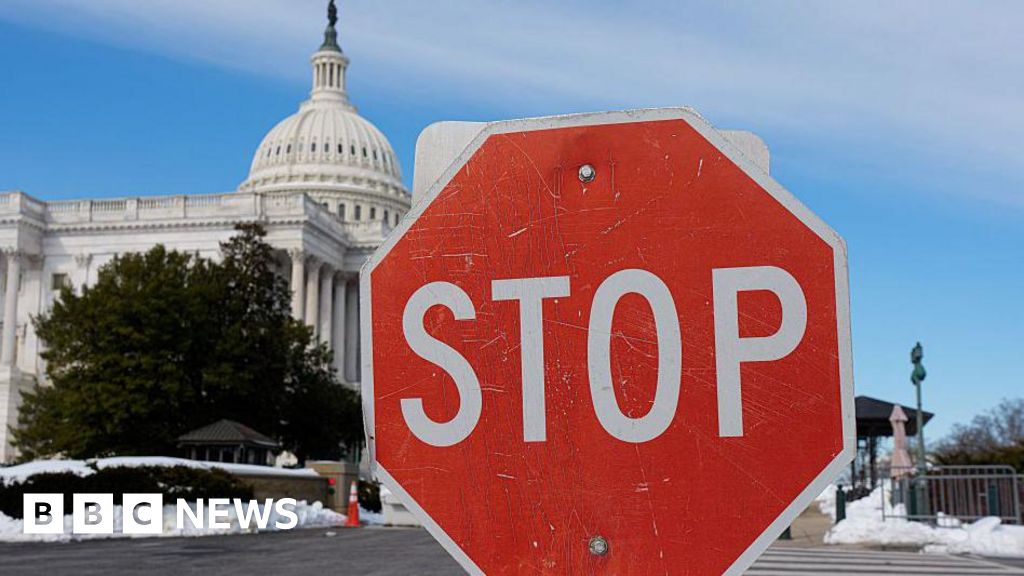
Partial government shutdown enters third day as funding standoff continuesImage Credit: BBC News
Key Points
- •WASHINGTON, D.C. – A partial U.S. government shutdown stretched into its third day on Monday, with no immediate resolution in sight as the House of Representatives remains deadlocked over a funding package. The impasse leaves several key federal agencies without a budget, forcing a halt to non-essential operations and placing hundreds of thousands of federal employees on furlough.
- •Federal Workforce: An estimated 800,000 federal employees are directly affected. "Essential" personnel, such as air traffic controllers, law enforcement, and active-duty military, will remain on the job without pay. Hundreds of thousands of "non-essential" workers have been instructed to stay home, facing the prospect of missing their next paycheck.
- •Government Services: The public can expect disruptions. National parks and museums are closed, passport and visa processing will see significant delays, and federal agencies like the Environmental Protection Agency (EPA) and the Internal Revenue Service (IRS) will have skeleton crews, slowing down regulatory work and taxpayer services.
- •Exempt Operations: Critical functions are protected from the shutdown by law. Social Security and Medicare payments will continue to go out, the U.S. Postal Service will operate as normal, and national security functions will be maintained.
- •Lost Productivity: Furloughed federal workers are not contributing to economic output.
Partial government shutdown enters third day as funding standoff continues
WASHINGTON, D.C. – A partial U.S. government shutdown stretched into its third day on Monday, with no immediate resolution in sight as the House of Representatives remains deadlocked over a funding package. The impasse leaves several key federal agencies without a budget, forcing a halt to non-essential operations and placing hundreds of thousands of federal employees on furlough.
The immediate economic impact has been cushioned by the weekend, a period when most federal services are naturally offline. But as the new work week begins, the financial and operational costs of the stalemate are set to escalate, raising concerns across financial markets and among businesses that rely on government services.
The Anatomy of the Impasse
The current shutdown stems from a fundamental disagreement between the Senate and a faction within the House majority over federal spending levels and policy priorities.
The Senate, with bipartisan support, passed a temporary funding measure late last week designed to keep the government open while broader budget negotiations continued. However, the bill stalled in the House.
House leadership has been unable to unite its caucus behind the Senate's "clean" continuing resolution (CR). A bloc of conservative members is demanding significant spending cuts and the inclusion of specific policy riders, which are opposed by the Senate and the White House. This legislative brinkmanship has become a recurring feature of fiscal deadlines in a divided Washington.
Key Sticking Points
At the heart of the standoff are competing visions for the nation's fiscal path. The House hardliners are leveraging the shutdown deadline to force concessions on issues ranging from border security funding to reductions in specific departmental budgets.
The White House has called the House's position untenable and has urged its leadership to pass the Senate's bipartisan bill immediately. Until one side blinks, the shutdown will continue.
Immediate and Visible Consequences
While essential services continue to operate, the shutdown's effects will become increasingly apparent to the public this week.
-
Federal Workforce: An estimated 800,000 federal employees are directly affected. "Essential" personnel, such as air traffic controllers, law enforcement, and active-duty military, will remain on the job without pay. Hundreds of thousands of "non-essential" workers have been instructed to stay home, facing the prospect of missing their next paycheck.
-
Government Services: The public can expect disruptions. National parks and museums are closed, passport and visa processing will see significant delays, and federal agencies like the Environmental Protection Agency (EPA) and the Internal Revenue Service (IRS) will have skeleton crews, slowing down regulatory work and taxpayer services.
-
Exempt Operations: Critical functions are protected from the shutdown by law. Social Security and Medicare payments will continue to go out, the U.S. Postal Service will operate as normal, and national security functions will be maintained.
The Economic Ripple Effect
Beyond the direct impact on federal workers, government shutdowns carry a substantial, if sometimes hidden, economic cost. Each day the stalemate persists, the financial fallout grows, affecting everything from investor confidence to the national debt.
Quantifying the Damage
Past shutdowns have provided a clear playbook for the economic consequences. The non-partisan Congressional Budget Office (CBO) estimated that the 35-day shutdown in 2018-2019 reduced real GDP by approximately $11 billion, with $3 billion of that lost permanently.
The costs accumulate through several channels:
- Lost Productivity: Furloughed federal workers are not contributing to economic output.
- Delayed Spending: Government contractors, from small businesses to major defense firms, face frozen payments and suspended projects, disrupting private-sector cash flow and investment.
- Reduced Consumer Confidence: The uncertainty created by political dysfunction can dampen consumer and business sentiment, leading to postponed spending and hiring decisions.
Market and Credit Rating Watch
Financial markets have so far reacted with caution rather than panic, conditioned by years of similar fiscal cliffs. However, a prolonged shutdown could test this resilience.
-
Investor Uncertainty: Extended political gridlock injects a level of unpredictability that markets dislike, potentially leading to increased volatility in equity markets.
-
Credit Rating Risk: International credit rating agencies are watching closely. In August, Fitch Ratings downgraded the U.S. long-term credit rating from AAA to AA+, explicitly citing "a steady deterioration in standards of governance over the last 20 years, including on fiscal and debt matters." A protracted shutdown would reinforce this narrative, potentially leading to further warnings from agencies like Moody's and S&P Global Ratings. A downgrade can increase the U.S. government's borrowing costs, an expense ultimately borne by taxpayers.
The Path Forward
With the weekend buffer now gone, pressure is mounting on all sides to find an off-ramp. There are three primary scenarios for what comes next:
-
A Quick Resolution: The House could relent and pass the Senate's funding bill, ending the shutdown this week. This would require a significant political shift from the holdouts.
-
A Short-Term Extension: Lawmakers could agree on an even shorter-term funding patch—perhaps for a week or two—to allow negotiations to continue without the pressure of an active shutdown. This "kick the can" approach is a common tactic.
-
A Protracted Stalemate: If neither side is willing to compromise, the shutdown could extend for weeks, significantly amplifying the economic damage and political fallout.
For now, Washington remains in a state of suspended animation. The coming days will be critical in determining whether this is a brief, disruptive blip or the start of a prolonged and costly period of government paralysis. All eyes are on the House floor, where the next move will decide the immediate fiscal fate of the nation.
Source: BBC News
Related Articles
Nationwide Protests Against ICE Enforcement Erupt in U.S.
Thousands are protesting ICE after the DOJ declined to investigate a fatal agent-involved shooting in Minneapolis, fueling a national movement and public anger.
Venezuela Amnesty Bill Could Free Political Prisoners
Learn about Venezuela's proposed amnesty bill to release political prisoners. The move could signal a major political shift and affect future economic sanctions
Pokémon Cancels Yasukuni Shrine Event After Backlash
The Pokémon Company has canceled an event at Tokyo's controversial Yasukuni Shrine after facing international backlash from China and South Korea.
US to Lose Measles Elimination Status: What It Means
The U.S. is poised to lose its measles elimination status due to escalating outbreaks. Learn what this downgrade means for public health and the economy.