Pentagon Shifts Strategy to Prioritize US Homeland Security
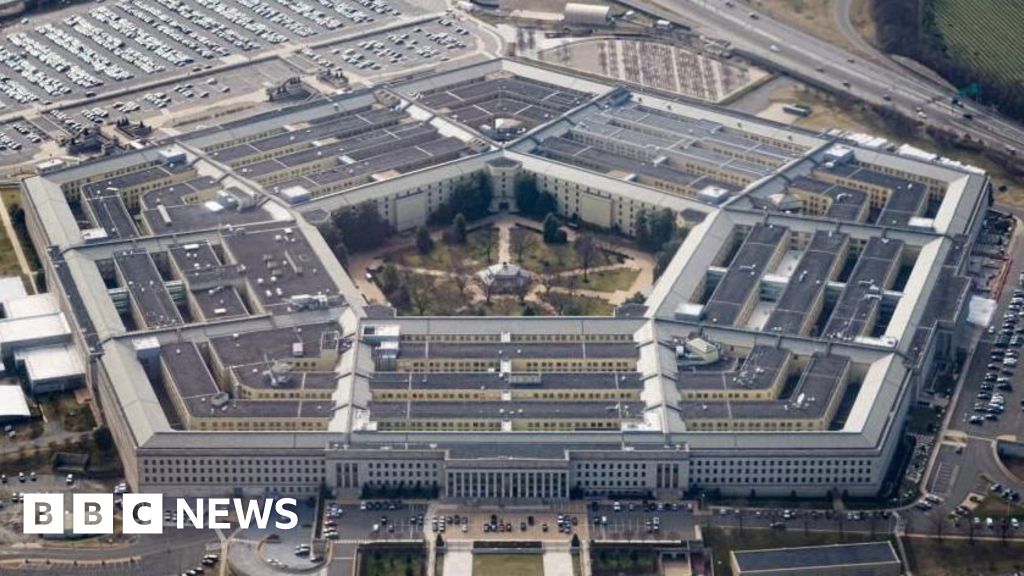
Pentagon to offer 'more limited' support to US alliesImage Credit: BBC News
Key Points
- •Homeland First: For the first time in recent cycles, the NDS identifies the Western Hemisphere—not the Indo-Pacific or Europe—as the primary theater of concern.
- •Strategic De-escalation: The U.S. will approach China through "strength, not confrontation," moving away from the 2018 classification of Beijing as a "revisionist power" and a "central challenge."
- •The End of Subsidies: Washington is signaling to NATO and Pacific partners that the era of the U.S. subsidizing international security is over.
- •The Shift: The U.S. will no longer view threats to distant allies as equivalent to threats to the American homeland.
- •European Responsibility: The document explicitly states that Europe must "take the lead" against threats that are "less severe for [the U.S.] but more so for them."
Pentagon Pivot: New Defense Strategy Prioritizes Homeland Over Global Policing
The United States Department of Defense has unveiled a landmark National Defense Strategy (NDS) that fundamentally reorders the nation’s security hierarchy. In a sharp departure from decades of post-Cold War doctrine, the 34-page document demotes China as the primary threat, instead elevating the security of the U.S. homeland and the Western Hemisphere to the top priority. The shift signals a new era of "hardnosed realism," characterized by a "more limited" support model for long-standing allies and a demand for immediate "burden-sharing" in global hotspots.
The Big Picture: From Globalism to Hemispheric Defense
The new strategy, released one year into President Donald Trump’s second term, represents the most significant recalibration of American military objectives in recent history. By focusing on "concrete interests" rather than "utopian idealism," the Pentagon is effectively drawing a defensive perimeter around the Americas.
Why it matters:
- Homeland First: For the first time in recent cycles, the NDS identifies the Western Hemisphere—not the Indo-Pacific or Europe—as the primary theater of concern.
- Strategic De-escalation: The U.S. will approach China through "strength, not confrontation," moving away from the 2018 classification of Beijing as a "revisionist power" and a "central challenge."
- The End of Subsidies: Washington is signaling to NATO and Pacific partners that the era of the U.S. subsidizing international security is over.
Redefining the Threat Landscape
The 2024 NDS replaces the expansive global ambitions of previous administrations with a concentrated focus on regional stability and resource protection.
The Russia-Ukraine Context
Despite the ongoing conflict in Eastern Europe, the Pentagon now classifies Russia as a "persistent but manageable threat" specifically to NATO’s eastern members.
- The Shift: The U.S. will no longer view threats to distant allies as equivalent to threats to the American homeland.
- European Responsibility: The document explicitly states that Europe must "take the lead" against threats that are "less severe for [the U.S.] but more so for them."
The China-Taiwan Equation
In a move likely to cause ripples in diplomatic circles, the new strategy makes no mention of Taiwan. This omission follows an $11 billion arms sale to the island late last year, but suggests a pivot toward strategic ambiguity or a lower prioritization of the cross-strait conflict.
- Economic Deterrence: While downplaying direct military confrontation, the report vows to prevent China from "dominating" the U.S. or its allies.
- Regional Autonomy: The U.S. expects regional players to manage their own immediate security environments.
North Korea and the Pacific
The strategy outlines a "more limited" role for U.S. deterrence on the Korean Peninsula.
- South Korea's Role: The Pentagon asserts that Seoul is now "capable of taking primary responsibility" for countering threats from Pyongyang.
The "Hardnosed Realism" Doctrine
The Pentagon describes this shift not as isolationism, but as a "focused and genuinely strategic approach." The document argues that previous administrations conflated American interests with those of the rest of the world to the detriment of domestic security.
Key Strategic Pillars:
- Burden-Sharing: Allies are expected to significantly increase defense spending and operational leadership.
- Access to Key Terrain: The Pentagon will prioritize guaranteeing military and commercial access to the Panama Canal, the "Gulf of America," and Greenland.
- Hemispheric Enforcement: The strategy follows a year of increased U.S. activity in the Americas, including the seizure of Venezuelan President Nicolás Maduro and aggressive anti-drug operations in the Caribbean and Eastern Pacific.
Comparing 2018 vs. Current Strategy
The evolution of the National Defense Strategy highlights a narrowing of the U.S. military's aperture:
| Feature | 2018 Strategy | Current Strategy |
|---|---|---|
| Top Priority | China & Russia ("Revisionist Powers") | U.S. Homeland & Western Hemisphere |
| Allied Engagement | Integrated Global Presence | "More Limited" Support / Burden-Sharing |
| Russia Status | Central Challenge to U.S. Security | Manageable Threat to Eastern NATO |
| Core Philosophy | Global Liberal Order | Hardnosed Realism |
Impact on Global Alliances
The "more limited" support model creates immediate pressure on traditional security architectures, most notably NATO and the U.S.-Japan-South Korea trilateral relationship.
For Europe:
The NDS reinforces President Trump’s long-standing demand for Europe to fund its own defense. By labeling Russia as a "manageable" threat, Washington is signaling that it no longer views the defense of the Suwalki Gap or the Donbas as a vital U.S. national interest.
For Asia:
The omission of Taiwan and the reduced role in North Korean deterrence suggests a "Pacific Retrenchment." Allies in Tokyo and Seoul may find themselves forced to accelerate domestic military buildups or seek new regional security pacts that do not rely on a permanent U.S. vanguard.
What to Watch Next
As the Pentagon begins implementing this strategy, several key indicators will determine the stability of the new global order:
- NATO Defense Budgets: Will European nations meet the new U.S. expectations for self-sufficiency, or will the alliance fracture under the pressure of "burden-sharing"?
- The Greenland Question: The strategy’s emphasis on Greenland suggests intensified diplomatic and economic pressure on Denmark and the Arctic Council to secure U.S. interests in the far north.
- Beijing’s Response: China’s reaction to being "demoted" in the U.S. threat hierarchy will be critical. While the U.S. seeks "strength without confrontation," Beijing may interpret the pivot as a vacuum of influence in the Indo-Pacific.
- Domestic Resource Reallocation: Watch for a shift in Pentagon procurement, moving away from long-range expeditionary capabilities toward homeland defense, border security, and hemispheric maritime patrols.
The Bottom Line: The Pentagon has officially retired the "policeman of the world" mantle. In its place is a strategy that treats the U.S. as a hemispheric power first and a global partner second, demanding that the rest of the world pick up the bill for its own security.
Source: BBC News
Related Articles
Nationwide Protests Against ICE Enforcement Erupt in U.S.
Thousands are protesting ICE after the DOJ declined to investigate a fatal agent-involved shooting in Minneapolis, fueling a national movement and public anger.
Venezuela Amnesty Bill Could Free Political Prisoners
Learn about Venezuela's proposed amnesty bill to release political prisoners. The move could signal a major political shift and affect future economic sanctions
Pokémon Cancels Yasukuni Shrine Event After Backlash
The Pokémon Company has canceled an event at Tokyo's controversial Yasukuni Shrine after facing international backlash from China and South Korea.
US to Lose Measles Elimination Status: What It Means
The U.S. is poised to lose its measles elimination status due to escalating outbreaks. Learn what this downgrade means for public health and the economy.