Mandelson's Epstein Apology: Legacy of a Labour Fixer
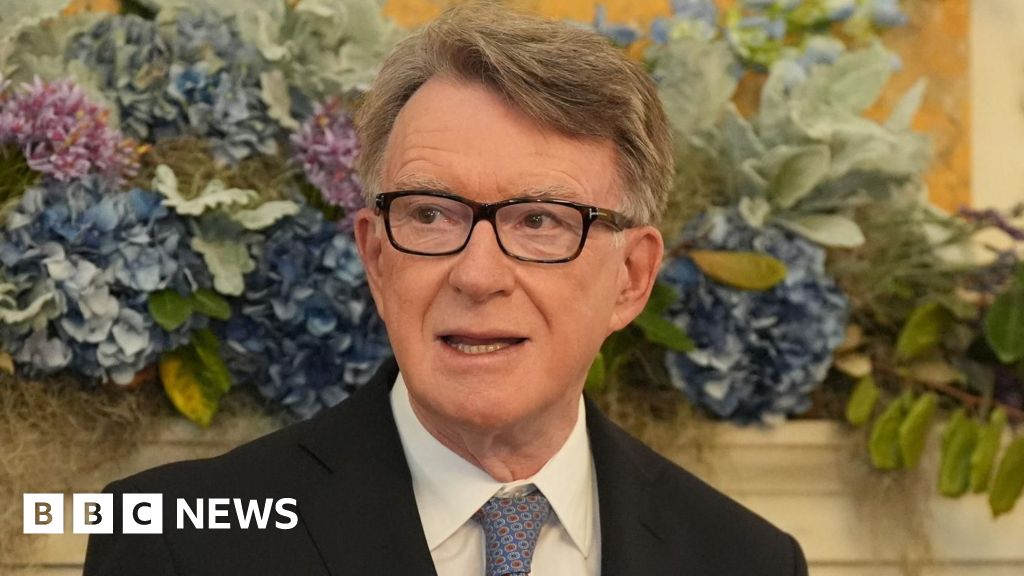
Peter Mandelson: Rise and fall of Labour's political fixerImage Credit: BBC News
Key Points
- •LONDON – Lord Peter Mandelson, the master strategist behind New Labour's electoral triumphs and a figure synonymous with political resilience, is once again facing a severe challenge to his legacy. In a statement addressing his past association with the convicted sex offender Jeffrey Epstein, the veteran politician has issued an "unequivocal apology" to Epstein's victims, a move that highlights the long shadow cast by the disgraced financier over powerful global networks.
- •Mandelson's Position: He maintains he was deceived by Epstein, who presented himself as a reformed character dedicated to philanthropy. Lord Mandelson insists he was unaware of the ongoing nature and scale of the abuse.
- •Nature of the Association: Reports indicate Mandelson met with Epstein on several occasions, including a visit to his infamous private island in 2009. The association continued for a period while Mandelson was serving as EU Trade Commissioner, a role that placed him at the centre of global commerce and politics.
- •Campaign Mastermind: He was the strategic genius behind Labour's landslide 1997 general election victory, which ended 18 years of Conservative rule. His focus on "the project" – rebranding the party as "New Labour" – was instrumental in winning over middle England.
- •Cabinet Minister: After the victory, he held several key posts, including Secretary of State for Trade and Industry and, later, Northern Ireland Secretary, where he played a role in the delicate peace process.
Peter Mandelson: Rise and fall of Labour's political fixer
LONDON – Lord Peter Mandelson, the master strategist behind New Labour's electoral triumphs and a figure synonymous with political resilience, is once again facing a severe challenge to his legacy. In a statement addressing his past association with the convicted sex offender Jeffrey Epstein, the veteran politician has issued an "unequivocal apology" to Epstein's victims, a move that highlights the long shadow cast by the disgraced financier over powerful global networks.
The apology marks the latest, and perhaps most damaging, chapter in a career defined by both extraordinary influence and recurring controversy. For a man once dubbed the "Prince of Darkness" for his mastery of political communication and backroom dealing, the admission ties him to one of the most toxic scandals of the 21st century, forcing a reckoning with past judgments.
The Epstein Connection
Lord Mandelson’s statement directly confronts his reported meetings with Epstein, which occurred after Epstein’s initial 2008 conviction for soliciting a minor for prostitution. While denying any knowledge of the full extent of Epstein's crimes, his apology aims to separate his association from any endorsement of the behaviour.
He offered the apology shortly after details of his links were revisited in the media, explaining, "I did not want to be held responsible for his [Jeffrey Epstein's] crimes of which I was ignorant, not indifferent, because of the lies he told me and so many others."
- Mandelson's Position: He maintains he was deceived by Epstein, who presented himself as a reformed character dedicated to philanthropy. Lord Mandelson insists he was unaware of the ongoing nature and scale of the abuse.
- Nature of the Association: Reports indicate Mandelson met with Epstein on several occasions, including a visit to his infamous private island in 2009. The association continued for a period while Mandelson was serving as EU Trade Commissioner, a role that placed him at the centre of global commerce and politics.
This episode forces a difficult question: how did a political operator renowned for his sharp instincts and extensive network become entangled with such a notorious figure? The explanation of being misled is one echoed by many prominent individuals who associated with Epstein, but it does little to quell public scrutiny.
Architect of New Labour
To understand the weight of this moment, one must recall Mandelson's pivotal role in modern British politics. He was a central figure in the triumvirate, alongside Tony Blair and Gordon Brown, that transformed the Labour Party from a perennial opposition into a dominant political force.
His career began in television before he became Labour's director of communications in 1985. It was here he honed the skills that would define his reputation: an unparalleled ability to manage the media, craft a compelling narrative, and enforce party discipline.
- Campaign Mastermind: He was the strategic genius behind Labour's landslide 1997 general election victory, which ended 18 years of Conservative rule. His focus on "the project" – rebranding the party as "New Labour" – was instrumental in winning over middle England.
- Cabinet Minister: After the victory, he held several key posts, including Secretary of State for Trade and Industry and, later, Northern Ireland Secretary, where he played a role in the delicate peace process.
- European Commissioner: Following his second cabinet resignation, he was appointed Britain's European Commissioner for Trade, a powerful position in Brussels where he navigated complex international trade deals and further expanded his global contacts.
A Pattern of Resignations
While his successes were monumental, Lord Mandelson's career has been punctuated by dramatic "falls." His proximity to wealth and power has twice before led to his resignation from the cabinet, creating a narrative of a brilliant but flawed politician.
The Loan Scandal (1998)
Just over a year into Labour's first term, Mandelson was forced to resign as Trade and Industry Secretary.
- The Controversy: It emerged he had accepted an undeclared, interest-free loan of £373,000 from fellow minister and millionaire Geoffrey Robinson. The loan was used to help purchase a home in Notting Hill. While he had not broken any laws, the failure to declare the loan to his building society and the perception of a conflict of interest made his position untenable.
The Passport Affair (2001)
After being rehabilitated and appointed Northern Ireland Secretary, he was forced to resign again in 2001.
- The Allegations: He was accused of using his influence to help Srichand Hinduja, an Indian billionaire, obtain a British passport. At the time, the Hinduja brothers' company was a sponsor of the Millennium Dome, a project within Mandelson's ministerial purview. He vehemently denied wrongdoing and was later cleared by an independent inquiry, but the political damage was done.
His return to government in 2008 under Gordon Brown as Business Secretary, and his elevation to the House of Lords, was seen as the ultimate comeback, cementing his reputation as a political survivor.
Implications for a Legacy
Since leaving frontline politics, Lord Mandelson has remained a significant figure. He co-founded the strategic advisory firm Global Counsel, which leverages his political and economic expertise for corporate clients, and he remains a frequent and influential commentator on British and European affairs.
However, the connection to Epstein threatens to overshadow these achievements. In the current political climate, where transparency and accountability are paramount, an association with such a toxic figure, regardless of the claimed ignorance, is a permanent stain.
- The Bottom Line: For a politician who built a career on managing perception, the Epstein scandal is an indelible reputational crisis. It complicates his legacy as a transformative political strategist, forever linking his name to a saga of exploitation and elite impunity.
- Next Steps: While Lord Mandelson is no longer an elected official, his influence persists in business and political circles. This apology is a clear attempt at damage control, but it is unlikely to end the questions about his judgment. For the current Labour leadership under Sir Keir Starmer, which seeks to project an image of integrity, the episode serves as a stark reminder of a past era the party is keen to leave behind.
Source: BBC News
Related Articles
Nationwide Protests Against ICE Enforcement Erupt in U.S.
Thousands are protesting ICE after the DOJ declined to investigate a fatal agent-involved shooting in Minneapolis, fueling a national movement and public anger.
Venezuela Amnesty Bill Could Free Political Prisoners
Learn about Venezuela's proposed amnesty bill to release political prisoners. The move could signal a major political shift and affect future economic sanctions
Pokémon Cancels Yasukuni Shrine Event After Backlash
The Pokémon Company has canceled an event at Tokyo's controversial Yasukuni Shrine after facing international backlash from China and South Korea.
US to Lose Measles Elimination Status: What It Means
The U.S. is poised to lose its measles elimination status due to escalating outbreaks. Learn what this downgrade means for public health and the economy.