Petrol Retailers Clash with UK Gov Over 'Rip Off' Claims
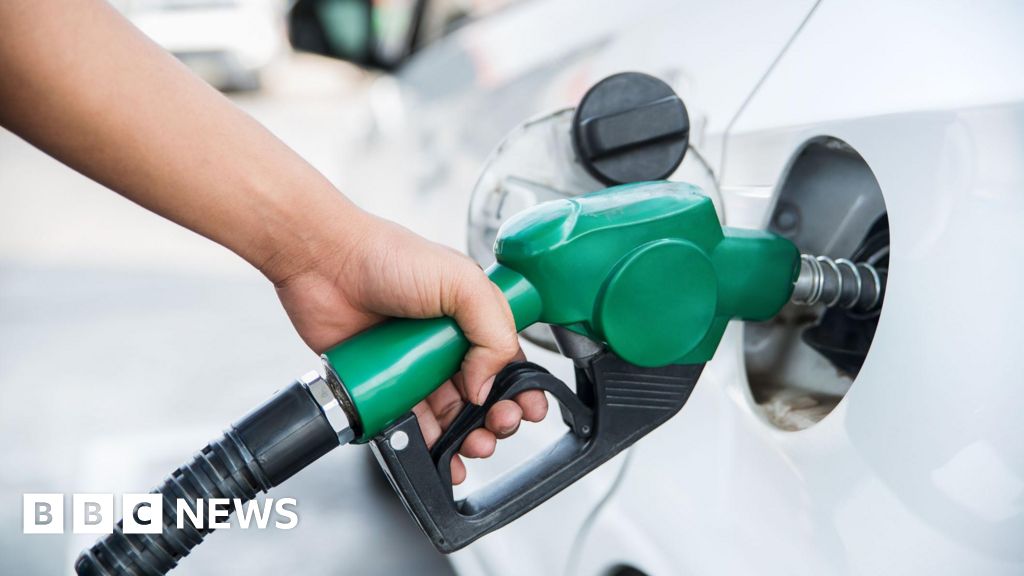
Petrol retailers in row with government over 'rip off' accusationsImage Credit: BBC News
Key Points
- •By a Senior Financial Correspondent
- •CMA Key Findings: The watchdog's investigation pointed to a 'rocket and feather' effect, where pump prices rise quickly with wholesale costs but fall slowly when they drop.
- •Government Response: Ministers threatened to create a "PumpWatch" style body to formalise the monitoring of prices and potentially issue fines for anti-competitive behaviour.
- •Energy Bills: The cost of electricity to power forecourt lights, pumps, and refrigerators for in-store products has more than doubled for many operators.
- •Labour Costs: Successive increases in the National Living Wage have significantly raised staffing costs, a major component of a forecourt's overheads.
Petrol retailers in row with government over 'rip off' accusations
By a Senior Financial Correspondent
A war of words has erupted between the UK's independent petrol retailers and the government, with industry leaders accusing ministers and commentators of inciting public anger and abuse against forecourt staff through "inflammatory" accusations of profiteering. The Petrol Retailers Association (PRA) reports a worrying increase in harassment of its members' employees, directly linking the hostility to high-level rhetoric surrounding the cost of living crisis.
The dispute brings into sharp focus the complex economics of fuel pricing and the growing tension between a government under pressure to tackle rising prices and a retail sector grappling with its own significant cost pressures.
The Heart of the Accusation
At the centre of the row is the language used to describe fuel pricing practices. The PRA, which represents nearly 5,500 independent forecourts, has taken a firm stance against what it sees as a damaging and inaccurate narrative.
Gordon Balmer, executive director of the PRA, stated that the fallout from these accusations is being felt on the front lines. "Recently I have heard of incidents from some of our members of retail staff being abused by members of the public, who may have been provoked by the incorrect and inflammatory language emanating from some commentators, for example, use of the terms 'rip offs' and 'profiteering'," he said.
This statement highlights a direct link between political discourse and real-world consequences, shifting the debate from spreadsheets and market data to the safety and wellbeing of retail workers.
Government and Regulator Scrutiny
The government's hard line on fuel prices is not without basis. It stems from a detailed investigation by the Competition and Markets Authority (CMA), the UK's competition watchdog. The CMA's report, published last year, identified a significant increase in fuel margins.
The regulator found that from 2019 to 2022, the average supermarket fuel margin had increased by 6 pence per litre. The CMA concluded that competition had weakened and that retailers were, in some cases, failing to pass on falls in wholesale costs to consumers quickly enough, costing the average driver an estimated £140 in 2022 alone.
This prompted strong reactions from government officials, who pledged to introduce new powers to increase price transparency and hold the industry to account.
- CMA Key Findings: The watchdog's investigation pointed to a 'rocket and feather' effect, where pump prices rise quickly with wholesale costs but fall slowly when they drop.
- Government Response: Ministers threatened to create a "PumpWatch" style body to formalise the monitoring of prices and potentially issue fines for anti-competitive behaviour.
The Retailer's Defence: A Story of Costs
Independent retailers argue that the "profiteering" narrative is a gross oversimplification that ignores the severe economic headwinds they face. They contend that focusing solely on the gap between wholesale and retail prices overlooks a surge in operational costs.
The PRA points out that its members' businesses are fundamentally different from the major supermarkets, which often use fuel as a loss-leader to attract customers to their main grocery business. For independent retailers, fuel and an associated convenience store are their entire business.
They highlight several key cost pressures that have eroded their already thin margins on fuel itself:
- Energy Bills: The cost of electricity to power forecourt lights, pumps, and refrigerators for in-store products has more than doubled for many operators.
- Labour Costs: Successive increases in the National Living Wage have significantly raised staffing costs, a major component of a forecourt's overheads.
- Supply Chain Inflation: The cost of goods for their convenience stores, a crucial source of profit, has risen sharply, alongside increased supplier and delivery fees.
- Regulatory Burden: Retailers also face costs associated with environmental regulations, payment processing fees, and business rates.
Deconstructing the Pump Price
To understand the retailer's position, it is crucial to break down the cost of a litre of fuel. The final price a consumer pays at the pump is composed of several elements, with the retailer's margin being one of the smallest.
- Wholesale Cost: This is the price the retailer pays for the refined petrol or diesel. It is the most volatile component, fluctuating with global oil prices and currency exchange rates.
- Fuel Duty: A fixed tax set by the government, currently at 52.95 pence per litre.
- Value Added Tax (VAT): Charged at 20% on the total of the wholesale cost, fuel duty, and the retailer's margin.
- Retailer Margin: This is the small portion left to cover all operational costs—staff, electricity, rent, maintenance—and generate a profit. The PRA argues this is the portion being squeezed.
This breakdown illustrates that over half the pump price is typically tax. Retailers argue that while they are being publicly admonished, the Treasury remains the single largest beneficiary of high fuel prices due to the ad valorem nature of VAT.
Implications and The Path Forward
The escalating dispute leaves both sides in a difficult position. The government must demonstrate it is acting decisively on the cost of living, with fuel prices being one of the most visible and politically sensitive indicators of inflation.
For retailers, the combination of public hostility and economic pressure creates an unsustainable environment. The abuse of staff is a critical tipping point, forcing industry bodies to push back more forcefully against the prevailing political narrative.
The likely next step is the formalisation of greater price transparency measures, as recommended by the CMA. The government is expected to legislate for a scheme that will give consumers access to real-time pricing data, theoretically increasing competition.
However, the core tension will remain. Without a broader public understanding of the cost structure of running a forecourt, and an acknowledgement of the different business models between supermarkets and independents, the "rip off" narrative may persist. The industry's plea is for a more nuanced debate that addresses market realities rather than resorting to language that, they claim, puts their employees in harm's way.
Source: BBC News
Related Articles
Nationwide Protests Against ICE Enforcement Erupt in U.S.
Thousands are protesting ICE after the DOJ declined to investigate a fatal agent-involved shooting in Minneapolis, fueling a national movement and public anger.
Venezuela Amnesty Bill Could Free Political Prisoners
Learn about Venezuela's proposed amnesty bill to release political prisoners. The move could signal a major political shift and affect future economic sanctions
Pokémon Cancels Yasukuni Shrine Event After Backlash
The Pokémon Company has canceled an event at Tokyo's controversial Yasukuni Shrine after facing international backlash from China and South Korea.
US to Lose Measles Elimination Status: What It Means
The U.S. is poised to lose its measles elimination status due to escalating outbreaks. Learn what this downgrade means for public health and the economy.