Police Failings Let Sex Offender Simon Levy Murder Women
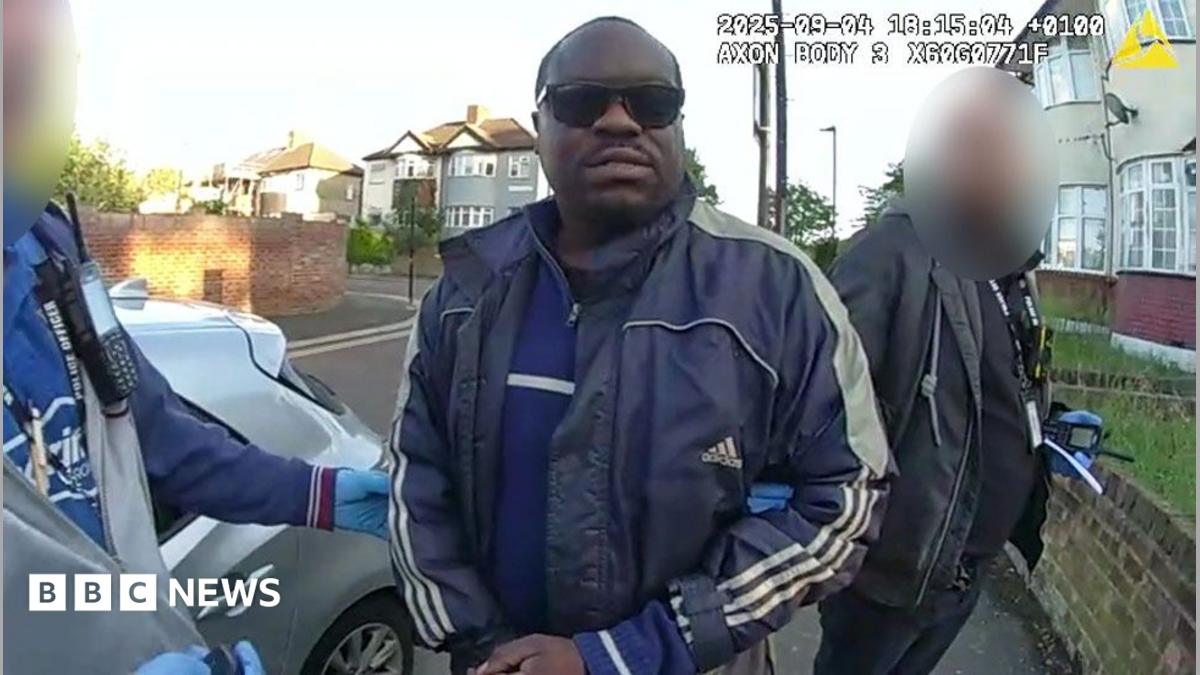
Police failings revealed as sex offender Simon Levy left free to murder and attack womenImage Credit: BBC News
Key Points
- •LONDON – A catastrophic series of investigative blunders and systemic delays by the British Transport Police (BTP) allowed a serial sex offender, Simon Levy, to remain free to attack multiple women on London's public transport network, an investigation has revealed. Despite being provided with clear CCTV evidence and, later, video footage of an assault in progress, police inaction left Levy at large for years, culminating in a spree of violence that could have been prevented.
- •The Assault: Levy boarded the train and deliberately positioned himself in front of the woman. After first leaning on her, she moved away, only to feel him forcefully touch her vagina over her clothing moments later. The victim described the force as so significant it felt like an attempt to penetrate her through her clothes.
- •The Confrontation: She immediately grabbed Levy’s hand and challenged him. He denied the assault, attempting to use a jumper draped over his arm as a cover story. "What are you talking about - look my hand is covered," he claimed, before verbally abusing the victim, calling her "crazy" and "stupid." He then disembarked at Westminster station.
- •The Initial Investigation: The victim, deeply distressed, reported the assault to the BTP. Critically, CCTV footage of Levy was available from the station. However, for reasons that remain unclear, police failed to identify him. He would not be linked to this crime until two years later, after more women had been victimised.
- •Incontrovertible Proof: The victim immediately reported the incident to the BTP and provided the video footage—direct, unambiguous evidence of a sexual assault in progress, with a clear image of the perpetrator.
Police failings revealed as sex offender Simon Levy left free to murder and attack women
LONDON – A catastrophic series of investigative blunders and systemic delays by the British Transport Police (BTP) allowed a serial sex offender, Simon Levy, to remain free to attack multiple women on London's public transport network, an investigation has revealed. Despite being provided with clear CCTV evidence and, later, video footage of an assault in progress, police inaction left Levy at large for years, culminating in a spree of violence that could have been prevented.
The case exposes critical flaws in how sexual offenses are investigated, raising urgent questions about police procedures and the protection of women in public spaces.
The First Attack: A Missed Opportunity
The pattern of offending began with a brazen assault on a busy Tube train in central London. Levy's first known victim found herself targeted in a crowded carriage, marking the start of a two-year ordeal before her attacker would be identified.
-
The Assault: Levy boarded the train and deliberately positioned himself in front of the woman. After first leaning on her, she moved away, only to feel him forcefully touch her vagina over her clothing moments later. The victim described the force as so significant it felt like an attempt to penetrate her through her clothes.
-
The Confrontation: She immediately grabbed Levy’s hand and challenged him. He denied the assault, attempting to use a jumper draped over his arm as a cover story. "What are you talking about - look my hand is covered," he claimed, before verbally abusing the victim, calling her "crazy" and "stupid." He then disembarked at Westminster station.
-
The Initial Investigation: The victim, deeply distressed, reported the assault to the BTP. Critically, CCTV footage of Levy was available from the station. However, for reasons that remain unclear, police failed to identify him. He would not be linked to this crime until two years later, after more women had been victimised.
A Spree of Violence and a Citizen's Evidence
A year after the first documented assault, Levy escalated his attacks, assaulting three more women in quick succession. This period was marked by extraordinary bravery from one victim and further inexplicable delays from the BTP.
After being sexually assaulted herself, one woman had the presence of mind to begin filming Levy with her phone. She captured him in the act of assaulting a second, unidentified woman in the same carriage.
-
Incontrovertible Proof: The victim immediately reported the incident to the BTP and provided the video footage—direct, unambiguous evidence of a sexual assault in progress, with a clear image of the perpetrator.
-
Continued Attacks: Despite this evidence being in police hands, Levy's spree continued. Just one week later, he assaulted a third woman on the transport network. He was subsequently arrested and questioned for the three recent offenses. However, after denying the charges, he was released on bail, with BTP officers stating they did not have enough evidence to charge him at that time.
The Investigation Unravels
The subsequent investigation into the three linked assaults was defined by a pattern of delay and inaction that allowed a dangerous offender to remain on bail for six months.
The handling of the case demonstrated a profound lack of urgency, culminating in a last-minute scramble to bring charges that legal experts describe as highly irregular.
A Timeline of Failures:
-
Delayed Procedures: Following Levy's arrest and release, it took investigators weeks to arrange crucial identity parades for the victims, a fundamental step in building a prosecutable case.
-
Prosecution Inaction: The BTP inexplicably waited six months before approaching the Crown Prosecution Service (CPS) to seek a charging decision, despite possessing video evidence and multiple victim testimonies.
-
Chaotic Charging Decision: When the BTP finally took action, it was only because they had arrested Levy again for a separate matter. They contacted the CPS demanding an emergency charging decision overnight so he could be put before a court the next day. This last-minute rush stood in stark contrast to the six months of inaction that preceded it, indicating a reactive, rather than proactive, investigative strategy.
Official Response and Systemic Issues
In the face of these revelations, the British Transport Police has admitted to significant failings in its handling of the Simon Levy case. The force has pledged to amend its procedures to prevent a repeat of the errors that left women vulnerable.
In a formal statement, BTP Assistant Chief Constable Charlie Doyle acknowledged the shortcomings. "It is clear that opportunities to expedite the investigation were missed and we have amended our procedures to address these issues," he said.
The BTP's promised changes focus on two key areas:
-
Expediting Investigations: The force has committed to new procedures to ensure that repeat offenders are dealt with swiftly, closing the time gaps that allowed Levy to remain at large.
-
Prioritising Linked Offences: BTP will now place a greater emphasis on identifying and prioritising linked offenses more effectively, acknowledging the failure to connect the dots in Levy's pattern of attacks.
Implications and Next Steps
The Simon Levy case serves as a damning indictment of the systems meant to protect the public. The courage of his victims, particularly the woman who filmed her attacker, stands in stark contrast to the institutional inertia that failed them.
The official admission of fault by the BTP is a necessary first step, but it leaves critical questions unanswered. Why was clear CCTV and video evidence not acted upon with the urgency it required? What specific training and oversight will be implemented to ensure procedural changes are more than just words in a press release?
For the victims and the wider public, this case has irrevocably damaged trust in the police's ability to handle sexual offenses. Rebuilding that confidence will require not just amended procedures, but a transparent and radical overhaul of the culture and priorities within the British Transport Police. The focus now shifts to holding the force accountable for its promises and ensuring that no other predator is afforded the freedom to attack again and again.
Source: BBC News
Related Articles
Nationwide Protests Against ICE Enforcement Erupt in U.S.
Thousands are protesting ICE after the DOJ declined to investigate a fatal agent-involved shooting in Minneapolis, fueling a national movement and public anger.
Venezuela Amnesty Bill Could Free Political Prisoners
Learn about Venezuela's proposed amnesty bill to release political prisoners. The move could signal a major political shift and affect future economic sanctions
Pokémon Cancels Yasukuni Shrine Event After Backlash
The Pokémon Company has canceled an event at Tokyo's controversial Yasukuni Shrine after facing international backlash from China and South Korea.
US to Lose Measles Elimination Status: What It Means
The U.S. is poised to lose its measles elimination status due to escalating outbreaks. Learn what this downgrade means for public health and the economy.