Rachel Reeves Defends UK Student Loans vs Martin Lewis
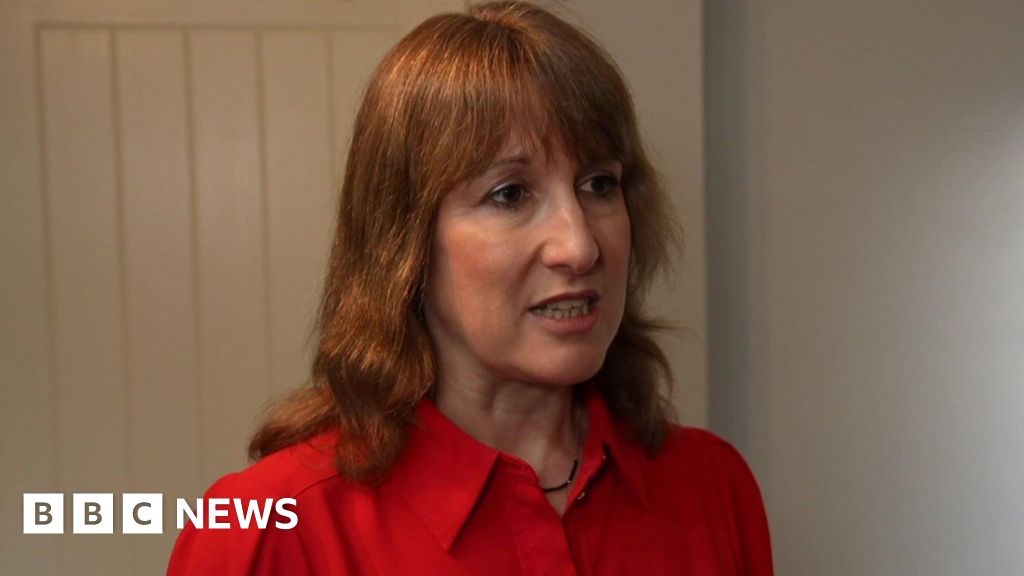
Rachel Reeves defends 'fair and reasonable' student loans systemImage Credit: BBC News
Key Points
- •LONDON – Labour's Shadow Chancellor, Rachel Reeves, has mounted a firm defence of the UK's contentious new student loan system, labelling it "fair and reasonable" in a direct rebuttal to criticism from prominent consumer champion Martin Lewis. The high-profile exchange underscores the deep political and economic divisions over how England funds its higher education, placing the financial burden on future generations squarely in the pre-election spotlight.
- •Plan 1 (Pre-2012): This system, for students who started before 2012, featured lower tuition fees (around £3,000 per year) and a lower repayment threshold. The interest rate was capped at the lower of the Bank of England base rate or the Retail Price Index (RPI).
- •Plan 2 (2012-2023): This marked a major shift. Tuition fees tripled to £9,000 (now £9,250), and the interest rate model became more punitive, charging RPI plus up to 3% depending on income. The loan was written off after 30 years. This system proved enormously expensive for the Treasury, with official forecasts predicting less than half the total loan value would ever be repaid.
- •Plan 5 (Post-2023): Introduced by the current Conservative government to improve taxpayer value, this system dramatically changed the terms for new students. While it lowered the interest rate to RPI only, it introduced two critical changes that are at the core of the current controversy: the repayment term was extended to 40 years, and the repayment threshold was lowered to £25,000.
- •Taxpayer Protection: The Plan 5 system is forecast to significantly reduce the long-term cost to the public purse. By having graduates repay more of their loans over a longer period, the government reduces the amount of debt that is eventually written off. For Reeves, this aligns with her core message of fiscal responsibility.
Rachel Reeves defends 'fair and reasonable' student loans system
LONDON – Labour's Shadow Chancellor, Rachel Reeves, has mounted a firm defence of the UK's contentious new student loan system, labelling it "fair and reasonable" in a direct rebuttal to criticism from prominent consumer champion Martin Lewis. The high-profile exchange underscores the deep political and economic divisions over how England funds its higher education, placing the financial burden on future generations squarely in the pre-election spotlight.
In a tense public discussion, Mr. Lewis, founder of Money Saving Expert, implored Ms. Reeves to "please have a rethink" of Labour's apparent acceptance of the current framework. He argued that the system effectively treats student loans as a "tax," a characterisation he stressed was fundamentally inaccurate and damaging to graduate aspirations.
Ms. Reeves, widely expected to become the UK's next Chancellor of the Exchequer, held her ground, signalling that a Labour government would not pursue a radical overhaul of the system. Her stance prioritises fiscal stability over costly reforms, a clear move to position the party as economically responsible ahead of a general election.
The Heart of the Disagreement
The clash highlights a fundamental conflict in perspective on the "Plan 5" student loan system, introduced for new students starting in September 2023.
Rachel Reeves argues the system is progressive. By design, it shields the lowest earners from repayments and ensures that those who benefit most financially from their degrees contribute the most. Her defence rests on the principle that repayments are contingent on income, not the total amount borrowed.
Martin Lewis counters that the structure of the loans—particularly the 40-year repayment term—creates a long-term financial and psychological burden that functions like a supplementary income tax for graduates, lasting for the majority of their working lives.
The Path to Plan 5: A System in Flux
To understand the current debate, it's crucial to see the evolution of student finance in England. The system has undergone several significant transformations, each altering the balance of cost between the student and the taxpayer.
-
Plan 1 (Pre-2012): This system, for students who started before 2012, featured lower tuition fees (around £3,000 per year) and a lower repayment threshold. The interest rate was capped at the lower of the Bank of England base rate or the Retail Price Index (RPI).
-
Plan 2 (2012-2023): This marked a major shift. Tuition fees tripled to £9,000 (now £9,250), and the interest rate model became more punitive, charging RPI plus up to 3% depending on income. The loan was written off after 30 years. This system proved enormously expensive for the Treasury, with official forecasts predicting less than half the total loan value would ever be repaid.
-
Plan 5 (Post-2023): Introduced by the current Conservative government to improve taxpayer value, this system dramatically changed the terms for new students. While it lowered the interest rate to RPI only, it introduced two critical changes that are at the core of the current controversy: the repayment term was extended to 40 years, and the repayment threshold was lowered to £25,000.
Analyzing the Competing Views
The positions of Reeves and Lewis represent two starkly different interpretations of the same set of facts. Each argument is rooted in a distinct economic and social philosophy.
Reeves's Rationale: Fiscal Prudence
The Shadow Chancellor's defence is built on a foundation of economic pragmatism and a desire to project fiscal credibility.
-
Taxpayer Protection: The Plan 5 system is forecast to significantly reduce the long-term cost to the public purse. By having graduates repay more of their loans over a longer period, the government reduces the amount of debt that is eventually written off. For Reeves, this aligns with her core message of fiscal responsibility.
-
Progressive Repayments: Labour maintains that the income-contingent nature of the system is its most important feature. Graduates who do not secure high-paying jobs are protected, as they will not repay if their earnings remain below the £25,000 threshold.
-
Avoiding Unfunded Commitments: Any significant change to the student loan system—such as lowering interest rates further, shortening the repayment term, or re-instating maintenance grants—would carry a multi-billion-pound price tag. Ahead of an election, Reeves is determined to avoid making any un-costed spending promises that could undermine Labour's economic platform.
Lewis's Critique: A 'Life Sentence' of Debt
Martin Lewis's campaign focuses on the real-world impact of the system's terms on the lives and choices of young people.
-
The 'Tax' Analogy: His central argument is that because a vast majority of Plan 5 graduates will never clear their debt, the 9% deduction on earnings above £25,000 is, in practice, a 40-year graduate tax, not a loan repayment. This, he argues, is a dishonest framing of the product.
-
The 40-Year Term: This is the most criticised element. A graduate starting work at 22 could be making repayments into their 60s. This extended period means many will pay back far more than they initially borrowed, even with a lower interest rate, as interest accrues over four decades.
-
Deterring Aspiration: Lewis warns that the prospect of a 40-year "debt sentence" could deter potential students, particularly from lower- and middle-income backgrounds who are more debt-averse, from pursuing higher education altogether.
What Comes Next?
This public confrontation solidifies the battle lines on higher education funding for the upcoming election.
Rachel Reeves has made it clear that a Labour government under Keir Starmer will not be a vehicle for radical student finance reform. The party's focus is on demonstrating economic stability, and the high cost of changing the loan system makes it a non-starter for now. Any changes are likely to be minor and peripheral, rather than structural.
However, the relentless campaigning from figures like Martin Lewis ensures the issue will not disappear. His ability to mobilise public opinion puts sustained pressure on politicians of all stripes. The debate highlights a fundamental and unresolved tension in UK policy: how to fund a world-class university sector without either overburdening the taxpayer or saddling a generation of graduates with a lifetime of debt.
For now, the status quo holds. But the passionate opposition to the Plan 5 model suggests that the debate over intergenerational fairness and the true cost of education is far from over.
Source: BBC News
Related Articles
Nationwide Protests Against ICE Enforcement Erupt in U.S.
Thousands are protesting ICE after the DOJ declined to investigate a fatal agent-involved shooting in Minneapolis, fueling a national movement and public anger.
Venezuela Amnesty Bill Could Free Political Prisoners
Learn about Venezuela's proposed amnesty bill to release political prisoners. The move could signal a major political shift and affect future economic sanctions
Pokémon Cancels Yasukuni Shrine Event After Backlash
The Pokémon Company has canceled an event at Tokyo's controversial Yasukuni Shrine after facing international backlash from China and South Korea.
US to Lose Measles Elimination Status: What It Means
The U.S. is poised to lose its measles elimination status due to escalating outbreaks. Learn what this downgrade means for public health and the economy.