Worcestershire Council Faces Bankruptcy, Reform UK Warns
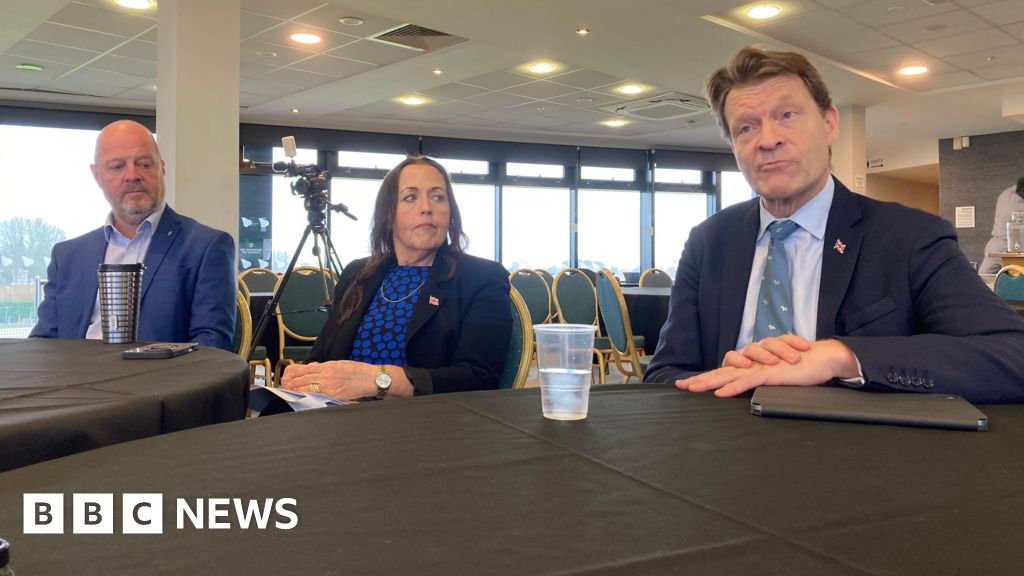
Reform UK warns Worcestershire County Council is facing bankruptcyImage Credit: BBC Politics
Key Points
- •LONDON – Worcestershire County Council is on a perilous path toward effective bankruptcy, according to a stark warning issued by Reform UK, the council's official opposition. The party has cautioned that without immediate and drastic action, the authority could be forced to issue a Section 114 notice, a move that would halt all non-essential spending and signal a complete loss of control over its finances.
- •The Central Claim: Reform UK alleges that Worcestershire County Council's financial position is so precarious that it is approaching the point of insolvency, necessitating the cancellation of approved projects to avert a formal declaration of bankruptcy.
- •Adult and Children's Social Care: This is the single greatest pressure point. A rising and ageing population, coupled with more complex needs, has caused demand and costs for adult social care to spiral. Simultaneously, a record number of children in the care system has placed unprecedented strain on children's services budgets, which are frequently overspent by tens of millions of pounds in councils across the country.
- •Inflationary Pressures: The high inflation of the past two years has dramatically increased the cost of delivering all council services. From construction materials for infrastructure projects to energy bills for public buildings and fuel for vehicle fleets, costs have surged far beyond what was allocated in initial budgets.
- •Legacy of Austerity: While central government has provided some recent funding increases, these have not been sufficient to reverse the impact of a decade of reduced grants following the 2008 financial crisis. Councils have become increasingly reliant on locally-raised council tax and business rates, which cannot bridge the widening funding gap for statutory services.
Reform UK warns Worcestershire County Council is facing bankruptcy
LONDON – Worcestershire County Council is on a perilous path toward effective bankruptcy, according to a stark warning issued by Reform UK, the council's official opposition. The party has cautioned that without immediate and drastic action, the authority could be forced to issue a Section 114 notice, a move that would halt all non-essential spending and signal a complete loss of control over its finances.
The warning paints a grim picture of the fiscal health of the council, which, like many local authorities across the United Kingdom, is grappling with a perfect storm of soaring demand for services, persistent inflation, and years of constrained central government funding.
The Core Allegation
At the heart of the alert is a declaration that the council's current budget is unsustainable. Reform UK leaders have signalled their intent to implement severe austerity measures, targeting projects they deem unaffordable luxuries.
"It would be a catastrophe," a party source close to the council's financial scrutiny process stated. "We're going to have to halt projects that were put into the budget by the previous administration, things that maybe were 'nice to have', but we can't afford them."
This statement suggests a fundamental reappraisal of the council's spending priorities is underway, with a sharp focus on protecting only legally mandated statutory services.
- The Central Claim: Reform UK alleges that Worcestershire County Council's financial position is so precarious that it is approaching the point of insolvency, necessitating the cancellation of approved projects to avert a formal declaration of bankruptcy.
The National Context: A Sector in Crisis
Worcestershire's predicament is not unique. It is a local manifestation of a systemic crisis gripping local government finance throughout England. Dozens of councils are teetering on the edge of financial failure, squeezed by a combination of powerful economic forces.
The primary drivers of this widespread distress are well-documented and create immense pressure on council budgets that were already stretched thin.
-
Adult and Children's Social Care: This is the single greatest pressure point. A rising and ageing population, coupled with more complex needs, has caused demand and costs for adult social care to spiral. Simultaneously, a record number of children in the care system has placed unprecedented strain on children's services budgets, which are frequently overspent by tens of millions of pounds in councils across the country.
-
Inflationary Pressures: The high inflation of the past two years has dramatically increased the cost of delivering all council services. From construction materials for infrastructure projects to energy bills for public buildings and fuel for vehicle fleets, costs have surged far beyond what was allocated in initial budgets.
-
Legacy of Austerity: While central government has provided some recent funding increases, these have not been sufficient to reverse the impact of a decade of reduced grants following the 2008 financial crisis. Councils have become increasingly reliant on locally-raised council tax and business rates, which cannot bridge the widening funding gap for statutory services.
Understanding a Section 114 Notice
The term "bankruptcy" in the context of a local council refers to the issuance of a Section 114 notice. This is a formal admission by the council's Chief Financial Officer (or Section 151 Officer) that the authority is unable to set a balanced budget for the forthcoming year.
It is the most severe financial distress signal a council can send and has profound consequences for residents and services.
-
Immediate Consequences: Upon issuing a Section 114 notice, a council must immediately freeze all new, non-essential expenditure. This effectively means spending is restricted to protecting vulnerable people, providing statutory services (such as waste collection and child protection), and meeting existing contractual obligations.
-
Loss of Autonomy: The notice triggers an intervention from central government, specifically the Department for Levelling Up, Housing and Communities (DLUHC). Commissioners are often appointed to take over financial decision-making from elected councillors, and the council is typically forced to accept emergency funding that comes with stringent conditions.
-
Path to Recovery: The recovery process involves drastic cuts to services, sales of council-owned assets (such as buildings and land), and significant council tax increases, often above the normal legally permitted cap. Recent examples in Birmingham, Croydon, and Nottingham have seen council tax hikes of 10-15%.
The Political Dimension in Worcestershire
The warning from Reform UK is also a significant political manoeuvre. After a series of defections from the ruling Conservative party, Reform UK recently became the official opposition on Worcestershire County Council. This new status provides them with a platform to challenge the administration's financial stewardship directly.
By highlighting the risk of bankruptcy, the party is positioning itself as the voice of fiscal prudence and responsibility, directly contrasting its approach with that of the Conservative leadership. The reference to halting projects from the "previous administration" is a clear critique of past spending decisions made under Conservative control.
- Local Power Dynamics: The Conservative Party maintains control of the council, but Reform UK's elevation to official opposition intensifies the political pressure. The budget-setting process for the next financial year will now be a key battleground, with every spending decision under intense scrutiny.
Implications and The Road Ahead
While the council's leadership has not yet issued a formal response to Reform UK's claims, it is understood they acknowledge the severe financial challenges. The administration will likely argue that it is actively working to manage the budget gap through efficiency savings and by lobbying the government for a more sustainable long-term funding settlement.
For the residents and businesses of Worcestershire, the coming months will be critical. The council faces a series of unenviable choices.
-
Difficult Decisions: Councillors must now weigh the political and social cost of cutting "nice-to-have" projects—which can include library upgrades, park improvements, and cultural initiatives—against the imperative to protect essential services for the most vulnerable.
-
Potential for Tax Rises: A significant council tax increase for the 2025/26 financial year appears almost inevitable as the authority seeks to maximise its income.
-
Heightened Scrutiny: External auditors and the DLUHC will be monitoring Worcestershire's financial position with extreme care. Any failure to present a credible and balanced budget could force the Chief Financial Officer's hand, making the feared Section 114 notice a reality.
The situation in Worcestershire is a stark reminder of the fragile state of public finances at a local level. The decisions made in its council chambers over the next six months will determine whether it can pull back from the fiscal precipice or join the growing list of English councils that have fallen into financial ruin.
Source: BBC Politics
Related Articles
Nationwide Protests Against ICE Enforcement Erupt in U.S.
Thousands are protesting ICE after the DOJ declined to investigate a fatal agent-involved shooting in Minneapolis, fueling a national movement and public anger.
Venezuela Amnesty Bill Could Free Political Prisoners
Learn about Venezuela's proposed amnesty bill to release political prisoners. The move could signal a major political shift and affect future economic sanctions
Pokémon Cancels Yasukuni Shrine Event After Backlash
The Pokémon Company has canceled an event at Tokyo's controversial Yasukuni Shrine after facing international backlash from China and South Korea.
US to Lose Measles Elimination Status: What It Means
The U.S. is poised to lose its measles elimination status due to escalating outbreaks. Learn what this downgrade means for public health and the economy.