Angel Fresco Resembling PM Meloni Sparks Investigation
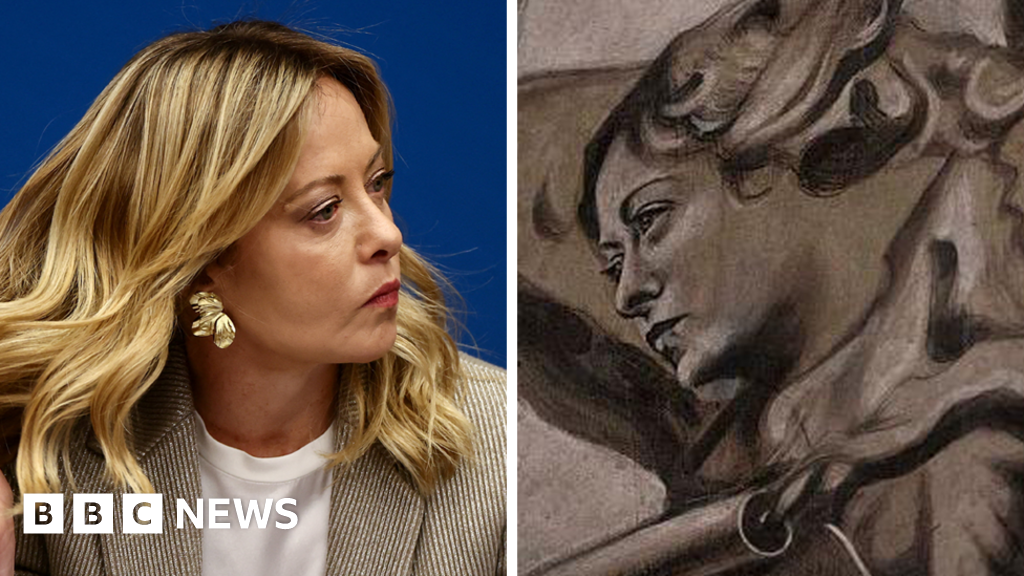
Restored angel fresco resembling Italian PM Meloni sparks investigationImage Credit: BBC News
Key Points
- •ROME – A routine art restoration within a historic Roman basilica has unexpectedly escalated into a national controversy, prompting a formal investigation by Italy's culture ministry and a sharp rebuke from the Diocese of Rome. The dispute centers on a newly unveiled fresco of an angel in the Basilica of St Lawrence in Lucina, which bears a striking and, for many, unmistakable resemblance to the country's current Prime Minister, Giorgia Meloni.
- •Key Actors: The investigation involves two parallel tracks. Italy's Ministry of Culture is assessing compliance with national heritage laws, while the Diocese of Rome is conducting an internal review of its own oversight protocols. The restorer responsible for the work is at the center of both inquiries.
- •The Artwork: The piece in question is a fresco of an angel. The specific controversy is tied to the facial features, which many observers believe were modeled directly on Prime Minister Meloni.
- •The Restoration Protocol: Standard procedure for such projects requires a detailed plan to be approved by both church authorities and the state's cultural heritage superintendency. The investigation will focus on whether the final work deviated from the approved plan.
- •The Basilica: The Basilica di San Lorenzo in Lucina is a significant historical and religious site, holding the relic of the gridiron on which St. Lawrence was martyred. Its prominence has amplified public and official interest in the matter.
Restored angel fresco resembling Italian PM Meloni sparks investigation
ROME – A routine art restoration within a historic Roman basilica has unexpectedly escalated into a national controversy, prompting a formal investigation by Italy's culture ministry and a sharp rebuke from the Diocese of Rome. The dispute centers on a newly unveiled fresco of an angel in the Basilica of St Lawrence in Lucina, which bears a striking and, for many, unmistakable resemblance to the country's current Prime Minister, Giorgia Meloni.
The affair has ignited a fierce debate at the intersection of art, religion, and politics, raising critical questions about artistic license, historical preservation standards, and the perceived politicization of a sacred space.
Official Scrutiny Mounts Over Disputed Fresco
The Italian government moved swiftly to address the growing public clamor. The Ministry of Culture has dispatched officers from its specialized heritage protection unit to conduct a thorough inspection of the artwork and the restoration process.
Simultaneously, the Diocese of Rome, which has ecclesiastical authority over the basilica, issued a statement expressing its profound "disappointment" with the outcome. The Diocese confirmed it has launched its own internal inquiry to ascertain how the project was supervised and to "determine who had been responsible" for the controversial depiction.
- Key Actors: The investigation involves two parallel tracks. Italy's Ministry of Culture is assessing compliance with national heritage laws, while the Diocese of Rome is conducting an internal review of its own oversight protocols. The restorer responsible for the work is at the center of both inquiries.
A Restoration Project Under the Microscope
The fresco is located in a private family chapel within the Basilica of St Lawrence in Lucina, a church with origins dating back to the 5th century, situated near the bustling Via del Corso in the heart of Rome. Such restorations are common in Italy's ancient churches, often funded by private patrons to preserve family chapels.
The controversy erupted after the scaffolding came down and the restored work was revealed. Art historians and restorers note that when a fresco is severely damaged, parts may need to be recreated based on historical evidence. However, introducing entirely new elements, particularly contemporary likenesses, is a significant departure from modern conservation ethics, which prioritize authenticity and fidelity to the original artist's intent.
- The Artwork: The piece in question is a fresco of an angel. The specific controversy is tied to the facial features, which many observers believe were modeled directly on Prime Minister Meloni.
- The Restoration Protocol: Standard procedure for such projects requires a detailed plan to be approved by both church authorities and the state's cultural heritage superintendency. The investigation will focus on whether the final work deviated from the approved plan.
- The Basilica: The Basilica di San Lorenzo in Lucina is a significant historical and religious site, holding the relic of the gridiron on which St. Lawrence was martyred. Its prominence has amplified public and official interest in the matter.
Art, Politics, and Patronage in Modern Italy
While artists throughout history have often included the likenesses of their patrons or contemporary figures in religious works, the practice is highly contentious in the context of modern, state-regulated historical preservation. The incident has sparked a debate over whether the depiction was an act of homage, a political statement, or a provocative gesture.
Prime Minister Meloni, as the leader of the right-wing Brothers of Italy party, is a highly visible and often polarizing figure in Italian politics. The use of her likeness in a sacred artwork, without clear authorization or context, has been interpreted by critics as an inappropriate fusion of temporal power and religious imagery.
- Allegations of Flattery: Some commentators suggest the restorer may have intentionally used the Prime Minister's likeness to curry favor or signal political allegiance—a practice with deep roots in Renaissance art but considered a serious breach of professional ethics today.
- Artistic License vs. Protocol: The central question for investigators is whether the restorer overstepped the bounds of their mandate. Conservation is viewed as a scientific discipline, distinct from new artistic creation. Any deviation from restoring what was originally there would be a significant violation.
- Public Reaction: The story quickly went viral on Italian social media and was picked up by major news outlets. Public response has ranged from amusement and satire to indignation over the perceived desecration of a cultural and religious treasure. The Prime Minister's office has not yet issued a formal comment on the matter.
Navigating Italy's Strict Heritage Laws
Italy has one of the world's most robust legal frameworks for protecting its vast cultural heritage. The Ministry of Culture's Soprintendenza Speciale Archeologia Belle Arti e Paesaggio di Roma (Superintendency for Archaeology, Fine Arts, and Landscape of Rome) is responsible for authorizing and overseeing all interventions on historical sites.
Unauthorized alterations to protected cultural assets are a serious offense under Italian law. The investigation will be led by experts who will compare the current state of the fresco with historical documentation and the approved restoration project files. If a deliberate and unapproved alteration is confirmed, the responsible parties could face professional sanctions, fines, and potential legal action.
- State Investigation: The Ministry's inspectors, likely working with the Carabinieri's specialist Art Squad (Tutela Patrimonio Culturale), will determine if a breach of the Code of Cultural Heritage and Landscape has occurred.
- Ecclesiastical Inquiry: The Diocese's investigation will run in parallel, focusing on the breakdown in its internal oversight process. This could lead to new, stricter protocols for the commissioning and supervision of restoration work in churches under its jurisdiction.
Implications and Next Steps
The immediate future of the fresco remains uncertain. Depending on the findings of the investigations, the Diocese could order the controversial elements to be removed or altered to conform with historical and religious standards. This would involve yet another delicate intervention on the centuries-old artwork.
The restorer at the center of the controversy could face severe professional consequences, including being barred from future work on state-protected heritage sites. Furthermore, the officials within the Diocese responsible for overseeing the project may also face reprimand.
This unusual case is poised to become a significant test of Italy's heritage protection laws in the modern era. It serves as a stark reminder of the delicate balance required to preserve the past while navigating the political and cultural pressures of the present. The outcome will likely set a precedent for how restoration projects are managed and the degree of creative freedom—if any—afforded to those entrusted with safeguarding the nation's artistic soul.
Source: BBC News
Related Articles
Nationwide Protests Against ICE Enforcement Erupt in U.S.
Thousands are protesting ICE after the DOJ declined to investigate a fatal agent-involved shooting in Minneapolis, fueling a national movement and public anger.
Venezuela Amnesty Bill Could Free Political Prisoners
Learn about Venezuela's proposed amnesty bill to release political prisoners. The move could signal a major political shift and affect future economic sanctions
Pokémon Cancels Yasukuni Shrine Event After Backlash
The Pokémon Company has canceled an event at Tokyo's controversial Yasukuni Shrine after facing international backlash from China and South Korea.
US to Lose Measles Elimination Status: What It Means
The U.S. is poised to lose its measles elimination status due to escalating outbreaks. Learn what this downgrade means for public health and the economy.