Robbie Williams Breaks The Beatles' UK Chart Record
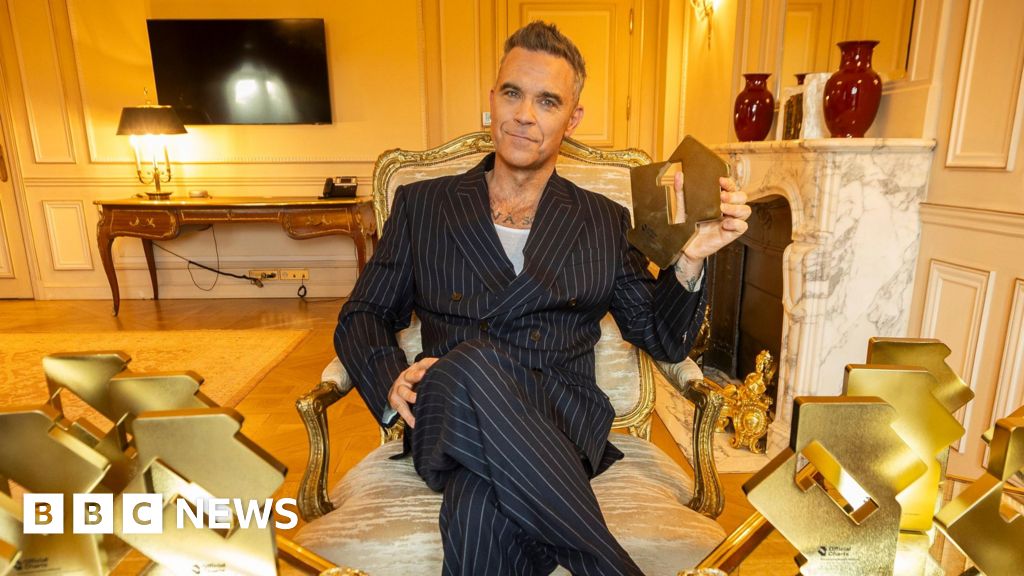
Robbie Williams breaks The Beatles' chart record with his 16th number one album BritpopImage Credit: BBC News
Key Points
- •16: The number of solo UK number one albums held by Robbie Williams.
- •21: Williams’ total number of chart-topping albums when including his work with Take That.
- •23: The total number of chart-toppers held by Sir Paul McCartney (including solo, Wings, and The Beatles), the only individual with more total number ones than Williams.
- •1997: The year Williams’ solo chart dominance began.
- •The Concept: Williams describes the record as "the album that I wanted to write after I left Take That," channeling the influence of Oasis, Elastica, and the broader Britpop movement.
Robbie Williams Secures Historic 16th Number One, Surpassing The Beatles
Robbie Williams has cemented his status as a titan of the British music industry, officially surpassing The Beatles to become the solo artist with the most number one albums in UK chart history. His latest studio effort, Britpop, debuted at the top spot this week, marking the 16th time Williams has reached the summit as a solo performer—a milestone that reshapes the record books for the modern era.
The Big Picture
The achievement places Williams ahead of the Fab Four, who collectively secured 15 number one albums. While Williams’ career began as a member of the boy band Take That, his solo trajectory, which launched with 1997’s Life Thru A Lens, has demonstrated a rare longevity and a consistent ability to capture the British public’s attention across three different decades.
By the Numbers
- 16: The number of solo UK number one albums held by Robbie Williams.
- 21: Williams’ total number of chart-topping albums when including his work with Take That.
- 23: The total number of chart-toppers held by Sir Paul McCartney (including solo, Wings, and The Beatles), the only individual with more total number ones than Williams.
- 1997: The year Williams’ solo chart dominance began.
Why It Matters
This record is more than a statistical anomaly; it represents the enduring commercial viability of the "Britpop" era's icons. Williams described the feat to BBC News as "unbelievable," comparing his career trajectory to "stretching an elastic band from Stoke-on-Trent to the Moon," adding that the band is now "orbiting Venus."
The success of the album Britpop suggests a strong cultural appetite for 1990s nostalgia, packaged through a modern lens. Williams, who dubbed himself the "Forrest Gump of Pop," has managed to pivot from the hedonistic tabloid fixture of the 90s to a seasoned statesman of British music.
Inside the Record: Britpop
The album itself serves as a sonic and visual tribute to the era that defined Williams’ early career. It is a calculated return to the energy of the mid-90s, specifically the period following his high-profile departure from Take That.
- The Concept: Williams describes the record as "the album that I wanted to write after I left Take That," channeling the influence of Oasis, Elastica, and the broader Britpop movement.
- The Artwork: The cover features a recreation of the famous 1995 Mick Hudson photograph taken at Glastonbury, showing a bleached-blonde, missing-toothed Williams—an image that became synonymous with his "rebel" phase.
- Key Collaborations:
- Gaz Coombes (Supergrass): Contributes to the glam-rock-inspired "Cocky."
- Gary Barlow: In a notable moment of reconciliation, Williams’ former Take That bandmate appears on the track "Morrissey," written from the perspective of a delusional stalker.
Critical Reception
While the commercial success of Britpop was immediate, critical reactions have highlighted the album's polarizing, "unrepentant" nature.
- The Guardian (4/5 stars): Praised the record as a "wayward yet winning time-machine trip."
- Rolling Stone (4/5 stars): Noted that Williams sounds "liberated" and "unrepentantly mad," delivering his strongest songwriting in years.
- NME: Offered a more tempered view, calling the album "bold" and "a laugh," though questioning its long-term legacy.
A Career Defined by Resilience
The path to 16 number ones has not been linear. Williams has been candid about the mental health struggles and substance abuse issues that plagued his peak years of fame. Speaking from Paris, where he is celebrating the chart win with his wife, Ayda Field, Williams noted the contrast between his current lifestyle and his past.
"I’m going to take this week, at least, to remind myself of how lucky I am," Williams said. "Because for a while, I didn’t get to do that because of mental illness or whatever. But now I am firmly in a place where the garden is blossoming."
The Complete Solo Number One Catalog
Williams' ascent to the top of the record books is underpinned by a consistent output of chart-topping releases:
- Life Thru A Lens (1997)
- I've Been Expecting You (1998)
- Sing When You're Winning (2000)
- Swing When You're Winning (2001)
- Escapology (2002)
- Greatest Hits (2004)
- Intensive Care (2005)
- Rudebox (2006)
- In And Out Of Consciousness (2010)
- Take The Crown (2012)
- Swings Both Ways (2013)
- The Heavy Entertainment Show (2016)
- The Christmas Present (2019)
- XXV (2022)
- Better Man: Original Soundtrack (2025)
- Britpop (2026)
What's Next
While Williams has officially surpassed The Beatles as a collective entity, the ultimate record for an individual remains within reach. Sir Paul McCartney currently holds the lead with 23 number one albums across his various projects. Given Williams' current momentum—securing three number one albums in just the last four years (XXV, Better Man, and Britpop)—the gap is narrowing.
However, Williams remains grounded by his family. He recounted a humorous exchange with his daughter, Teddy, who reminded him that while he may have more number one albums than anyone else, that record currently applies only "in the UK."
For the music industry, Williams' success provides a blueprint for how legacy artists can maintain relevance in the streaming era: by leaning into their history while continuing to deliver high-concept, personality-driven projects that resonate with a loyal, multi-generational fan base.
Source: BBC News
Related Articles
Nationwide Protests Against ICE Enforcement Erupt in U.S.
Thousands are protesting ICE after the DOJ declined to investigate a fatal agent-involved shooting in Minneapolis, fueling a national movement and public anger.
Venezuela Amnesty Bill Could Free Political Prisoners
Learn about Venezuela's proposed amnesty bill to release political prisoners. The move could signal a major political shift and affect future economic sanctions
Pokémon Cancels Yasukuni Shrine Event After Backlash
The Pokémon Company has canceled an event at Tokyo's controversial Yasukuni Shrine after facing international backlash from China and South Korea.
US to Lose Measles Elimination Status: What It Means
The U.S. is poised to lose its measles elimination status due to escalating outbreaks. Learn what this downgrade means for public health and the economy.