Ryan Routh Sentenced to Life for Trump Assassination Attempt
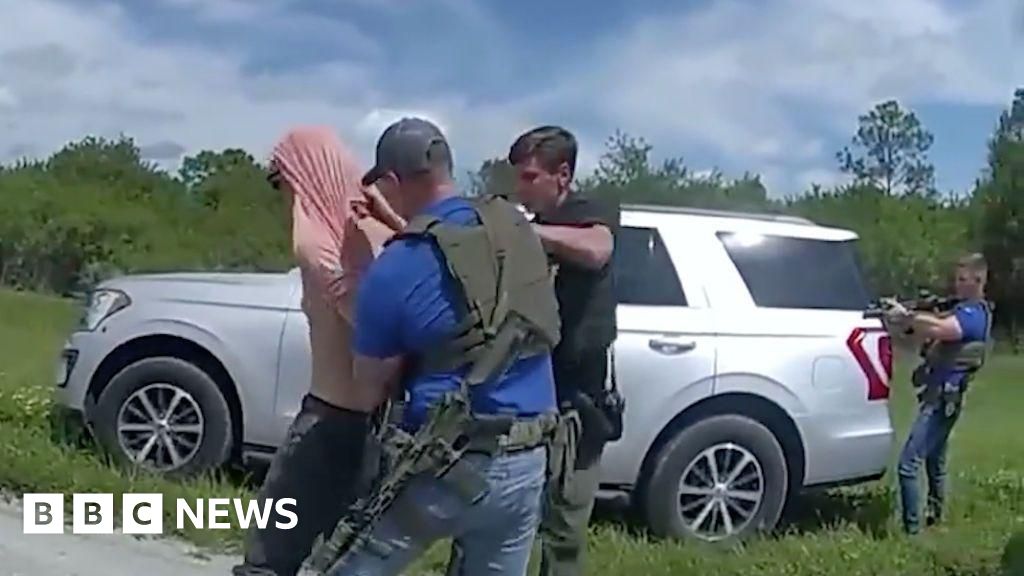
Ryan Routh sentenced to life in prison for 2024 attempt on Trump's lifeImage Credit: BBC News
Key Points
- •WEST PALM BEACH, FLORIDA – A federal judge has sentenced Ryan Routh to life in prison without the possibility of parole for his attempt to assassinate former President Donald Trump at a Florida golf course in September 2024. The sentence concludes a high-stakes trial that provided a detailed account of a premeditated plot and underscored the persistent security threats facing high-profile political figures.
- •The Weapon: Federal agents testified they recovered a semiautomatic SKS-style rifle equipped with a scope and an extended magazine from the thick brush where Routh had been hiding. The weapon was found loaded, which prosecutors argued was clear proof of his lethal intent.
- •The Vantage Point: In a crucial piece of testimony, investigators acknowledged that Routh is not believed to have had a clear line of sight to Mr. Trump at any point during the incident. Prosecutors argued this was because his plan was thwarted by alert Secret Service agents before he could move into a final firing position, not because of a lack of intent.
- •Digital Evidence: Jurors were shown evidence from Routh's electronic devices, including online searches related to assassination techniques, long-range ballistics, and the former president's daily schedule. The prosecution used this data to establish a timeline of Routh's planning in the weeks leading up to the attempt.
- •Eyewitness Testimony: Secret Service agents who were part of the counter-sniper surveillance team described spotting Routh with binoculars, noting his suspicious behavior as he concealed himself in the foliage bordering the 5th hole of the golf course.
Ryan Routh sentenced to life in prison for 2024 attempt on Trump's life
WEST PALM BEACH, FLORIDA – A federal judge has sentenced Ryan Routh to life in prison without the possibility of parole for his attempt to assassinate former President Donald Trump at a Florida golf course in September 2024. The sentence concludes a high-stakes trial that provided a detailed account of a premeditated plot and underscored the persistent security threats facing high-profile political figures.
Routh, 28, stood silently as U.S. District Judge Aileen Cannon delivered the mandatory sentence in a West Palm Beach courtroom. A jury had previously found him guilty on all counts, including attempted assassination of a former president, a federal crime carrying severe penalties.
The verdict and sentence bring a legal conclusion to an incident that sent shockwaves through the U.S. political landscape, prompting an immediate and extensive review of Secret Service protocols for protecting former heads of state.
The Prosecution's Case: A Premeditated Plot
Federal prosecutors constructed a case arguing that Routh’s actions on September 15, 2024, were the culmination of a meticulously planned effort to kill the 45th U.S. President. Over the course of the trial, they presented evidence detailing Routh's surveillance of the Trump International Golf Club, his acquisition of weaponry, and his digital footprint.
Key evidence presented to the jury included:
-
The Weapon: Federal agents testified they recovered a semiautomatic SKS-style rifle equipped with a scope and an extended magazine from the thick brush where Routh had been hiding. The weapon was found loaded, which prosecutors argued was clear proof of his lethal intent.
-
The Vantage Point: In a crucial piece of testimony, investigators acknowledged that Routh is not believed to have had a clear line of sight to Mr. Trump at any point during the incident. Prosecutors argued this was because his plan was thwarted by alert Secret Service agents before he could move into a final firing position, not because of a lack of intent.
-
Digital Evidence: Jurors were shown evidence from Routh's electronic devices, including online searches related to assassination techniques, long-range ballistics, and the former president's daily schedule. The prosecution used this data to establish a timeline of Routh's planning in the weeks leading up to the attempt.
-
Eyewitness Testimony: Secret Service agents who were part of the counter-sniper surveillance team described spotting Routh with binoculars, noting his suspicious behavior as he concealed himself in the foliage bordering the 5th hole of the golf course.
The Defense's Argument
Routh’s defense team did not dispute his presence at the golf course. Instead, their strategy focused on questioning the prosecution's narrative of a viable assassination plot. They argued that the government had not proven beyond a reasonable doubt that Routh had the actual capability or immediate intent to carry out the act.
The defense heavily emphasized the lack of a clear line of sight, portraying Routh as a deeply troubled individual who was acting out a fantasy rather than executing a concrete plan. They characterized his actions as reckless and dangerous but stopped short of a genuine assassination attempt. Routh did not take the stand in his own defense.
Background of the September Incident
The attempt occurred on a clear afternoon as Mr. Trump was playing golf.
Secret Service agents, positioned to secure the perimeter, identified Routh hiding in bushes approximately 400 yards from the former president's group. When agents moved to challenge him, Routh reportedly opened fire on them before fleeing the scene in a vehicle.
A brief chase ensued, which ended with Routh crashing his car and being apprehended. No one in the former president's detail was harmed, and Mr. Trump was safely evacuated from the course. The incident marked the most significant security breach involving a former U.S. president in modern history.
Broader Implications
The sentencing closes a major legal chapter, but its reverberations continue to be felt across the security and political spectrum.
-
Security Protocols: The attempt triggered an immediate and comprehensive review of Secret Service protective details for former presidents. The agency has reportedly implemented new strategies, including expanded perimeters and enhanced technological surveillance, particularly for protectees who maintain public-facing lifestyles.
-
Legal Deterrent: Legal experts note that the swift prosecution and mandatory life sentence serve as a powerful deterrent. The verdict reinforces the federal government's zero-tolerance policy for politically motivated violence, especially acts directed at current or former leaders.
-
Political Climate: The case has been a stark reminder of the dangers posed by extreme political polarization. Statements from both the White House and Mr. Trump’s office following the incident called for a de-escalation of violent rhetoric, though the broader political environment remains tense.
What's Next?
While the trial is over, the legal process may not be entirely complete. Routh’s attorneys are expected to file an appeal, likely focusing on evidentiary rulings made during the trial and the legal definition of an "attempt" under the federal statute.
Meanwhile, the Secret Service will continue to adapt its security posture based on its internal review of the September 15th incident. For now, the life sentence delivered in the Florida courtroom serves as the definitive state response to an act that briefly terrorized the nation and brought the reality of political violence into sharp focus.
Source: BBC News
Related Articles
Nationwide Protests Against ICE Enforcement Erupt in U.S.
Thousands are protesting ICE after the DOJ declined to investigate a fatal agent-involved shooting in Minneapolis, fueling a national movement and public anger.
Venezuela Amnesty Bill Could Free Political Prisoners
Learn about Venezuela's proposed amnesty bill to release political prisoners. The move could signal a major political shift and affect future economic sanctions
Pokémon Cancels Yasukuni Shrine Event After Backlash
The Pokémon Company has canceled an event at Tokyo's controversial Yasukuni Shrine after facing international backlash from China and South Korea.
US to Lose Measles Elimination Status: What It Means
The U.S. is poised to lose its measles elimination status due to escalating outbreaks. Learn what this downgrade means for public health and the economy.