Bipartisan Call for Investigation into Alex Pretti Killing
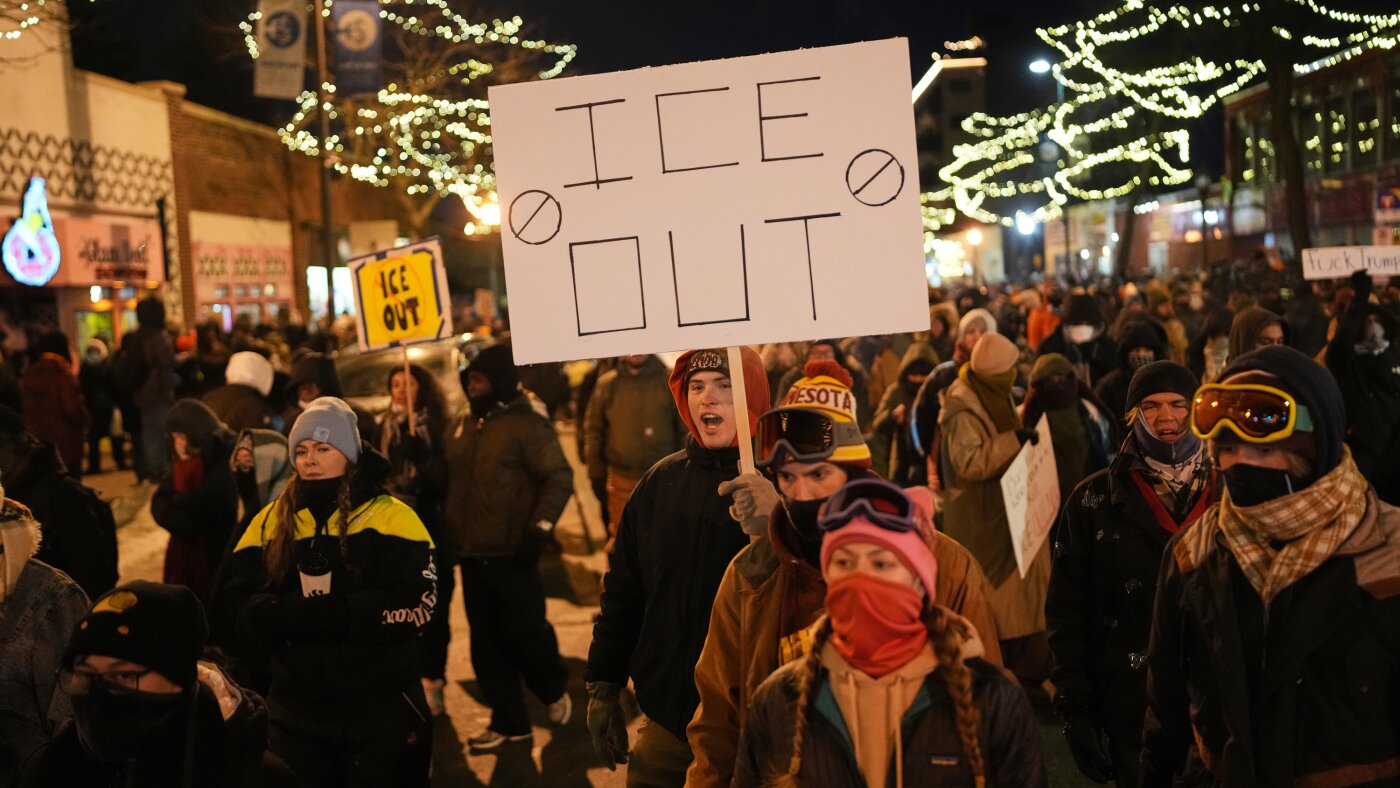
Senate Democrats and Republicans call for investigation into killing of Alex PrettiImage Credit: NPR News
Key Points
- •WASHINGTON – The fatal shooting of a U.S. citizen by federal officers in Minneapolis has ignited a rare bipartisan firestorm on Capitol Hill, escalating into a high-stakes confrontation over government funding that threatens a partial shutdown of federal agencies, including the Department of Homeland Security.
- •The Official Narrative: Administration officials claim federal agents acted in self-defense. Greg Bovino, the head of President Trump's immigration operation, told CNN the agents are "the victims" and that Pretti "perpetrated violence" by injecting himself into a law enforcement operation with a weapon. Trump-appointed U.S. Attorney Bill Essayli asserted that if a citizen approaches law enforcement with a gun, officers "will be legally justified in shooting you."
- •The Counter-Narrative: The source article notes that available video evidence and eyewitness accounts contradict the administration's claims. It states there is no verified evidence of Pretti brandishing a handgun during the encounter. Furthermore, local officials, including Minneapolis Police Chief Brian O'Hara, report a complete lack of cooperation from federal authorities regarding the investigation.
- •The Sticking Point: Funding for the Department of Homeland Security (DHS), which oversees Immigration and Customs Enforcement (ICE), is at the center of the dispute. While Congress has passed full-year funding for some agencies, DHS and the Pentagon remain on temporary measures.
- •The Legislative Hurdle: In the Senate, any major spending bill requires a 60-vote supermajority to overcome a filibuster. With a narrow Republican majority, they need Democratic votes to pass the package.
Senate Democrats and Republicans Call for Investigation Into Killing of Alex Pretti
WASHINGTON – The fatal shooting of a U.S. citizen by federal officers in Minneapolis has ignited a rare bipartisan firestorm on Capitol Hill, escalating into a high-stakes confrontation over government funding that threatens a partial shutdown of federal agencies, including the Department of Homeland Security.
The death of Alex Pretti, 37, during an immigration enforcement protest on Saturday has united lawmakers from both parties in demanding a transparent, multi-jurisdictional investigation, placing them in direct opposition to the Trump administration's narrative and its handling of the aftermath.
The Flashpoint in Minneapolis
The incident has created a starkly divided reality between the administration's account and reports from the ground.
-
The Official Narrative: Administration officials claim federal agents acted in self-defense. Greg Bovino, the head of President Trump's immigration operation, told CNN the agents are "the victims" and that Pretti "perpetrated violence" by injecting himself into a law enforcement operation with a weapon. Trump-appointed U.S. Attorney Bill Essayli asserted that if a citizen approaches law enforcement with a gun, officers "will be legally justified in shooting you."
-
The Counter-Narrative: The source article notes that available video evidence and eyewitness accounts contradict the administration's claims. It states there is no verified evidence of Pretti brandishing a handgun during the encounter. Furthermore, local officials, including Minneapolis Police Chief Brian O'Hara, report a complete lack of cooperation from federal authorities regarding the investigation.
A Rare Bipartisan Rebuke
The administration's posture has drawn swift and forceful condemnation from a coalition of Democrats and Republicans, a notable development in a Congress where GOP criticism of the White House has been infrequent.
Democratic Accusations
Minnesota's Democratic senators are leading the charge, accusing federal agencies of obstruction.
"This looks very much like another cover up," Sen. Tina Smith, D-Minn., stated Sunday, revealing that state investigators were forced to obtain a warrant to access evidence and were still denied by federal agents.
Her colleague, Sen. Amy Klobuchar, D-Minn., cited a pattern of aggressive tactics by federal immigration officers in her state as justification for taking a hard line. "When they're killing two constituents in my state... No, I am not voting for this funding," Klobuchar said on NBC News.
Republican Calls for Transparency
Several key Senate Republicans have broken with the administration, warning that the credibility of federal law enforcement is on the line.
"There must be a thorough and impartial investigation," Sen. Thom Tillis, R-N.C., posted Sunday. "Any administration official who rushes to judgment and tries to shut down an investigation before it begins are doing an incredible disservice to the nation and to President Trump's legacy."
Sen. Bill Cassidy, R-La., echoed this demand, calling for a "full joint federal and state investigation" and stating that the "credibility of ICE and DHS are at stake."
Fiscal Crisis Looms on Capitol Hill
The political fallout is now directly threatening to derail government funding negotiations, creating significant economic uncertainty. The incident has become the primary obstacle to passing a spending package for several major federal departments.
-
The Sticking Point: Funding for the Department of Homeland Security (DHS), which oversees Immigration and Customs Enforcement (ICE), is at the center of the dispute. While Congress has passed full-year funding for some agencies, DHS and the Pentagon remain on temporary measures.
-
The Legislative Hurdle: In the Senate, any major spending bill requires a 60-vote supermajority to overcome a filibuster. With a narrow Republican majority, they need Democratic votes to pass the package.
-
The Democratic Ultimatum: Senate Minority Leader Chuck Schumer declared Saturday that Democrats would not vote to advance the spending package if it includes DHS funding without significant changes or oversight attached. This blockade, driven by the events in Minneapolis, makes a partial government shutdown a distinct possibility.
Widening Political Fractures
The controversy has also exposed rifts within the Republican party and highlighted the jurisdictional tensions between federal and local authorities.
The statement from U.S. Attorney Essayli that carrying a firearm near law enforcement could be a "death sentence" drew sharp criticism from Second Amendment advocates within his own party.
"Carrying a firearm is not a death sentence, it's a Constitutionally protected God-given right," Rep. Thomas Massie, R-Ky., posted on X, a sentiment reportedly shared by the National Rifle Association.
Meanwhile, Rep. James Comer, R-Ky., Chair of the House Oversight Committee, took a different tack, suggesting on Fox News that if local officials in Minneapolis won't cooperate, ICE should be removed from the city entirely.
What's Next
The death of Alex Pretti has spiraled from a local tragedy into a national crisis with profound political and fiscal implications. The path forward is contingent on two critical pressure points:
-
The Investigation: The administration faces mounting bipartisan pressure to abandon its DHS-led internal probe in favor of a joint investigation with state and local authorities. A refusal to do so will almost certainly intensify accusations of a cover-up and further alienate key Republican allies.
-
The Funding Deadline: With Senate Democrats unified in their threat to block DHS funding, the White House and Senate Republicans must decide whether to negotiate on new oversight measures for the agency or risk a politically damaging and economically disruptive partial government shutdown.
The coming days will test the administration's influence over its own party and determine whether a bipartisan demand for accountability can prevail over executive authority. The outcome will not only shape the investigation into Pretti's death but also set the federal government's fiscal course.
Source: NPR News
Related Articles
Nationwide Protests Against ICE Enforcement Erupt in U.S.
Thousands are protesting ICE after the DOJ declined to investigate a fatal agent-involved shooting in Minneapolis, fueling a national movement and public anger.
Venezuela Amnesty Bill Could Free Political Prisoners
Learn about Venezuela's proposed amnesty bill to release political prisoners. The move could signal a major political shift and affect future economic sanctions
Pokémon Cancels Yasukuni Shrine Event After Backlash
The Pokémon Company has canceled an event at Tokyo's controversial Yasukuni Shrine after facing international backlash from China and South Korea.
US to Lose Measles Elimination Status: What It Means
The U.S. is poised to lose its measles elimination status due to escalating outbreaks. Learn what this downgrade means for public health and the economy.