Shabana Mahmood on Labour's New Immigration Stance
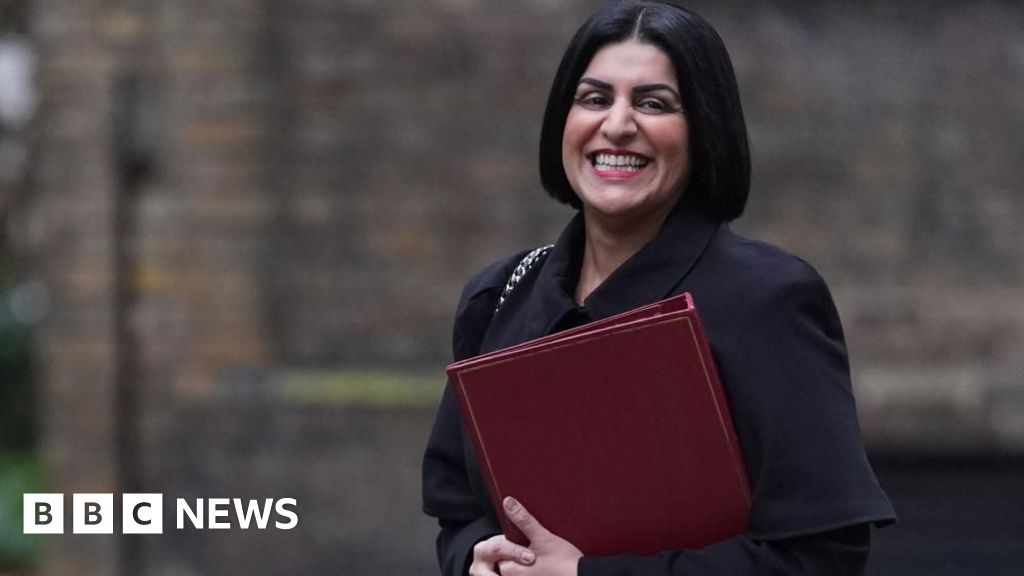
Shabana Mahmood defends immigration reforms amid Labour oppositionImage Credit: BBC Politics
Key Points
- •LONDON – In a significant articulation of Labour's evolving stance on immigration, Shadow Justice Secretary Shabana Mahmood has defended a more selective, skills-focused approach, framing settlement in the UK as a "privilege, not a right." The comments, made before the influential Home Affairs Committee, signal a strategic pivot designed to align the party with economic priorities and address voter concerns, while simultaneously creating friction within its own ranks.
- •Privilege, Not a Right: Mahmood's central declaration that settlement is a "privilege" is a deliberate rhetorical choice. It shifts the focus from the rights of the individual migrant to the discretion of the state, suggesting a system with stricter conditionality and higher entry bars.
- •Attracting the 'Brightest and Best': This phrase indicates a clear preference for a merit-based system. Labour's policy would likely prioritize individuals with skills in high-demand sectors such as technology, green energy, life sciences, and advanced manufacturing, directly linking immigration to the party's industrial strategy.
- •Economic Contribution: Implicit in her remarks is the idea that future migrants will be evaluated heavily on their potential economic contribution, whether through direct employment, innovation, or investment. This suggests a system that could favour higher earners and those with specific, verifiable qualifications.
- •Sectoral Pressures: Industries like hospitality, social care, and agriculture, which historically relied on a steady flow of EU labour for lower-wage roles, face an acute staffing crisis. A policy focused exclusively on the "brightest and best" could exacerbate these shortages.
Shabana Mahmood defends immigration reforms amid Labour opposition
LONDON – In a significant articulation of Labour's evolving stance on immigration, Shadow Justice Secretary Shabana Mahmood has defended a more selective, skills-focused approach, framing settlement in the UK as a "privilege, not a right." The comments, made before the influential Home Affairs Committee, signal a strategic pivot designed to align the party with economic priorities and address voter concerns, while simultaneously creating friction within its own ranks.
Mahmood’s testimony positions Labour's prospective immigration policy as a tool for economic competitiveness. She argued it would be "odd" for the UK not to actively seek to attract the "brightest and best" global talent, a statement that echoes language previously used by Conservative governments but is now being repurposed to define Labour's new, pragmatic agenda.
This move is widely seen as an attempt to neutralize a potent political weapon for the Conservatives and present Labour as a party of fiscal prudence and economic management ahead of a general election.
Mahmood's Core Argument
Appearing before MPs, Mahmood laid out a clear, if still developing, framework for Labour's thinking. Her statements were carefully calibrated to project authority and a departure from the party's more open-door policies of the past.
The core of her argument rested on the principle of national interest, emphasizing that immigration must serve the UK's economic and social needs.
-
Privilege, Not a Right: Mahmood's central declaration that settlement is a "privilege" is a deliberate rhetorical choice. It shifts the focus from the rights of the individual migrant to the discretion of the state, suggesting a system with stricter conditionality and higher entry bars.
-
Attracting the 'Brightest and Best': This phrase indicates a clear preference for a merit-based system. Labour's policy would likely prioritize individuals with skills in high-demand sectors such as technology, green energy, life sciences, and advanced manufacturing, directly linking immigration to the party's industrial strategy.
-
Economic Contribution: Implicit in her remarks is the idea that future migrants will be evaluated heavily on their potential economic contribution, whether through direct employment, innovation, or investment. This suggests a system that could favour higher earners and those with specific, verifiable qualifications.
The Economic Context: Post-Brexit Labour Dynamics
Mahmood's comments do not exist in a vacuum. They are a direct response to the UK's complex post-Brexit economic landscape, which is characterized by persistent labour shortages, anemic productivity growth, and intense global competition for talent.
The current Conservative government has already moved to tighten immigration rules, significantly increasing the salary threshold for Skilled Worker visas to £38,700. While this has been welcomed by some who advocate for higher domestic wages, it has caused alarm in several key sectors.
-
Sectoral Pressures: Industries like hospitality, social care, and agriculture, which historically relied on a steady flow of EU labour for lower-wage roles, face an acute staffing crisis. A policy focused exclusively on the "brightest and best" could exacerbate these shortages.
-
Productivity Puzzle: A key government and Bank of England concern is the UK's stagnant productivity. Proponents of a high-skill immigration model argue that attracting elite talent can drive innovation, improve business processes, and have a positive spillover effect on the broader workforce.
-
Inflation and Wages: The debate is also linked to inflation. Limiting the supply of overseas labour could, in theory, drive up wages for domestic workers. However, economists are divided on the real-world impact, with some warning it could simply fuel inflation and make UK businesses less competitive if not matched by productivity gains.
A Calculated Political Shift
This policy articulation represents a significant evolution for the Labour Party. Under previous leadership, the party was often portrayed by opponents as favouring looser immigration controls. The current leadership under Keir Starmer is executing a clear strategy of "policy triangulation" to occupy the political center ground.
This new, tougher-sounding stance is designed to appeal directly to swing voters in "Red Wall" constituencies, where immigration has consistently polled as a top concern.
-
Contrast with the Past: The language used by Mahmood is a world away from the policies advocated during the Jeremy Corbyn era, which included a more sympathetic stance towards freedom of movement. It signals a definitive break and a move towards a more controlled, state-managed system.
-
Internal Dissent: This shift is not without risk. It has already drawn criticism from the left of the party and from affiliated groups who argue it abandons Labour's internationalist traditions. Critics worry it could lead to a "two-tier" system that devalues essential but lower-paid workers and creates a "race to the bottom" on humanitarian principles.
Implications for Business and Industry
The business community's reaction to Labour's developing policy is likely to be mixed, reflecting the diverse needs of the UK economy.
-
Tech and Finance: London's tech and finance hubs will likely welcome a streamlined, efficient system for attracting top-tier global talent. For these sectors, access to the world's best software engineers, data scientists, and financial analysts is a matter of competitive survival.
-
Healthcare and Social Care: The NHS and the social care sector remain heavily reliant on international staff. While doctors and specialist consultants would qualify under a "brightest and best" model, there are deep concerns about the pipeline of nurses, care assistants, and support staff, who may not meet higher salary or skill thresholds.
-
SMEs and Hospitality: Small and medium-sized enterprises (SMEs), along with the hospitality and construction sectors, may face significant challenges. These businesses often require a broader range of skills and labour, not just elite talent, and could be disproportionately affected by a restrictive regime.
What Comes Next
Mahmood's testimony is a clear marker, but the detailed policy is yet to be written. Her comments set the stage for immigration to become a central economic, as well as social, battleground at the next general election.
The next steps will be crucial. The financial markets and business leaders will be watching closely for Labour to publish a detailed policy paper that puts substance behind the rhetoric. This document will need to address the inherent tension between attracting elite talent and filling the widespread labour shortages that are acting as a drag on UK economic growth.
For now, the message is clear: a future Labour government intends to use immigration not as a social issue to be managed, but as an economic lever to be pulled in pursuit of national prosperity. The challenge will be convincing a broad coalition of voters and businesses that it has found the right balance.
Source: BBC Politics
Related Articles
Nationwide Protests Against ICE Enforcement Erupt in U.S.
Thousands are protesting ICE after the DOJ declined to investigate a fatal agent-involved shooting in Minneapolis, fueling a national movement and public anger.
Venezuela Amnesty Bill Could Free Political Prisoners
Learn about Venezuela's proposed amnesty bill to release political prisoners. The move could signal a major political shift and affect future economic sanctions
Pokémon Cancels Yasukuni Shrine Event After Backlash
The Pokémon Company has canceled an event at Tokyo's controversial Yasukuni Shrine after facing international backlash from China and South Korea.
US to Lose Measles Elimination Status: What It Means
The U.S. is poised to lose its measles elimination status due to escalating outbreaks. Learn what this downgrade means for public health and the economy.