Watch: Snake Scares Commuters at Sydney Train Station
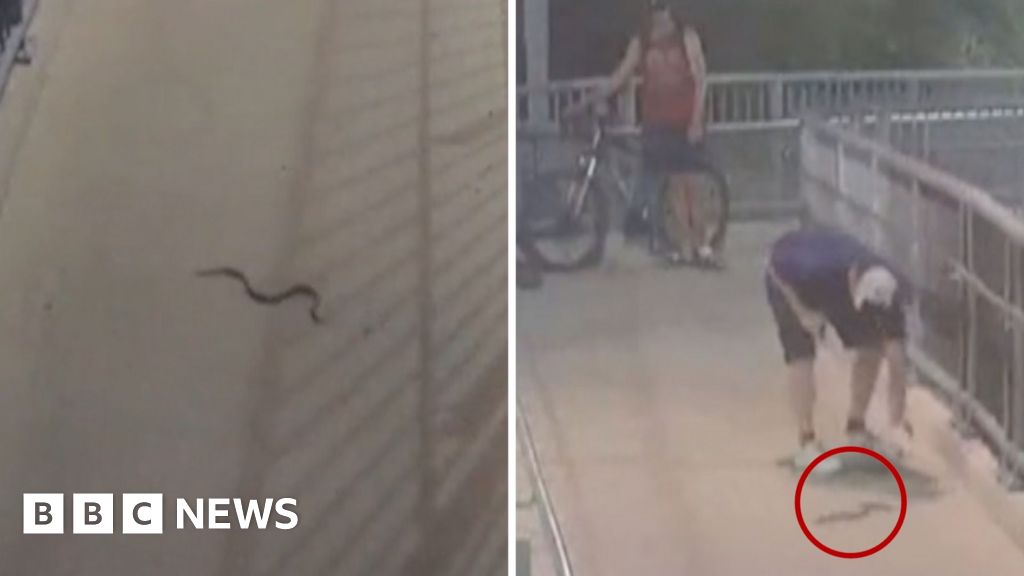
Watch: Snake scares commuters at Sydney train stationImage Credit: BBC News
Key Points
- •SYDNEY – A routine commute was brought to a standstill at a Sydney train station this week, not by signal failures or trackwork, but by a venomous snake found slithering on a busy platform. The incident, captured on CCTV, serves as a stark case study in the unique operational and financial risks faced by public infrastructure managers in Australia, where the urban environment frequently intersects with native wildlife.
- •Discovery: CCTV footage shows commuters on the platform suddenly recoiling and moving away from an area near the platform edge.
- •Reaction: A wave of alarm spreads as more people realize a snake is present. Most maintain a significant distance, with some fleeing the immediate vicinity.
- •Intervention: In a move strongly discouraged by wildlife experts and authorities, one individual is seen calmly approaching the snake, seizing it behind the head, and removing it from the platform area.
- •Official Confirmation: A spokesman for Transport for NSW later confirmed the gravity of the situation, identifying the animal as a "brown or black snake," both of which are highly venomous species native to the region.
Watch: Snake scares commuters at Sydney train station
SYDNEY – A routine commute was brought to a standstill at a Sydney train station this week, not by signal failures or trackwork, but by a venomous snake found slithering on a busy platform. The incident, captured on CCTV, serves as a stark case study in the unique operational and financial risks faced by public infrastructure managers in Australia, where the urban environment frequently intersects with native wildlife.
The footage shows a moment of sudden panic as commuters spot the reptile, with several people seen running to create distance. The disruption highlights a recurring challenge for Transport for New South Wales (NSW), the agency responsible for one of Australia's largest public transport networks, forcing a constant balance between public safety, service continuity, and wildlife management.
While the immediate crisis was resolved by a single passerby who controversially grabbed the snake with his bare hands, the event triggers a deeper analysis of the hidden costs and liabilities associated with such encounters. For an entity like Transport for NSW, a snake on a platform is not merely a public relations issue; it is a complex risk management scenario with significant financial implications.
The Incident at a Glance
The event unfolded quickly, escalating from a normal day to a high-risk situation in seconds. The swift, albeit unorthodox, resolution prevented a prolonged shutdown but underscored the unpredictability of wildlife on the network.
- Discovery: CCTV footage shows commuters on the platform suddenly recoiling and moving away from an area near the platform edge.
- Reaction: A wave of alarm spreads as more people realize a snake is present. Most maintain a significant distance, with some fleeing the immediate vicinity.
- Intervention: In a move strongly discouraged by wildlife experts and authorities, one individual is seen calmly approaching the snake, seizing it behind the head, and removing it from the platform area.
- Official Confirmation: A spokesman for Transport for NSW later confirmed the gravity of the situation, identifying the animal as a "brown or black snake," both of which are highly venomous species native to the region.
The Reptile in Question: A High-Stakes Intruder
The official identification of the snake is critical to understanding the level of risk involved. Both Eastern Brown Snakes and Red-bellied Black Snakes are common in the Sydney basin and pose a serious threat to human life.
- Eastern Brown Snake (Pseudonaja textilis): This species is responsible for the majority of fatal snakebites in Australia. Its venom is a potent neurotoxin and coagulant, causing progressive paralysis and uncontrolled bleeding. They are known to be fast-moving and can be defensive when they feel cornered.
- Red-bellied Black Snake (Pseudechis porphyriacus): While less aggressive than the brown snake, its venom is also dangerous, containing neurotoxins and myotoxins that can cause significant illness, muscle damage, and require antivenom treatment.
The presence of either species in a high-traffic public area represents a critical safety failure and a significant liability risk for the transport authority.
Beyond the Scare: The Economic Ripple Effects
From a financial and operational perspective, the incident is more than a viral video. It is a tangible example of the costs associated with the urban-wildlife interface, which can be broken down into direct, indirect, and long-term categories.
Direct Costs and Liabilities
The most immediate financial concerns stem from the direct management of the incident and the potential legal exposure.
- Wildlife Management Services: Transport for NSW, like many large infrastructure operators in Australia, must either retain staff trained in wildlife handling or maintain contracts with professional snake catchers for rapid deployment. These services represent a recurring operational expense.
- Staff Training: Employees, from station staff to track workers, require specialized training to identify and respond to wildlife encounters safely and in accordance with official protocols. This adds to labor overheads.
- Liability and Insurance: The primary financial risk is liability. A snakebite on railway property could lead to substantial legal claims for personal injury, negligence, or failure to provide a safe environment. This risk directly translates into higher insurance premiums for public liability coverage. Had the individual who handled the snake been bitten, the legal and financial fallout could have been immense.
Indirect and System-Wide Costs
Beyond the immediate expenses, such incidents create broader economic impacts on the transport system and the city itself.
- Service Disruptions: A prolonged platform closure to manage a wildlife threat can cause significant train delays. These delays have a cascading economic cost, measured in lost productivity for thousands of commuters and increased operational costs for the network as it works to restore normal timetables.
- Reputational Risk: While often seen as a uniquely Australian problem, frequent safety incidents can erode public confidence in the transport system's ability to manage its environment, potentially impacting ridership over the long term.
- Resource Allocation: Every minute that staff and management spend on an unplanned event like a snake on a platform is a minute not spent on core operations, maintenance, or customer service, representing a real cost in diverted resources.
The Bottom Line: A Mandate for Proactive Risk Management
This incident serves as a critical reminder that for Australian enterprises, particularly those managing sprawling public infrastructure, environmental risk management is not an abstract concept but a core business function. The viral footage of a brave (or reckless) commuter is secondary to the underlying operational reality.
The key takeaway for Transport for NSW and similar entities is the necessity of robust, proactive protocols. Relying on the intervention of an untrained member of the public is not a sustainable or responsible strategy.
Next steps will likely involve a review of current procedures:
- Protocol Reinforcement: An internal review of wildlife incursion protocols, response times for professional handlers, and on-site staff procedures is almost certain.
- Public Awareness Campaigns: The incident provides an opportunity to educate the public on the correct response: keep a safe distance, notify staff immediately, and never attempt to handle a snake.
- Infrastructure Assessment: In the long term, transport authorities may need to invest further in environmental design and exclusion measures, such as snake-proof fencing and sealing potential entry points in and around station infrastructure, especially for facilities bordering bushland.
Ultimately, the snake on the platform is a potent symbol of a larger business challenge. In Australia, managing financial and operational risk means accounting for a natural environment that is often unpredictable and, at times, dangerous. For a senior financial correspondent, the story is not just about the snake; it’s about the cost of keeping the trains running on time in a continent unlike any other.
Source: BBC News
Related Articles
Nationwide Protests Against ICE Enforcement Erupt in U.S.
Thousands are protesting ICE after the DOJ declined to investigate a fatal agent-involved shooting in Minneapolis, fueling a national movement and public anger.
Venezuela Amnesty Bill Could Free Political Prisoners
Learn about Venezuela's proposed amnesty bill to release political prisoners. The move could signal a major political shift and affect future economic sanctions
Pokémon Cancels Yasukuni Shrine Event After Backlash
The Pokémon Company has canceled an event at Tokyo's controversial Yasukuni Shrine after facing international backlash from China and South Korea.
US to Lose Measles Elimination Status: What It Means
The U.S. is poised to lose its measles elimination status due to escalating outbreaks. Learn what this downgrade means for public health and the economy.