Spain Imposes Border Controls on Italy Over Migrant Row
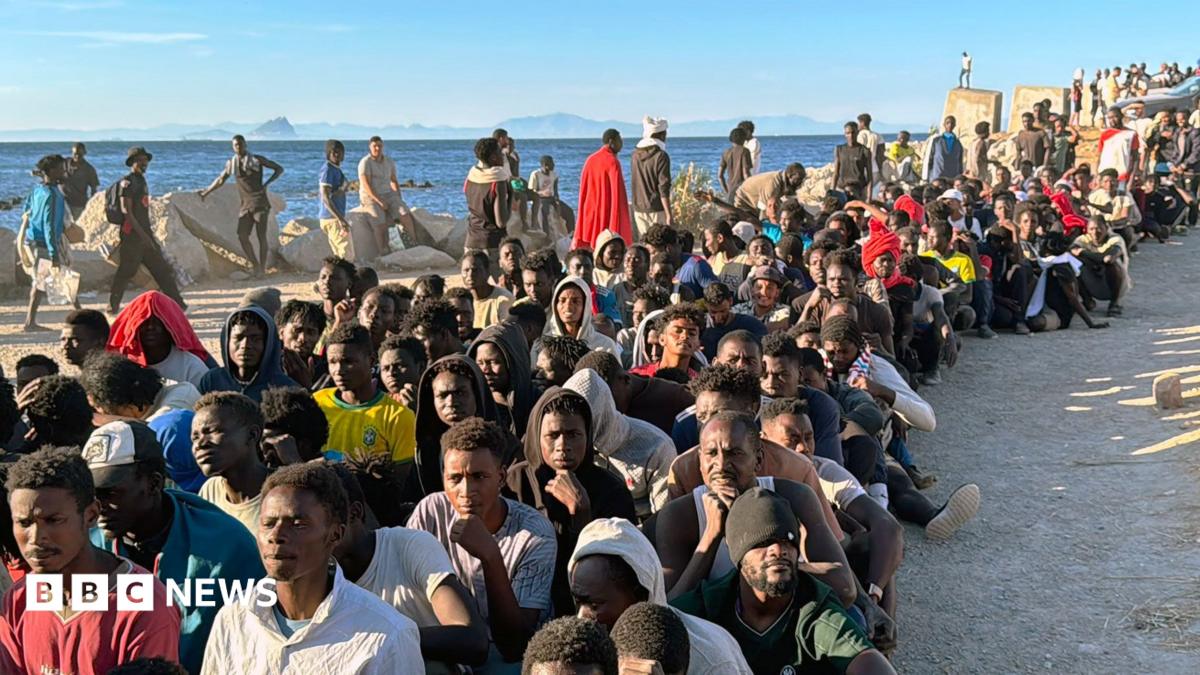
Spain to impose border controls against Italy as row over Ceuta migrant influx intensifiesImage Credit: BBC News
Key Points
- •MADRID – Spain has announced it will impose retaliatory border controls on all air and sea arrivals from Italy, a dramatic escalation in a diplomatic feud that is fracturing the European Union's cherished principle of free movement. The move pits two of the bloc's largest economies against each other, exposing deep-seated divisions over migration policy.
- •Who is affected: All passengers, regardless of nationality, arriving on flights and ferries from Italy will be subject to checks.
- •What it entails: Authorities will conduct passport, nationality, and visa verifications for all travelers. This is a departure from the seamless travel normally guaranteed within the EU's Schengen Area.
- •Duration: The controls are set to last until September 7, though the government noted this period could be modified "if the circumstances that led to its adoption" change.
- •1. Italy's Initial Move: Last week, Italy's conservative government, led by Prime Minister Giorgia Meloni, unilaterally suspended the Schengen agreement for arrivals from Spain. Rome stated the move was a necessary security precaution to prevent any migrants who entered Ceuta from travelling onward to Italy.
Spain to impose border controls against Italy as row over Ceuta migrant influx intensifies
MADRID – Spain has announced it will impose retaliatory border controls on all air and sea arrivals from Italy, a dramatic escalation in a diplomatic feud that is fracturing the European Union's cherished principle of free movement. The move pits two of the bloc's largest economies against each other, exposing deep-seated divisions over migration policy.
The Spanish government confirmed the measures will take effect at midnight (22:00 GMT) and remain for at least one month. This direct response follows Italy's refusal to lift similar restrictions it imposed on travelers from Spain a week ago, following a massive influx of migrants into the Spanish North African exclave of Ceuta.
The escalating tit-for-tat actions threaten to unravel a key pillar of European integration, creating friction for tourists and businesses during the peak summer season and posing a significant challenge to EU cohesion.
The Retaliatory Measures
Madrid's decision marks a significant hardening of its stance after its Sunday deadline for Italy to reverse course was ignored. Spain's counter-measures are designed to mirror the controls implemented by Rome.
A statement from the Spanish government cited "the persistent irregular migratory pressure" as justification for the temporary reintroduction of border checks.
- Who is affected: All passengers, regardless of nationality, arriving on flights and ferries from Italy will be subject to checks.
- What it entails: Authorities will conduct passport, nationality, and visa verifications for all travelers. This is a departure from the seamless travel normally guaranteed within the EU's Schengen Area.
- Duration: The controls are set to last until September 7, though the government noted this period could be modified "if the circumstances that led to its adoption" change.
How We Got Here: A Timeline of Escalation
The dispute ignited after an unprecedented surge of approximately 78,000 migrants from Morocco entered Ceuta, a Spanish city on the coast of North Africa.
1. Italy's Initial Move: Last week, Italy's conservative government, led by Prime Minister Giorgia Meloni, unilaterally suspended the Schengen agreement for arrivals from Spain. Rome stated the move was a necessary security precaution to prevent any migrants who entered Ceuta from travelling onward to Italy.
2. Spain's Ultimatum: Madrid vehemently rejected Italy's justification. On Friday, the socialist government of Prime Minister Pedro Sanchez dismissed Rome's reasoning as being based on "spurious arguments," noting that migrants in Ceuta are not within the Schengen Area and cannot travel freely to the EU mainland. Spain demanded Italy lift its controls by Sunday.
3. Italy's Defiance: Rome flatly rejected the demand, stating it would not accept "ultimatums." The Italian government confirmed its controls would remain until at least August 15, a date it claims Spain "expects a new wave of migration" to hit Ceuta. Italy further stated the checks would last "until security and terrorist risks for Italy have been completely eliminated."
The Schengen Zone Under Strain
At the heart of this conflict is the Schengen Agreement, a treaty that created Europe's border-free travel zone. This area, encompassing 27 countries, is a cornerstone of the EU single market, facilitating seamless trade, tourism, and labor mobility.
- Core Principle: The agreement allows more than 400 million people to travel without facing internal border checks, representing a powerful symbol of European unity and a significant economic driver.
- Temporary Suspension: Member states can temporarily reintroduce internal border controls in exceptional circumstances, such as a serious threat to public policy or internal security. However, such moves are politically sensitive and economically disruptive.
- Current Dispute: The use of these exceptional clauses by Spain and Italy against one another marks a rare and worrying instance of internal EU conflict, moving beyond security threats to become a tool of diplomatic leverage.
The Human and Economic Cost
While both governments have attempted to downplay the impact on citizens, the real-world consequences are already being felt.
- Travel Disruptions: Despite Italian assurances that checks are focused on non-EU nationals, Spain's El Pais newspaper reported long queues and significant waiting times at several Italian airports. Passengers arriving from Spain were reportedly funneled into specific lines for document verification, disrupting the flow of travel.
- Tourism Sector: The measures come at a critical time for the tourism industries in both Spain and Italy, which are heavily reliant on the summer holiday season. The added friction and uncertainty of border controls could deter travelers and impact economic recovery in a sector still rebounding from the pandemic.
- Business and Trade: While goods are not directly targeted, the controls on people slow business travel, a vital component of the integrated European economy. The political rift also creates an unstable environment that can chill cross-border investment and commercial relationships.
A Political and Ideological Clash
The row highlights the stark ideological divide between the leaders of Spain and Italy.
- Pedro Sanchez: Spain's socialist prime minister has generally advocated for a more compassionate, EU-coordinated approach to migration management.
- Giorgia Meloni: Italy's conservative prime minister has long been a vocal critic of the EU's migration rules, campaigning on a platform of stricter national border enforcement and a hardline stance against irregular migration.
This confrontation is seen as a test case for the EU's ability to manage internal political differences, particularly on the deeply divisive issue of migration. It demonstrates how national interests and domestic political pressures can quickly override commitments to collective European principles.
What's Next?
With both nations now enforcing mutual border controls, the focus shifts to Brussels and the potential for de-escalation.
- EU Intervention: The European Commission, which oversees the implementation of Schengen rules, will be under immense pressure to mediate the dispute. Failure to do so could encourage other member states to use border controls as a political weapon, further eroding the Schengen system.
- Key Deadlines: The immediate deadlines to watch are August 15, when Italy has said it will reassess its measures, and September 7, the scheduled end date for Spain's controls. Any extension or intensification would signal a deeper crisis.
- Long-Term Implications: This standoff serves as a stark warning about the fragility of EU unity. It underscores the urgent need for a comprehensive and sustainable reform of the bloc's migration and asylum system, a challenge that has eluded consensus for years. Without a unified policy, the EU remains vulnerable to internal fractures driven by external pressures.
Source: BBC News
Related Articles
Nationwide Protests Against ICE Enforcement Erupt in U.S.
Thousands are protesting ICE after the DOJ declined to investigate a fatal agent-involved shooting in Minneapolis, fueling a national movement and public anger.
Venezuela Amnesty Bill Could Free Political Prisoners
Learn about Venezuela's proposed amnesty bill to release political prisoners. The move could signal a major political shift and affect future economic sanctions
Pokémon Cancels Yasukuni Shrine Event After Backlash
The Pokémon Company has canceled an event at Tokyo's controversial Yasukuni Shrine after facing international backlash from China and South Korea.
US to Lose Measles Elimination Status: What It Means
The U.S. is poised to lose its measles elimination status due to escalating outbreaks. Learn what this downgrade means for public health and the economy.