Starmer Calls for Mandelson's Removal from House of Lords
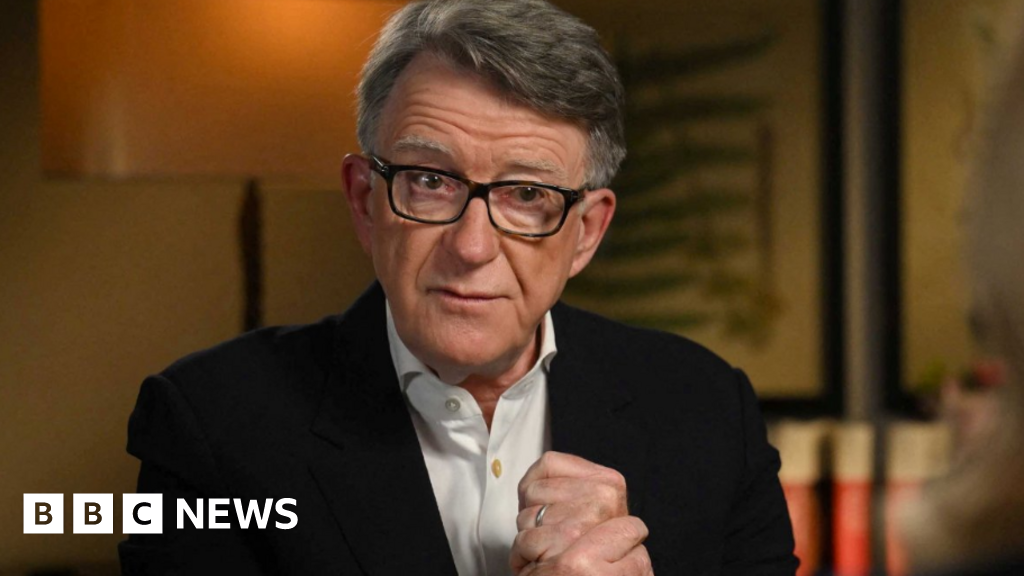
Starmer believes Mandelson 'should not be member of Lords'Image Credit: BBC Politics
Key Points
- •LONDON – In a move that signals a definitive and potentially ruthless break with the New Labour era, Prime Minister Keir Starmer has declared that Lord Peter Mandelson, a principal architect of the party's past successes, should no longer sit in the House of Lords. The stark statement, delivered by the prime minister's official spokesman, represents an unprecedented public rebuke of a Labour grandee and escalates the new government's push for political and constitutional reform.
- •The Bottom Line: This is not a policy announcement but a direct political statement. Starmer is using the authority of his office to publicly delegitimise a key figure from Labour's past, framing him as incompatible with the government's new ethical and political direction.
- •New Labour Architect: Alongside Tony Blair and Gordon Brown, Mandelson was the strategic mastermind behind the creation of "New Labour" in the 1990s. His command of communications and political strategy was instrumental in the party's landslide 1997 election victory and its subsequent decade in power.
- •Cabinet Controversies: His career was twice interrupted by high-profile resignations from the Cabinet. The first in 1998 over an undeclared home loan, and the second in 2001 amid accusations related to a passport application, though he was later cleared of any impropriety. These events cemented his reputation as a divisive figure.
- •Peerage and Return: After serving as a European Commissioner for Trade, he was brought back into government by Gordon Brown in 2008. He was elevated to the peerage as Baron Mandelson of Foy and Hartlepool, allowing him to serve as Business Secretary and First Secretary of State, effectively deputy prime minister.
Starmer believes Mandelson 'should not be member of Lords'
LONDON – In a move that signals a definitive and potentially ruthless break with the New Labour era, Prime Minister Keir Starmer has declared that Lord Peter Mandelson, a principal architect of the party's past successes, should no longer sit in the House of Lords. The stark statement, delivered by the prime minister's official spokesman, represents an unprecedented public rebuke of a Labour grandee and escalates the new government's push for political and constitutional reform.
The statement reverberated through Westminster, laying bare the tensions between the current leadership's focus on "new standards" and the legacy of its most influential and controversial predecessors.
Downing Street Delivers Unprecedented Rebuke
The prime minister's position was delivered in a brief but powerfully worded statement on Tuesday.
"The prime minister believes that Peter Mandelson should not be a member of the House of Lords or use the title," the official spokesman said, offering no further immediate clarification.
This direct intervention moves beyond typical party management into a public disavowal of one of its most senior figures. It is highly unusual for a sitting prime minister to personally call for the removal of a peer from their own party, particularly one as central to its history as Lord Mandelson.
- The Bottom Line: This is not a policy announcement but a direct political statement. Starmer is using the authority of his office to publicly delegitimise a key figure from Labour's past, framing him as incompatible with the government's new ethical and political direction.
The Architect and the 'Prince of Darkness'
Understanding the gravity of Starmer's statement requires understanding Lord Mandelson's towering and complex role in modern British politics. Appointed a life peer in 2008, his career is a study in influence, controversy, and resilience.
-
New Labour Architect: Alongside Tony Blair and Gordon Brown, Mandelson was the strategic mastermind behind the creation of "New Labour" in the 1990s. His command of communications and political strategy was instrumental in the party's landslide 1997 election victory and its subsequent decade in power.
-
Cabinet Controversies: His career was twice interrupted by high-profile resignations from the Cabinet. The first in 1998 over an undeclared home loan, and the second in 2001 amid accusations related to a passport application, though he was later cleared of any impropriety. These events cemented his reputation as a divisive figure.
-
Peerage and Return: After serving as a European Commissioner for Trade, he was brought back into government by Gordon Brown in 2008. He was elevated to the peerage as Baron Mandelson of Foy and Hartlepool, allowing him to serve as Business Secretary and First Secretary of State, effectively deputy prime minister.
Starmer's Push for a New Era
The move against Mandelson is consistent with Starmer's overarching political project: to present his Labour government as a clean break from the factionalism and perceived ethical lapses of the past, both within his own party and from the previous Conservative government.
Since taking office, Starmer has repeatedly emphasised themes of integrity, accountability, and standards in public life. This stance serves as the backdrop for his ambitious plans for constitutional reform, with the House of Lords a primary target.
-
A Break with the Past: By singling out Mandelson, Starmer is sending a clear message that no figure, regardless of their historical importance, is exempt from the new standards he seeks to impose. It distances his administration from the "New Labour" brand, which, while electorally successful, remains controversial for some voters.
-
Lords Reform Agenda: The Labour government is committed to significant reform of the upper chamber. Proposals outlined in its manifesto include replacing the House of Lords with a smaller, democratically elected second chamber. Publicly questioning the legitimacy of a high-profile current member serves to build the case for this fundamental change.
Business, Influence, and the Peerage
From a financial and corporate governance perspective, the statement shines a harsh spotlight on the intersection of business and politics within the House of Lords.
After leaving government in 2010, Lord Mandelson co-founded the strategic advisory firm Global Counsel. The firm advises multinational corporations on political and regulatory risk, a role that relies heavily on insight and access. This has long been a point of scrutiny.
-
Post-Political Career: Lord Mandelson's success in the private sector is intrinsically linked to the experience and network he built in public life. The title "Lord" and his membership in the legislature add a layer of prestige and perceived influence that is valuable in the corporate world.
-
Scrutiny on Influence: Critics argue that peers with active business interests, particularly in consultancy and lobbying, represent a potential conflict of interest. The concern is that membership in Parliament can be leveraged for commercial gain, blurring the lines between public service and private profit. Starmer's statement implicitly taps into this public unease.
What Happens Next?
The immediate consequences of the prime minister's statement are primarily political, but they set the stage for concrete action.
Lord Mandelson cannot be forcibly removed from the House of Lords by the prime minister. Peers hold their seats for life unless they are convicted of a serious criminal offence, resign, or are removed for non-attendance. The statement, therefore, is an exercise in applying immense political pressure.
The focus will now shift to Lord Mandelson's response and the wider implications for the House of Lords. He could choose to ignore the call, resign his seat to avoid a protracted conflict, or take a leave of absence.
- The Path Forward: This confrontation is a prelude to a larger battle over Lords reform. Starmer has demonstrated he is willing to engage in high-stakes political combat to advance his agenda. The incident will fuel the debate on the composition, role, and ethical standards of the upper chamber, likely accelerating the government's timetable for tabling formal reform legislation. For now, the move serves as a powerful symbol of a new premier asserting total control over his party's identity and future.
Source: BBC Politics
Related Articles
Nationwide Protests Against ICE Enforcement Erupt in U.S.
Thousands are protesting ICE after the DOJ declined to investigate a fatal agent-involved shooting in Minneapolis, fueling a national movement and public anger.
Venezuela Amnesty Bill Could Free Political Prisoners
Learn about Venezuela's proposed amnesty bill to release political prisoners. The move could signal a major political shift and affect future economic sanctions
Pokémon Cancels Yasukuni Shrine Event After Backlash
The Pokémon Company has canceled an event at Tokyo's controversial Yasukuni Shrine after facing international backlash from China and South Korea.
US to Lose Measles Elimination Status: What It Means
The U.S. is poised to lose its measles elimination status due to escalating outbreaks. Learn what this downgrade means for public health and the economy.