Steve Wright Sentenced for 1999 Murder of Victoria Hall
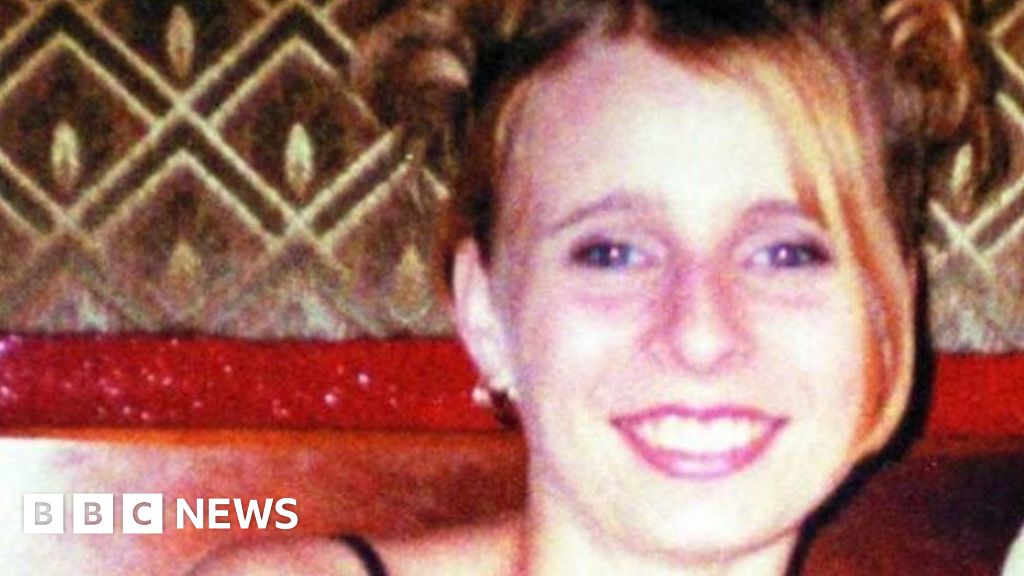
Steve Wright given 40 years for Victoria Hall's murderImage Credit: BBC News
Key Points
- •IPSWICH, UK – The serial killer Steve Wright, already serving a whole-life sentence for the murder of five women, was today handed a 40-year minimum term for the 1999 murder of 17-year-old Victoria Hall. The sentence, delivered at Ipswich Crown Court, brings a formal, albeit symbolic, conclusion to a case that has haunted Suffolk for over two decades.
- •The Family's Anguish: The statement highlighted the family's torment, describing how every family celebration was tinged with sadness and how they were robbed of seeing Victoria grow up, pursue a career, or have a family of her own.
- •A Life Cut Short: Victoria was remembered as a vibrant young woman with a promising future. She was studying at Orwell High School and had ambitions to attend university. Her death sent a wave of fear through the local community, fundamentally changing the sense of safety in the small Suffolk towns.
- •Fibre Analysis: Forensic scientists found microscopic textile fibres on Victoria's body and clothing that matched those found in Wright's car, a Ford Escort, and on carpets from his home. The combination of these specific fibres was deemed so rare that it created a powerful associative link.
- •DNA Breakthrough: Most damningly, a tiny sample of DNA was retrieved from Victoria's fingernail clippings and clothing. Advances in DNA profiling allowed scientists to generate a partial profile that matched Steve Wright. The probability of the DNA belonging to another unrelated male was calculated as being one in a billion.
Steve Wright given 40 years for Victoria Hall's murder
IPSWICH, UK – The serial killer Steve Wright, already serving a whole-life sentence for the murder of five women, was today handed a 40-year minimum term for the 1999 murder of 17-year-old Victoria Hall. The sentence, delivered at Ipswich Crown Court, brings a formal, albeit symbolic, conclusion to a case that has haunted Suffolk for over two decades.
Wright, 66, refused to appear in court for the sentencing, a move the judge noted as a final act of cowardice. Mr Justice Garnham acknowledged the sentence's practical futility, given Wright will never be eligible for release. However, he stressed the judicial importance of formally holding Wright accountable for a crime that inflicted "unimaginable" and "unrelenting" grief upon Victoria's family.
The judge stated the term he imposed would "almost certainly make no difference" but that it was his duty to decide on a proper sentence. He added that the court's actions "could never heal the bereaved family's loss and grief," but he hoped it would provide some measure of closure.
A Crime That Shocked a Community
Victoria Hall, a bright and popular A-level student from Trimley St Mary, vanished in the early hours of Sunday, 19th September 1999. She was walking home from a nightclub in Felixstowe with a friend when they parted ways just yards from her front door. She was never seen alive again.
Her disappearance triggered a massive search operation involving hundreds of police officers and local volunteers. Five days later, her naked body was discovered by a dog walker in a water-filled ditch 25 miles away in Creeting St Peter. The initial post-mortem examination was inconclusive, and a lack of forensic evidence at the time meant the investigation eventually went cold, leaving her family without answers for 22 years.
In a victim impact statement read to the court, Victoria's family described their lives as being "wiped out in a moment." Her father, Graham Hall, detailed the "gaping hole" left by her death and the constant pain of not knowing what had happened to their daughter for more than two decades.
- The Family's Anguish: The statement highlighted the family's torment, describing how every family celebration was tinged with sadness and how they were robbed of seeing Victoria grow up, pursue a career, or have a family of her own.
- A Life Cut Short: Victoria was remembered as a vibrant young woman with a promising future. She was studying at Orwell High School and had ambitions to attend university. Her death sent a wave of fear through the local community, fundamentally changing the sense of safety in the small Suffolk towns.
The Decades-Long Path to Justice
The case remained one of Suffolk's most notorious unsolved murders until a major breakthrough in 2019. Suffolk Police launched a new review, applying modern forensic techniques to evidence gathered at the time of the crime.
This meticulous re-examination, conducted by a dedicated cold case team, ultimately identified Steve Wright as the prime suspect. He was arrested in July 2021 and subsequently charged with Victoria's murder. The trial, which concluded last month, presented a compelling case built on minute but irrefutable scientific evidence.
The Forensic Breakthrough
The conviction rested on two critical pieces of forensic evidence that linked Wright directly to Victoria Hall.
- Fibre Analysis: Forensic scientists found microscopic textile fibres on Victoria's body and clothing that matched those found in Wright's car, a Ford Escort, and on carpets from his home. The combination of these specific fibres was deemed so rare that it created a powerful associative link.
- DNA Breakthrough: Most damningly, a tiny sample of DNA was retrieved from Victoria's fingernail clippings and clothing. Advances in DNA profiling allowed scientists to generate a partial profile that matched Steve Wright. The probability of the DNA belonging to another unrelated male was calculated as being one in a billion.
This evidence proved crucial in convincing the jury of Wright's guilt, demonstrating the immense power of modern science in resolving historical crimes.
Profile of a Serial Killer
The conviction for Victoria Hall's murder adds another dark chapter to the story of Steve Wright, already one of Britain's most infamous serial killers. Known as the "Suffolk Strangler," Wright was convicted in 2008 for the murders of five women in and around Ipswich during a terrifying 10-day period in late 2006.
His victims were Gemma Adams, 25, Tania Nicol, 19, Anneli Alderton, 24, Paula Clennell, 24, and Annette Nicholls, 29. All were sex workers, and their bodies were discovered in rural locations around Ipswich. For these crimes, Wright was given a whole-life order, meaning he will die in prison.
- A Pattern of Violence: The murder of Victoria Hall occurred seven years before the 2006 killing spree, suggesting Wright's capacity for extreme violence was present long before he came to national attention. Prosecutors argued it was the "missing link" in his criminal timeline.
- Previous Denials: Throughout the investigation and trial for the 2006 murders, Wright vehemently denied any involvement. He maintained the same stance regarding Victoria Hall's murder, refusing to offer any explanation or confession.
Implications and The Road Ahead
Today's sentencing provides a definitive, if long-overdue, answer for the Hall family. It also serves as a landmark moment for law enforcement, underscoring the value of persistent cold case reviews.
The successful prosecution sends a clear message that serious unresolved crimes will not be forgotten and that scientific advancements can bring justice to families decades after a tragedy. For Suffolk Police, it represents the culmination of an unwavering commitment to Victoria Hall and her family.
- Justice for the Hall Family: While the sentence is largely academic, its judicial and emotional significance cannot be overstated. It formally holds Wright accountable and provides a degree of closure to a family that has endured unimaginable suffering.
- Vindication for Law Enforcement: The case is a testament to the dedication of the cold case team and the evolution of forensic science. It highlights the importance of preserving evidence, no matter how old, in the hope that future technology can unlock its secrets.
- The Power of Cold Case Reviews: This outcome will likely bolster support for dedicated cold case units across the country, offering a sliver of hope to other families still waiting for answers in unsolved cases. The principle that a killer can be brought to justice more than two decades later is a powerful deterrent and a source of comfort for victims' relatives.
Source: BBC News
Related Articles
Nationwide Protests Against ICE Enforcement Erupt in U.S.
Thousands are protesting ICE after the DOJ declined to investigate a fatal agent-involved shooting in Minneapolis, fueling a national movement and public anger.
Venezuela Amnesty Bill Could Free Political Prisoners
Learn about Venezuela's proposed amnesty bill to release political prisoners. The move could signal a major political shift and affect future economic sanctions
Pokémon Cancels Yasukuni Shrine Event After Backlash
The Pokémon Company has canceled an event at Tokyo's controversial Yasukuni Shrine after facing international backlash from China and South Korea.
US to Lose Measles Elimination Status: What It Means
The U.S. is poised to lose its measles elimination status due to escalating outbreaks. Learn what this downgrade means for public health and the economy.