Federal Reserve Double Whammy Threatens Stocks in 2026
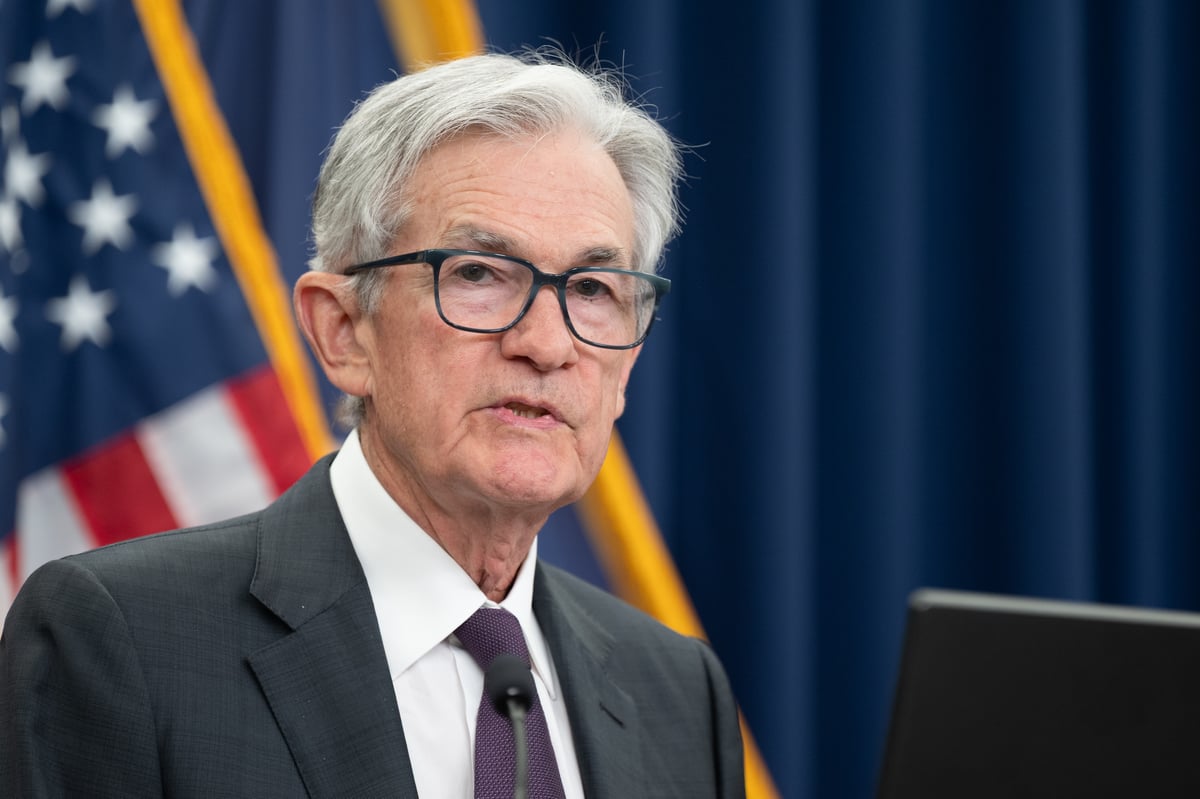
The Stock Market Is Facing a Federal Reserve Double Whammy in 2026 -- and Things May Get Ugly for Wall StreetImage Credit: Yahoo Finance
Key Points
- •NEW YORK – Wall Street has spent the better part of three years riding a powerful bull market, but the biggest threat to the rally in 2026 may not be a slowing economy or geopolitical turmoil. Instead, all eyes are on the U.S. Federal Reserve, which is flashing warning signs of internal division and a leadership crisis that could destabilize markets.
- •Broad-Based Gains: The Dow Jones Industrial Average, S&P 500, and Nasdaq Composite surged by 13%, 16%, and 20%, respectively. For the S&P 500, this marked a third consecutive year of gains exceeding 16%.
- •Technological Leaps: The rapid commercialization of artificial intelligence and breakthroughs in quantum computing have spurred innovation, promising to unlock new revenue streams and boost productivity for many of Wall Street’s most influential companies.
- •Economic Resilience: The U.S. economy has remained robust, allowing a majority of S&P 500 companies to consistently surpass Wall Street’s profit expectations.
- •Fiscal Tailwinds: The Tax Cuts and Jobs Act, passed during President Donald Trump's first term, has continued to incentivize corporations to repurchase their own stock, a practice that reduces the number of outstanding shares and can mechanically boost earnings per share (EPS).
The Stock Market Is Facing a Federal Reserve Double Whammy in 2026 -- and Things May Get Ugly for Wall Street
NEW YORK – Wall Street has spent the better part of three years riding a powerful bull market, but the biggest threat to the rally in 2026 may not be a slowing economy or geopolitical turmoil. Instead, all eyes are on the U.S. Federal Reserve, which is flashing warning signs of internal division and a leadership crisis that could destabilize markets.
The central bank, typically a pillar of stability, is now poised to deliver a one-two punch of uncertainty that has seasoned analysts concerned.
A Market Built on Momentum
Investors have had ample reason for optimism. The stock market’s performance in 2025 was stellar, continuing a multi-year run of impressive returns.
- Broad-Based Gains: The Dow Jones Industrial Average, S&P 500, and Nasdaq Composite surged by 13%, 16%, and 20%, respectively. For the S&P 500, this marked a third consecutive year of gains exceeding 16%.
A confluence of powerful catalysts has fueled this ascent, creating a near-perfect environment for equities.
- Technological Leaps: The rapid commercialization of artificial intelligence and breakthroughs in quantum computing have spurred innovation, promising to unlock new revenue streams and boost productivity for many of Wall Street’s most influential companies.
- Economic Resilience: The U.S. economy has remained robust, allowing a majority of S&P 500 companies to consistently surpass Wall Street’s profit expectations.
- Fiscal Tailwinds: The Tax Cuts and Jobs Act, passed during President Donald Trump's first term, has continued to incentivize corporations to repurchase their own stock, a practice that reduces the number of outstanding shares and can mechanically boost earnings per share (EPS).
- Monetary Easing: Investors have cheered the prospect of additional interest rate cuts from the Federal Reserve, which lowers the cost of borrowing and encourages businesses to invest in hiring, acquisitions, and innovation.
The Fed’s Primary Role
The Federal Reserve’s mission is twofold: to foster maximum employment and maintain stable prices. To achieve this, its primary policy-making body, the Federal Open Market Committee (FOMC), adjusts the federal funds rate—the overnight lending rate for banks—and manages the size of its balance sheet by buying or selling U.S. Treasury bonds.
While the FOMC is comprised of a dozen expert economists, its decisions are based on backward-looking data, meaning it can sometimes be late to react to economic shifts. Historically, markets have tolerated the occasional policy misstep, taking comfort in the committee's unified approach.
That unity, however, has fractured.
Whammy No. 1: A House Divided
The first major headwind for 2026 is a historic and public level of disagreement within the FOMC. A lack of consensus on the path of monetary policy injects a high degree of uncertainty into markets, which thrive on predictability.
- A Pattern of Dissent: Each of the last four FOMC meetings has featured at least one dissenting vote, signaling a breakdown in the committee's unified front.
- Unprecedented Disagreement: The October and December 2025 meetings were particularly notable. While both resulted in a 25-basis-point rate cut, they included dissents in opposite directions. At each meeting, at least one member argued for holding rates steady, while another advocated for a more aggressive 50-basis-point cut.
- A Historical Rarity: According to market analysis, there have only been three FOMC meetings with dissents in opposing directions since 1990. Two of them occurred in the final three months of 2025.
This level of internal conflict was highlighted by Bianco Research President Jim Bianco, who noted after the September 2025 meeting, "I have not seen a meeting with so much contradictions." A divided Fed struggles to project a clear policy path, leaving investors and businesses to guess at its next move. This confusion is a significant risk for a market already trading at elevated valuations.
Whammy No. 2: A Leadership Transition Under Political Fire
The second part of the double whammy is the impending leadership change at the very top of the central bank, which is unfolding under intense political pressure.
- Powell's Term Ends: Federal Reserve Chair Jerome Powell's term is set to conclude on May 15, 2026. While his position on the Board of Governors extends to 2028, his leadership of the committee will end.
- Intense Political Pressure: The transition comes as President Trump, now in the first year of his second non-consecutive term, has repeatedly and publicly criticized Powell. The President has urged the Fed to enact aggressive interest rate cuts to stimulate economic growth and counter a modest rise in the unemployment rate.
- Uncertainty Over Succession: The end of Powell’s tenure opens the door to a new chair who may have a starkly different philosophy on managing inflation and employment. The nomination and confirmation process is likely to be politically charged, further threatening the perception of the Fed’s independence from political influence.
This leadership vacuum creates profound uncertainty about policy continuity. A new chair could pivot dramatically, either by cutting rates too aggressively and risking a resurgence of inflation, or by maintaining a tighter policy that could stifle economic activity.
The Bottom Line for Investors
The combination of a deeply divided FOMC and a politically charged leadership transition creates a perfect storm of uncertainty for Wall Street heading into 2026. The central bank, long viewed as a stabilizing force, now risks becoming a primary source of market volatility.
For investors, the implications are clear and immediate.
- Expect Increased Volatility: Policy uncertainty from the Fed almost always translates to choppier, less predictable market action as traders react to every rumor and statement from committee members.
- Heightened Risk of Policy Error: A fractured and politically pressured Fed is more susceptible to making a mistake. The margin for error is slim, and a miscalculation could either overheat the economy or tip it into a downturn.
- Confidence Is Key: The market's long-term health relies on confidence in the institutions that guide the economy. As the Fed's credibility is tested by both internal division and external pressure, investors may demand a higher premium for taking on risk, potentially leading to a correction in stock prices.
While the fundamental drivers of corporate earnings and innovation remain intact, the year ahead will be defined by how the Federal Reserve navigates this dangerous double whammy. Investors would be wise to brace for a bumpier ride.
Source: Yahoo Finance
Related Articles
Nationwide Protests Against ICE Enforcement Erupt in U.S.
Thousands are protesting ICE after the DOJ declined to investigate a fatal agent-involved shooting in Minneapolis, fueling a national movement and public anger.
Venezuela Amnesty Bill Could Free Political Prisoners
Learn about Venezuela's proposed amnesty bill to release political prisoners. The move could signal a major political shift and affect future economic sanctions
Pokémon Cancels Yasukuni Shrine Event After Backlash
The Pokémon Company has canceled an event at Tokyo's controversial Yasukuni Shrine after facing international backlash from China and South Korea.
US to Lose Measles Elimination Status: What It Means
The U.S. is poised to lose its measles elimination status due to escalating outbreaks. Learn what this downgrade means for public health and the economy.