Stranraer's Hotel Ice Rink: A Curling Champion Factory
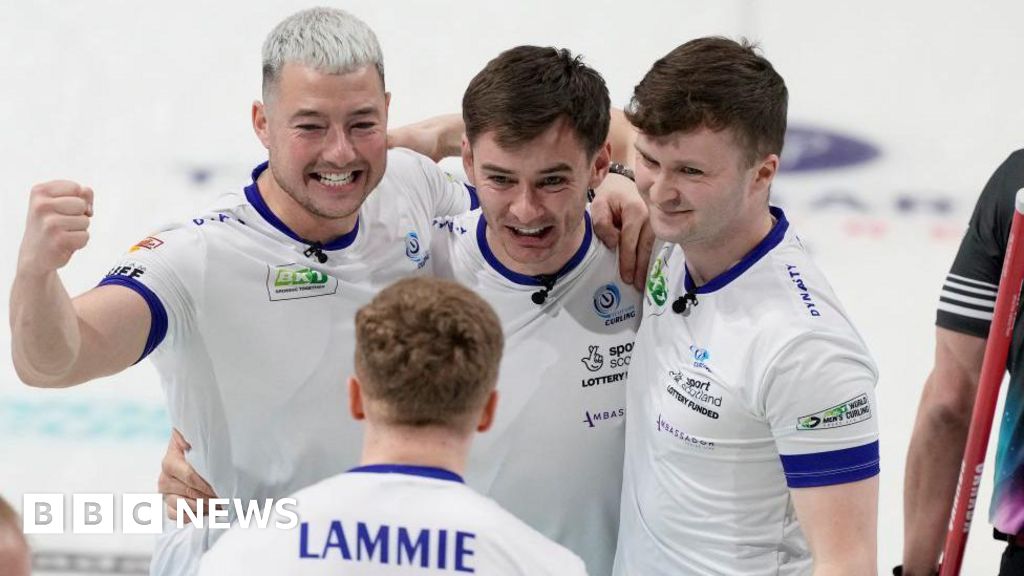
The Stranraer hotel ice rink producing some of the world's finest curlersImage Credit: BBC News
Key Points
- •STRANRAER, SCOTLAND – In the remote coastal town of Stranraer, an unassuming hotel has become the unlikely epicentre of global curling excellence. The North West Castle Hotel, home to the only private ice rink in a UK hotel, is operating as a de facto national academy, consistently producing a disproportionate number of world-class and Olympic-level athletes from a single, community-focused facility.
- •Elite Talent Pipeline: The rink is closely associated with the McMillan family, a curling dynasty. Hammy McMillan is a former world champion, and his sons, Grant and Hammy Jr., and nephew, Bobby Lammie, have all won World and European championships. Lammie is also an Olympic silver medalist (Beijing 2022).
- •Global Representation: At any given major international championship—be it the Worlds, Europeans, or the Olympics—it is common to find multiple athletes who honed their skills on the Stranraer ice, representing Great Britain and Scotland.
- •Community Hub: The rink supports a thriving local league with dozens of teams. This grassroots participation forms the base of the pyramid, creating a broad pool of players and a culture where the sport is deeply embedded in the community's social fabric.
- •Synergistic Operations: The ice rink is not a standalone cost centre but a primary driver of hotel revenue. It attracts curling tournaments, training camps, and social players who book rooms, dine at the restaurants, and use the bar, creating a virtuous economic cycle.
The Stranraer hotel ice rink producing some of the world's finest curlers
STRANRAER, SCOTLAND – In the remote coastal town of Stranraer, an unassuming hotel has become the unlikely epicentre of global curling excellence. The North West Castle Hotel, home to the only private ice rink in a UK hotel, is operating as a de facto national academy, consistently producing a disproportionate number of world-class and Olympic-level athletes from a single, community-focused facility.
This unique model challenges the conventional wisdom of state-funded, centralized sports development, presenting a compelling case study in grassroots success and synergistic business operations.
Why It Matters
The Stranraer phenomenon is more than a heartwarming sports story; it's a significant anomaly in the economics of elite athletics. While nations invest millions in state-of-the-art national performance centres, this single, family-run establishment in a town of fewer than 10,000 people has created a talent pipeline that rivals, and in some cases surpasses, entire national programs.
Its success raises fundamental questions about the most effective models for nurturing elite talent and the economic viability of private sporting infrastructure.
By the Numbers: A Curling Dynasty
The output from the Stranraer curling scene is statistically staggering for its size. The facility, built in 1970, has been the training ground for generations of champions.
-
Elite Talent Pipeline: The rink is closely associated with the McMillan family, a curling dynasty. Hammy McMillan is a former world champion, and his sons, Grant and Hammy Jr., and nephew, Bobby Lammie, have all won World and European championships. Lammie is also an Olympic silver medalist (Beijing 2022).
-
Global Representation: At any given major international championship—be it the Worlds, Europeans, or the Olympics—it is common to find multiple athletes who honed their skills on the Stranraer ice, representing Great Britain and Scotland.
-
Community Hub: The rink supports a thriving local league with dozens of teams. This grassroots participation forms the base of the pyramid, creating a broad pool of players and a culture where the sport is deeply embedded in the community's social fabric.
The Backstory: A Legacy of Ice
Stranraer, located in the Galloway region of southwest Scotland, is geographically isolated from the country's central belt, where most national sporting bodies are headquartered.
The North West Castle Hotel was purchased by ice hockey enthusiast Douglas McMillan in the 1960s. He later added the four-sheet curling rink, a visionary move that transformed the hotel's business model and the town's sporting identity.
Control has since passed to the next generation, but the core principle remains: a hotel with a world-class sporting facility at its heart.
The Unconventional Business Model
The Stranraer model’s financial resilience lies in its integrated, self-sustaining structure, a stark contrast to the grant-dependent nature of many public sports facilities.
-
Synergistic Operations: The ice rink is not a standalone cost centre but a primary driver of hotel revenue. It attracts curling tournaments, training camps, and social players who book rooms, dine at the restaurants, and use the bar, creating a virtuous economic cycle.
-
Diversified Revenue Streams: Income is generated from multiple sources beyond just ice time. This includes annual club membership fees, competition entry fees, spectator revenue, and, most critically, the full spectrum of hotel and hospitality services.
-
Lean Infrastructure: Unlike sprawling, purpose-built national centres with high fixed overheads, the Stranraer rink is an integrated part of a larger commercial enterprise. This allows for shared costs in areas like maintenance, administration, and marketing, creating a more efficient operational footprint.
The 'Stranraer Effect': Proximity to Excellence
The key to the rink's success in producing elite talent appears to be its unique culture, where aspiring juniors and club-level amateurs share the same ice as global champions. This accessibility demystifies the path to the top.
The environment fosters a powerful, informal mentorship system. Young curlers don't just see their heroes on television; they see them practising on a Tuesday night for a local league game.
As one local observer noted for BBC News, this proximity is a powerful motivator. "People do look up to the curlers," she said. "They are down there on the ice playing club curling as if it's normal, then they go away and the next weekend they're playing at European and World level."
This dynamic normalises high performance and creates a tangible pathway for progression.
-
Culture of Humility: World champions remain part of the local club scene, preventing the disconnect that can occur between grassroots sport and the professional elite.
-
Constant Competition: The sheer volume of active local players ensures a consistently high level of competition, sharpening skills from a young age.
-
Knowledge Transfer: Tactical knowledge and technical skills are passed down organically from seasoned champions to the next generation in a way that formal coaching programs often struggle to replicate.
What's Next: Sustaining the Anomaly
While the Stranraer model is undeniably successful, it faces future challenges common to private, family-run enterprises.
The primary concerns are succession planning and the long-term capital investment required to maintain a 50-year-old facility at a world-class standard. The economics of running an energy-intensive ice rink are also a significant headwind.
However, the Stranraer story offers a powerful lesson for sports governing bodies. It demonstrates that fostering a dense, competitive, and accessible community hub can be a more effective incubator for talent than a top-down, centralized approach. The challenge for organizations like British Curling is to understand how to support and replicate the "Stranraer effect" without disturbing the delicate ecosystem that makes it work.
The future of Stranraer's curling dynasty rests on its ability to maintain its unique business model and community culture in an era of ever-increasing professionalization in global sport.
Source: BBC News
Related Articles
Nationwide Protests Against ICE Enforcement Erupt in U.S.
Thousands are protesting ICE after the DOJ declined to investigate a fatal agent-involved shooting in Minneapolis, fueling a national movement and public anger.
Venezuela Amnesty Bill Could Free Political Prisoners
Learn about Venezuela's proposed amnesty bill to release political prisoners. The move could signal a major political shift and affect future economic sanctions
Pokémon Cancels Yasukuni Shrine Event After Backlash
The Pokémon Company has canceled an event at Tokyo's controversial Yasukuni Shrine after facing international backlash from China and South Korea.
US to Lose Measles Elimination Status: What It Means
The U.S. is poised to lose its measles elimination status due to escalating outbreaks. Learn what this downgrade means for public health and the economy.