Keir Starmer's Premiership: 3 Threats & What Saves Him
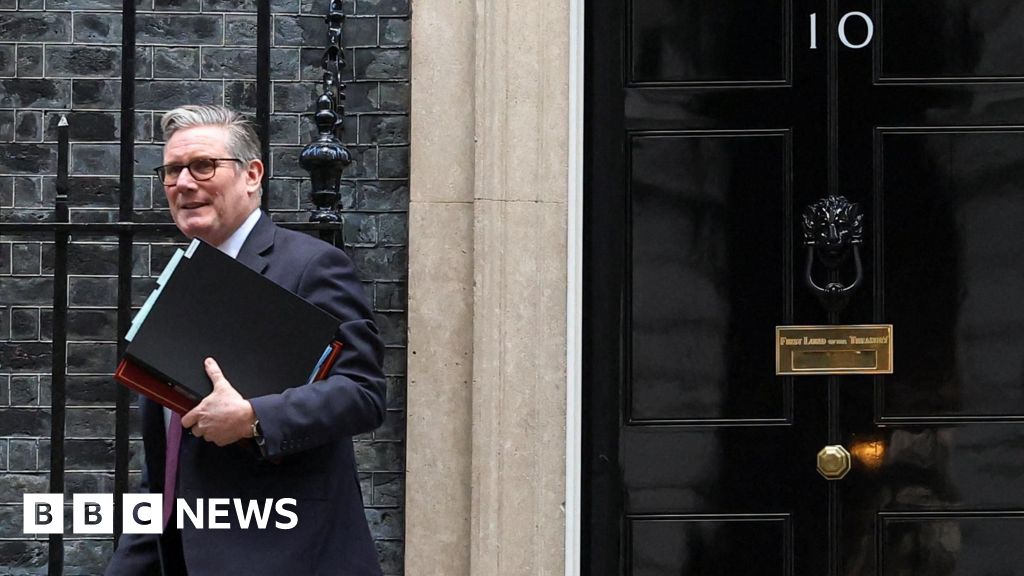
Three things that could bring Starmer down - and what might save himImage Credit: BBC News
Key Points
- •LONDON – The celebratory mood that carried Sir Keir Starmer into Number 10 has faded, replaced by the harsh realities of governance and the low hum of anxiety in Westminster. While few Labour MPs are publicly calling for the Prime Minister to go, a palpable sense that this is a profoundly serious moment for his premiership is settling over the party. The vast majority won on a platform of change and stability now looks less like a fortress and more like a fragile coalition of competing interests.
- •The Unpalatable Choice: The Treasury is caught between two politically toxic options. The first is to implement significant tax rises, which would shatter the government's core promise of fiscal prudence and open it up to devastating attacks from the opposition. The second is to impose a new era of austerity, with deep spending cuts that would alienate the party’s base, enrage public sector unions, and betray the voters who backed Labour to end years of underfunding.
- •Key Flashpoints: The battlegrounds are already being marked out. Public sector pay negotiations are chief among them; unions are demanding settlements that reflect years of real-terms pay cuts, a demand the Treasury insists it cannot afford. Other areas of conflict include the scale of green investment, welfare reform, and foreign policy stances. A significant rebellion on any of these issues could inflict deep and lasting damage on the Prime Minister's authority.
- •The NHS Waiting List Paradox: This is the government's most visible and emotive challenge. Despite potentially allocating more funding, structural issues, workforce shortages, and post-pandemic backlogs mean that waiting lists could remain stubbornly high or even continue to grow in the short term. If the headline number does not fall, the government’s narrative of "rescuing the NHS" will be perceived as a failure, regardless of the complexities involved.
- •The Contenders: Chancellor Rachel Reeves is intrinsically tied to the government's economic strategy and would struggle to distance herself from its challenges. Other senior figures, like Health Secretary Wes Streeting or Shadow Home Secretary Yvette Cooper, have their own high-profile and difficult briefs. A challenge from the left is more likely to manifest as a rebellion than a credible leadership bid. This lack of a clear successor acts as Starmer's most powerful shield, forcing would-be plotters to conclude that a divisive leadership contest would be more damaging than sticking with the current leader.
Three things that could bring Starmer down - and what might save him
LONDON – The celebratory mood that carried Sir Keir Starmer into Number 10 has faded, replaced by the harsh realities of governance and the low hum of anxiety in Westminster. While few Labour MPs are publicly calling for the Prime Minister to go, a palpable sense that this is a profoundly serious moment for his premiership is settling over the party. The vast majority won on a platform of change and stability now looks less like a fortress and more like a fragile coalition of competing interests.
The challenges are mounting. A toxic economic inheritance, deep-seated public service issues, and the ever-present threat of internal party dissent are converging to create a perilous political landscape. Here, we analyse the three primary threats that could derail Starmer's government, and the crucial factors that might yet ensure his survival.
1. The Fiscal Straitjacket
The government's primary and most immediate vulnerability is the economy. Having inherited public finances in a more precarious state than anticipated, the Prime Minister and his Chancellor, Rachel Reeves, find themselves bound by a fiscal straitjacket of their own making. Their campaign was built on a foundation of economic credibility and a promise not to raise taxes on working people. That foundation is now under immense strain.
Independent forecasts from the Office for Budget Responsibility (OBR) have reportedly revealed a larger-than-expected black hole in the public finances, forcing a series of unpalatable choices. The government's core mission to rebuild public services, particularly the NHS, requires vast sums of money that simply aren't there without breaking core manifesto pledges.
- The Unpalatable Choice: The Treasury is caught between two politically toxic options. The first is to implement significant tax rises, which would shatter the government's core promise of fiscal prudence and open it up to devastating attacks from the opposition. The second is to impose a new era of austerity, with deep spending cuts that would alienate the party’s base, enrage public sector unions, and betray the voters who backed Labour to end years of underfunding.
This dilemma strikes at the heart of Starmer’s political identity. A decision to raise taxes would undermine his claim to be a departure from "tax and spend" Labour stereotypes. Conversely, cuts would lead to accusations that he is no different from the Conservatives he replaced, fatally wounding his credibility with the party's left flank and public sector voters.
2. The Left Flank Rebellion
The Labour Party has always been a broad church, and its internal tensions have been suppressed, not solved, by the shared goal of winning power. Now in government, those ideological fissures are re-emerging, particularly as the economic reality bites. The party's left wing, which remained largely quiet during the election campaign, is finding its voice once more.
Any move towards spending restraint is viewed by this faction not as pragmatic governance but as a betrayal of socialist principles. Backbench MPs, many of whom hold seats with strong union backing and a more radical membership, are growing increasingly restless. They did not endure years in opposition to oversee another period of austerity.
- Key Flashpoints: The battlegrounds are already being marked out. Public sector pay negotiations are chief among them; unions are demanding settlements that reflect years of real-terms pay cuts, a demand the Treasury insists it cannot afford. Other areas of conflict include the scale of green investment, welfare reform, and foreign policy stances. A significant rebellion on any of these issues could inflict deep and lasting damage on the Prime Minister's authority.
The danger for Starmer is a war on two fronts: battling a hostile opposition in the Commons while simultaneously fighting a rearguard action against his own MPs. A sustained rebellion from the left would project an image of a weak, divided government, unable to command its own benches, let alone the country.
3. The Delivery Deficit
Voters handed Labour a mandate to fix a country they felt was broken. The party’s five "missions," particularly the pledges to cut NHS waiting lists and kickstart economic growth, were central to its appeal. The greatest long-term threat to Starmer is a failure to deliver tangible results on these core promises.
Public patience, while initially high, is not infinite. The sheer scale of the problems, from hospital backlogs to the housing crisis, means that quick wins are almost impossible. The risk is that after 18 to 24 months in power, voters see little material improvement in their daily lives or the public services they rely on.
- The NHS Waiting List Paradox: This is the government's most visible and emotive challenge. Despite potentially allocating more funding, structural issues, workforce shortages, and post-pandemic backlogs mean that waiting lists could remain stubbornly high or even continue to grow in the short term. If the headline number does not fall, the government’s narrative of "rescuing the NHS" will be perceived as a failure, regardless of the complexities involved.
A "delivery deficit" creates a powerful narrative for the opposition: that Labour promised the earth but failed to deliver. It erodes trust and makes the government appear incompetent, feeding a sense of disillusionment that could be lethal by the time of the next election.
What Might Save Him: The TINA Factor
Despite these formidable challenges, it is far too early to write off the Prime Minister. His survival may depend less on his own strengths and more on the weaknesses of his opponents, both inside and outside the party—a political scenario often summarised as "There Is No Alternative" (TINA).
A Fractured Opposition
The Conservative Party, reeling from a historic election defeat, is embroiled in its own existential crisis. It is currently engaged in a protracted leadership contest and a bitter internal debate about its future direction. This inward focus provides Starmer with crucial political breathing room. A weak and divided opposition is unable to land effective blows or present itself as a credible government-in-waiting, allowing Labour to dominate the political agenda, even amidst its own difficulties.
The Lack of a Successor
Crucially, there is no single, obvious challenger poised to replace Starmer within the Labour Party. While the party is rich with ambitious figures, no individual currently commands the authority, cross-factional support, or alternative vision required to mount a successful coup.
- The Contenders: Chancellor Rachel Reeves is intrinsically tied to the government's economic strategy and would struggle to distance herself from its challenges. Other senior figures, like Health Secretary Wes Streeting or Shadow Home Secretary Yvette Cooper, have their own high-profile and difficult briefs. A challenge from the left is more likely to manifest as a rebellion than a credible leadership bid. This lack of a clear successor acts as Starmer's most powerful shield, forcing would-be plotters to conclude that a divisive leadership contest would be more damaging than sticking with the current leader.
The Path Forward
Sir Keir Starmer stands at a critical juncture. His premiership is balanced on a knife-edge between the immense expectations that swept him into office and the brutal constraints of his inheritance. His ability to navigate the treacherous economic waters while holding his fractious party together and demonstrating tangible progress to a weary public will define his political fate. The coming 12 months will be a severe test of his leadership, his political skill, and the very foundations of the coalition that brought him to power.
Source: BBC News
Related Articles
Nationwide Protests Against ICE Enforcement Erupt in U.S.
Thousands are protesting ICE after the DOJ declined to investigate a fatal agent-involved shooting in Minneapolis, fueling a national movement and public anger.
Venezuela Amnesty Bill Could Free Political Prisoners
Learn about Venezuela's proposed amnesty bill to release political prisoners. The move could signal a major political shift and affect future economic sanctions
Pokémon Cancels Yasukuni Shrine Event After Backlash
The Pokémon Company has canceled an event at Tokyo's controversial Yasukuni Shrine after facing international backlash from China and South Korea.
US to Lose Measles Elimination Status: What It Means
The U.S. is poised to lose its measles elimination status due to escalating outbreaks. Learn what this downgrade means for public health and the economy.