Trial Opens in Plot to Mail Explosives to UK & Poland
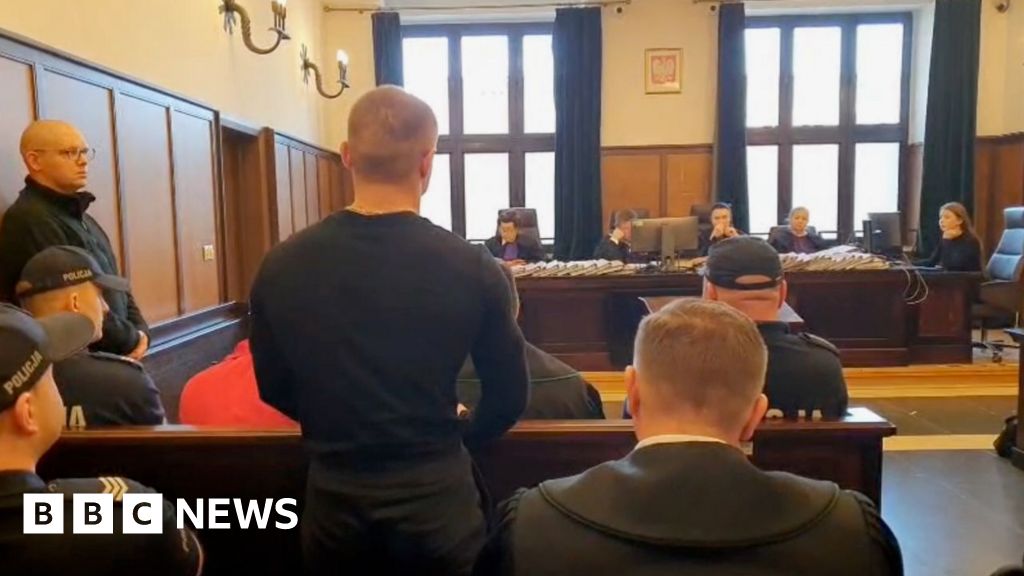
Trial starts in case of explosives sent to UK and PolandImage Credit: BBC News
Key Points
- •LONDON – A landmark trial has begun, pulling back the curtain on a sophisticated plot to mail explosive devices to corporate targets in the United Kingdom and Poland. The case, which involves alleged international criminal networks and has sent a chill through corporate security circles, opened with the stunning testimony of the man who claims he was the unwitting courier for the lethal packages.
- •The Unwitting Mule: Suranovas stated he was recruited online for what he believed was a legitimate, if unconventional, job. He was paid approximately €200 per parcel to repackage and forward items to addresses provided by his handler, whom the prosecution identifies as Volkov. He told the BBC, "I was told they were electronic samples... I had no idea there were explosives inside."
- •A Sustained Campaign: In a revelation that underscores the potential scale of the threat, Suranovas testified that his initial dispatches were considered a "test run." Upon his arrest, he had already been contracted for a continuous monthly engagement. He was to be responsible for sending "three or four" more such parcels every month to a list of new corporate addresses across Europe.
- •The Financial Arrangement: Payments were reportedly made in cryptocurrency, a common tactic used by criminal organizations to obscure financial trails and complicate law enforcement investigations. This financial layer suggests a high degree of planning and a clear intent to remain anonymous.
- •Screening Gaps: While airports have rigorous passenger and cargo screening, the same level of granular inspection is not always feasible for the billions of small parcels circulating in domestic and international mail systems. The plotters allegedly exploited this by designing devices to mimic common electronic goods.
Trial Starts in Case of Explosives Sent to UK and Poland
LONDON – A landmark trial has begun, pulling back the curtain on a sophisticated plot to mail explosive devices to corporate targets in the United Kingdom and Poland. The case, which involves alleged international criminal networks and has sent a chill through corporate security circles, opened with the stunning testimony of the man who claims he was the unwitting courier for the lethal packages.
The proceedings are set to scrutinize not just the individuals behind the plot, but also the vulnerabilities within the global logistics and postal systems they allegedly exploited.
The Central Allegations
The trial, held at the Old Bailey in London, centers on charges of conspiracy to cause explosions likely to endanger life or cause serious injury to property. The prosecution alleges that a coordinated effort was made to dispatch improvised explosive devices (IEDs) disguised as routine business parcels.
The primary defendant, identified in court documents as Andrius Volkov, is accused of masterminding the operation. Prosecutors claim he orchestrated the manufacturing of the devices and hired couriers to send them to specific commercial addresses, including a prominent financial services firm in London's Canary Wharf and a logistics hub in Warsaw.
The plot was uncovered in a joint operation involving the UK's National Crime Agency (NCA), Poland's Internal Security Agency (ABW), and Europol, after a parcel was flagged by advanced screening equipment at a UK distribution center.
The Courier's Bombshell Testimony
The prosecution's key witness, Alexander Suranovas, provided the trial's first major revelation. Suranovas, who was paid to dispatch the parcels, told the court he was merely a "logistics middleman" and had no knowledge of their dangerous contents.
His testimony detailed a chilling arrangement that points to a planned, long-term campaign of corporate intimidation or terrorism.
-
The Unwitting Mule: Suranovas stated he was recruited online for what he believed was a legitimate, if unconventional, job. He was paid approximately €200 per parcel to repackage and forward items to addresses provided by his handler, whom the prosecution identifies as Volkov. He told the BBC, "I was told they were electronic samples... I had no idea there were explosives inside."
-
A Sustained Campaign: In a revelation that underscores the potential scale of the threat, Suranovas testified that his initial dispatches were considered a "test run." Upon his arrest, he had already been contracted for a continuous monthly engagement. He was to be responsible for sending "three or four" more such parcels every month to a list of new corporate addresses across Europe.
-
The Financial Arrangement: Payments were reportedly made in cryptocurrency, a common tactic used by criminal organizations to obscure financial trails and complicate law enforcement investigations. This financial layer suggests a high degree of planning and a clear intent to remain anonymous.
The Corporate and Economic Nexus
While the trial is a criminal proceeding, its implications resonate deeply within the financial and corporate sectors. The choice of targets—a high-value financial firm and a critical infrastructure logistics company—suggests motives beyond random violence, pointing towards potential corporate extortion, market manipulation, or sophisticated industrial sabotage.
This case highlights a tangible shift in the threat landscape. Previously abstract risks are now materializing, forcing boardrooms to re-evaluate their security protocols and exposure. The plot moves the threat actor from the digital realm of cyber-attacks to the physical domain of direct, violent assault on corporate assets and personnel.
A Focus on Vulnerabilities
The methods used by the plotters expose critical weak points in the vast, high-speed world of global parcel delivery. The sheer volume of packages processed daily by carriers like DHL, FedEx, and national postal services creates an environment where concealment is possible, despite enhanced security measures.
-
Screening Gaps: While airports have rigorous passenger and cargo screening, the same level of granular inspection is not always feasible for the billions of small parcels circulating in domestic and international mail systems. The plotters allegedly exploited this by designing devices to mimic common electronic goods.
-
The 'Last-Mile' Problem: The use of couriers like Suranovas introduces a layer of separation between the mastermind and the physical act of mailing, complicating attribution and making it easier to breach the initial security perimeter of a postal service.
-
Cross-Border Complexity: Coordinating law enforcement across multiple jurisdictions, each with different regulations and procedures for mail handling, remains a significant challenge. This case stands as a testament to the success of international cooperation but also serves as a warning about the seams that criminals seek to exploit.
Implications and Next Steps
The trial is expected to last several weeks, with further testimony anticipated from forensics experts, digital investigators who tracked the cryptocurrency payments, and representatives from the targeted companies. The outcome will have far-reaching consequences.
For businesses, this trial is a stark reminder:
- Physical security can no longer be a secondary concern to cybersecurity.
- Vetting of inbound mail and parcels, particularly those that are unsolicited or from unknown sources, must be treated with the utmost seriousness.
- Employee training on identifying and reporting suspicious packages is a critical line of defense.
For the logistics industry and regulators:
- A conviction could trigger a broad review of screening protocols for domestic and intra-European parcels.
- Pressure may mount for greater data sharing between private logistics firms and national security agencies.
- The cost of compliance and enhanced security measures will likely be passed on, potentially impacting shipping costs for businesses and consumers alike.
The court will now hear detailed forensic evidence on the construction of the devices. As the trial unfolds, the corporate world will be watching closely, aware that the verdict and the details revealed will shape the future of corporate security and risk management for years to come.
Source: BBC News
Related Articles
Nationwide Protests Against ICE Enforcement Erupt in U.S.
Thousands are protesting ICE after the DOJ declined to investigate a fatal agent-involved shooting in Minneapolis, fueling a national movement and public anger.
Venezuela Amnesty Bill Could Free Political Prisoners
Learn about Venezuela's proposed amnesty bill to release political prisoners. The move could signal a major political shift and affect future economic sanctions
Pokémon Cancels Yasukuni Shrine Event After Backlash
The Pokémon Company has canceled an event at Tokyo's controversial Yasukuni Shrine after facing international backlash from China and South Korea.
US to Lose Measles Elimination Status: What It Means
The U.S. is poised to lose its measles elimination status due to escalating outbreaks. Learn what this downgrade means for public health and the economy.