Trump's Foreign Policy Shift: China's Risks & Gains
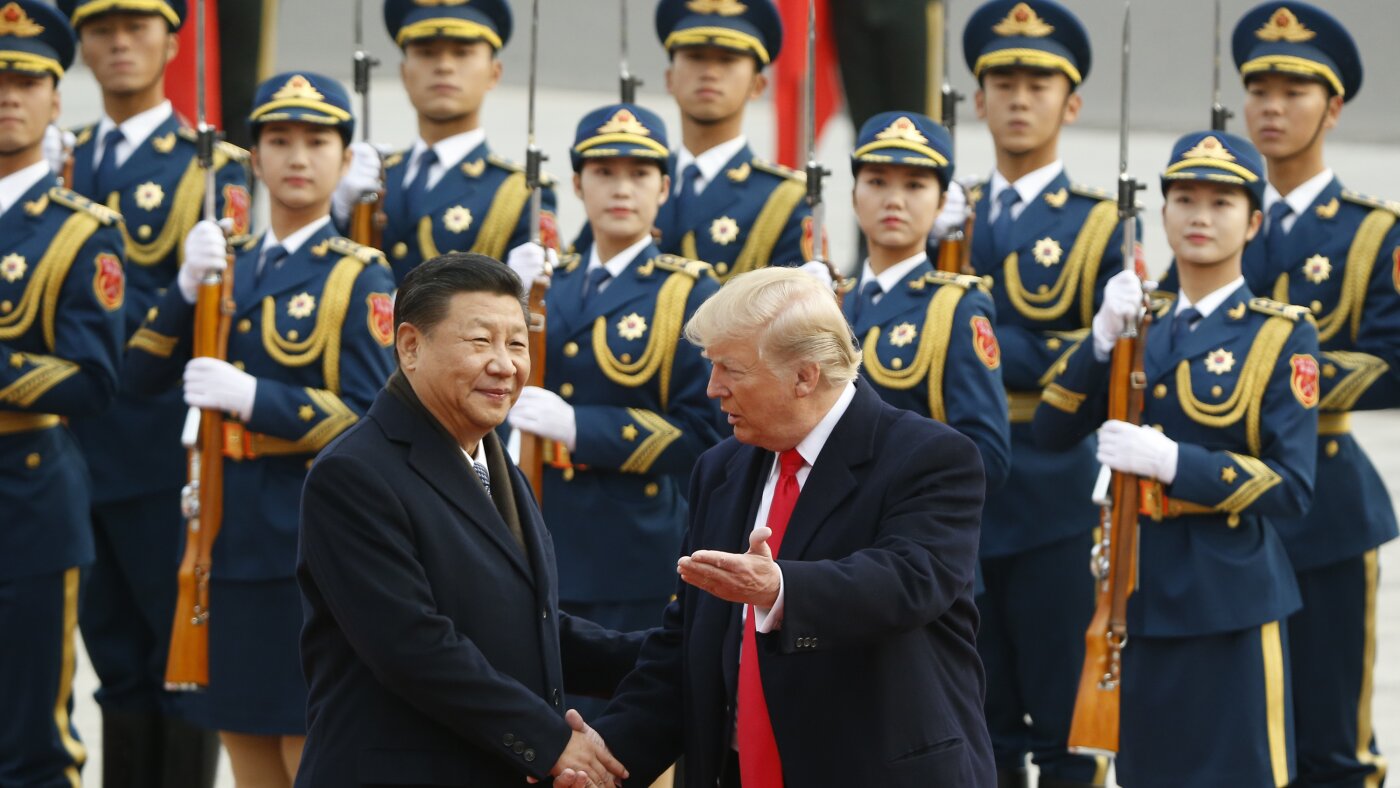
As Trump reshapes foreign policy, China moves to limit risks, reap gainsImage Credit: NPR News
Key Points
- •WASHINGTON – The Trump administration's pivot in foreign policy, marked by an aggressive new focus on the Western Hemisphere, is forcing a strategic recalibration in Beijing. As the White House directs its attention toward Venezuela and Greenland, Chinese leaders are carefully weighing the new landscape—relieved to be out of the immediate line of fire but wary of America's unpredictable "military adventurism."
- •Korean War Scars: The People's Republic's formative experience with U.S. power was the Korean War (1950-1953), which saw China deploy nearly 3 million personnel to the peninsula. This direct conflict left an indelible mark on its perception of American military reach.
- •Post-Cold War Lessons: In the modern era, China was alarmed by the U.S. invasion of Iraq without a U.N. mandate. However, Chinese military experts also used the conflict as a valuable case study, analyzing U.S. weaponry and tactics to inform their own modernization. For two decades, U.S. preoccupation in the Middle East consumed resources that might otherwise have been deployed to contain China.
- •A Two-Factor Analysis: According to Chu Shulong, an international relations expert at Tsinghua University in Beijing, China assesses U.S. military actions through a specific lens. "First, is it [the U.S.] invading a foreign nation in violation of the U.N. charter, and second, does it have a direct effect on China's security?"
- •Economic Headwinds: China sources approximately 4% of its crude oil from Venezuela. U.S. actions there have made the country's "investment environment is certainly very unfavorable for China," says Jiang Shixue, director of the Center for Latin American Studies at Shanghai University.
As Trump reshapes foreign policy, China moves to limit risks, reap gains
WASHINGTON – The Trump administration's pivot in foreign policy, marked by an aggressive new focus on the Western Hemisphere, is forcing a strategic recalibration in Beijing. As the White House directs its attention toward Venezuela and Greenland, Chinese leaders are carefully weighing the new landscape—relieved to be out of the immediate line of fire but wary of America's unpredictable "military adventurism."
This complex dynamic has China simultaneously attempting to de-risk its global investments, preserve a functional relationship with Washington, and quietly capitalize on the strategic and narrative opportunities created by President Trump's "America First" doctrine.
The Shifting Strategic Focus
The administration’s recent actions starkly illustrate a shift away from what the U.S. until recently deemed its "pacing threat": China. The abrupt removal of Venezuela's leader by force and the overt expression of expansionist interest in Greenland signal a re-prioritization of America's traditional sphere of influence.
For Beijing, this pivot is a double-edged sword. While the immediate pressure in its own neighborhood may have eased, U.S. officials have explicitly framed these moves as partial counters to growing Chinese influence, leaving Beijing to grapple with an administration whose rhetoric eschews global interventionism but whose actions suggest otherwise.
"Given how much significance China attaches to regime security, American willingness to intervene is the greatest concern for Beijing," notes Tong Zhao, an expert on strategic security at the Carnegie Endowment for International Peace.
A Historical View of U.S. Power
Beijing’s concerns are deeply rooted in its history with U.S. foreign military interventions. This long-standing apprehension shapes its modern-day calculus.
-
Korean War Scars: The People's Republic's formative experience with U.S. power was the Korean War (1950-1953), which saw China deploy nearly 3 million personnel to the peninsula. This direct conflict left an indelible mark on its perception of American military reach.
-
Post-Cold War Lessons: In the modern era, China was alarmed by the U.S. invasion of Iraq without a U.N. mandate. However, Chinese military experts also used the conflict as a valuable case study, analyzing U.S. weaponry and tactics to inform their own modernization. For two decades, U.S. preoccupation in the Middle East consumed resources that might otherwise have been deployed to contain China.
-
A Two-Factor Analysis: According to Chu Shulong, an international relations expert at Tsinghua University in Beijing, China assesses U.S. military actions through a specific lens. "First, is it [the U.S.] invading a foreign nation in violation of the U.N. charter, and second, does it have a direct effect on China's security?"
So far, U.S. actions in Venezuela and its ambitions toward Greenland have drawn objections from Beijing, but not significant pushback, as they do not yet cross the threshold of directly threatening China's core security.
Protecting the U.S. Relationship
Despite its long-term strategic competition with the U.S., China’s immediate priority is managing its most critical bilateral relationship.
"China's main concern is how to maintain a working relationship with Trump to prevent him from taking further actions that harm China," Chu explains. "So, while China doesn't approve of the U.S. actions in other parts of the world, it doesn't feel [like] they have much direct relation to China."
This pragmatism extends to its economic interests, even when they are directly impacted.
-
Economic Headwinds: China sources approximately 4% of its crude oil from Venezuela. U.S. actions there have made the country's "investment environment is certainly very unfavorable for China," says Jiang Shixue, director of the Center for Latin American Studies at Shanghai University.
-
An Appeal to Shared Interests: However, Jiang argues that China's economic footprint in Latin America is not inherently anti-U.S. and could even align with Trump's goals. "A prosperous, fast-growing Latin America will reduce drug trafficking and illegal immigration," he says. "Doesn't that help the United States?"
Furthermore, Beijing has found a silver lining in the Trump administration's transactional approach. Jiang notes that Chinese officials are pleased Trump is less focused on promoting democracy or human rights and tends to intervene in smaller, weaker nations. "He's interested in stabilizing major power relations and avoiding World War III," Jiang adds. "Those are reassuring messages to Beijing."
A Grand Bargain on the Horizon?
The Trump administration's focus on the Western Hemisphere hints at the potential for a new geopolitical arrangement, which could be a topic of discussion during the president's planned visit to China in April.
Tong Zhao of the Carnegie Endowment suggests the logic of a possible U.S.-China "grand bargain" is emerging: "for China to restrain its own expansion of economic and geopolitical influence in the Western Hemisphere, in exchange for the United States to accommodate Chinese core interests in the Asia-Pacific."
- The Core Interest: Chief among these interests is Taiwan, the self-governing island that Beijing considers its own sovereign territory. U.S. accommodation on this issue would represent a monumental strategic victory for China.
The Narrative Windfall
Even if a grand bargain never materializes, Trump's interventionist actions provide a significant propaganda victory for Beijing. They perfectly fit the long-standing official Chinese narrative that the U.S. uses the pretext of liberal values to seize resources and bully smaller nations.
This trend is having a profound impact not only on state messaging but also on China's intellectual class, many of whom were once staunch admirers of the American system.
- Growing Disillusionment: China's liberals are "genuinely disillusioned, because what the U.S. is doing right now is worse than the behavior of America's illiberal rivals," says Zhao. This sentiment is echoed by Tsinghua University's Chu Shulong. "We considered it [American democracy and rule of law] your most fundamental strength, something other countries should learn from and emulate. But Trump..."
What to Watch
As President Trump prepares for a potential visit to China, the world will be watching to see if these shifting dynamics lead to a new era of accommodation or simply a temporary lull in a deepening rivalry. Beijing's strategy is clear: limit the immediate damage from U.S. policy shifts, protect the vital bilateral relationship at all costs, and exploit the strategic vacuum and narrative gaps left by an America focused on its own hemisphere. The ultimate outcome will depend on whether Washington sees a willing partner for a grand bargain or simply a rival biding its time.
Source: NPR News
Related Articles
Nationwide Protests Against ICE Enforcement Erupt in U.S.
Thousands are protesting ICE after the DOJ declined to investigate a fatal agent-involved shooting in Minneapolis, fueling a national movement and public anger.
Venezuela Amnesty Bill Could Free Political Prisoners
Learn about Venezuela's proposed amnesty bill to release political prisoners. The move could signal a major political shift and affect future economic sanctions
Pokémon Cancels Yasukuni Shrine Event After Backlash
The Pokémon Company has canceled an event at Tokyo's controversial Yasukuni Shrine after facing international backlash from China and South Korea.
US to Lose Measles Elimination Status: What It Means
The U.S. is poised to lose its measles elimination status due to escalating outbreaks. Learn what this downgrade means for public health and the economy.