Trump Hotel Belgrade Plan Collapses Amid Controversy
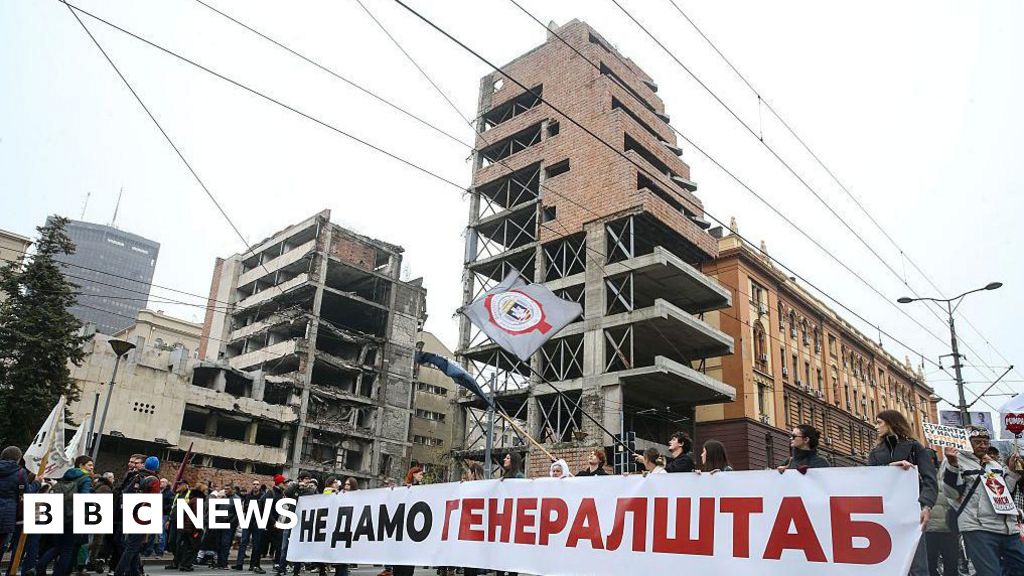
How plans for Trump International hotel in Belgrade unravelledImage Credit: BBC News
Key Points
- •Architectural Icon: Designed by the celebrated architect Nikola Dobrović and completed in 1965, the complex is considered a masterpiece of post-war Modernist architecture. Its twin buildings, connected by a dramatic, collapsing bridge structure, were intended to symbolize a canyon being carved through a mountain.
- •Symbol of Conflict: The building gained global notoriety in 1999 when it was heavily damaged by NATO airstrikes during the Kosovo War. For over two decades, its skeletal, bomb-blasted facade has remained a prominent and jarring fixture in downtown Belgrade—a constant, physical reminder of the conflict.
- •Protected Status: In 2005, in recognition of its architectural and historical significance, the Generalštab complex was officially designated a Monument of Culture, granting it legal protection from demolition or alteration that would compromise its integrity. This status would prove to be the project's critical stumbling block.
- •The Vision: The project called for a luxury Trump International Hotel, complete with high-end apartments, exclusive retail space, and a conference center. The development would have fundamentally altered one of Belgrade's most visible and symbolic locations.
- •The Economic Pitch: Proponents argued the development would create thousands of jobs, boost tourism, and signal to the world that Serbia was open for business. The government framed it as a forward-looking move to modernize Belgrade and attract further international capital.
How plans for Trump International hotel in Belgrade unravelled
A landmark deal that would have seen the Trump Organization transform a potent symbol of Serbian history—the ruins of the former Yugoslav Ministry of Defence—into a luxury hotel complex has collapsed, mired in a legal and political quagmire that now sees a government minister on trial. The ambitious project, once hailed as a symbol of fresh U.S.-Serbian economic ties, has instead become a cautionary tale about the collision of global finance, national identity, and the immovable weight of history.
The unravelling of the multi-million dollar venture highlights the immense challenges of developing politically and emotionally charged sites. What was pitched as a futuristic vision for Belgrade's city center has disintegrated amid public outcry and allegations of official misconduct, leaving the iconic "Generalštab" building's future as uncertain as ever.
A Landmark's Scarred Past
At the heart of the controversy is the Generalštab building. It is not merely a piece of real estate; for many Serbians, it is a hallowed, if painful, monument.
-
Architectural Icon: Designed by the celebrated architect Nikola Dobrović and completed in 1965, the complex is considered a masterpiece of post-war Modernist architecture. Its twin buildings, connected by a dramatic, collapsing bridge structure, were intended to symbolize a canyon being carved through a mountain.
-
Symbol of Conflict: The building gained global notoriety in 1999 when it was heavily damaged by NATO airstrikes during the Kosovo War. For over two decades, its skeletal, bomb-blasted facade has remained a prominent and jarring fixture in downtown Belgrade—a constant, physical reminder of the conflict.
-
Protected Status: In 2005, in recognition of its architectural and historical significance, the Generalštab complex was officially designated a Monument of Culture, granting it legal protection from demolition or alteration that would compromise its integrity. This status would prove to be the project's critical stumbling block.
The Deal and its Architects
The proposal to redevelop the site was championed as a major foreign investment win for the Serbian government, promising to erase a scar from the cityscape and replace it with a symbol of economic progress.
The project, spearheaded by the Trump Organization with involvement from figures including Jared Kushner, envisioned a gleaming, world-class complex that would inject hundreds of millions of dollars into the local economy.
The Grand Proposal
The plans, developed in conjunction with local partners and with the strong backing of the Serbian government, were ambitious and transformative.
-
The Vision: The project called for a luxury Trump International Hotel, complete with high-end apartments, exclusive retail space, and a conference center. The development would have fundamentally altered one of Belgrade's most visible and symbolic locations.
-
The Economic Pitch: Proponents argued the development would create thousands of jobs, boost tourism, and signal to the world that Serbia was open for business. The government framed it as a forward-looking move to modernize Belgrade and attract further international capital.
-
The Political Angle: For the administration of President Aleksandar Vučić, a deal with the then-U.S. President's family business was seen as a powerful tool for cementing a closer relationship with Washington, promising both economic and diplomatic dividends.
The Unraveling: A Legal Tripwire
The project's momentum came to a halt when confronted with the building's legally protected status. The designation as a Monument of Culture made the kind of radical redevelopment planned by the Trump Organization legally impossible without government intervention.
This is where the plan began to publicly unravel. Rather than seeking a compromise that respected the building's heritage, sources allege a more direct approach was taken to clear the legal hurdle.
The Allegations and the Aftermath
The attempt to circumvent heritage laws triggered a fierce backlash from architects, historians, and the public, culminating in a formal criminal investigation.
-
The Accusation: The central allegation is that a concerted effort was made within the government to strip the Generalštab of its protected status. This effort has led to the indictment of Culture Minister Nikola Selaković, who is now on trial for abuse of office.
-
The Mechanism: Prosecutors accuse Selaković of using his ministerial position to illegitimately influence or falsify official proceedings and documents. The goal, they contend, was to revoke the building's cultural heritage status, thereby paving the way for its redevelopment by the Trump-led consortium. He is accused of pressuring the Republic Institute for the Protection of Cultural Monuments to reverse its expert assessment.
-
The Backlash: The move sparked outrage. Civic groups and professional organizations mobilized, arguing that sacrificing a key piece of national and architectural history for a commercial project was unacceptable. The ensuing public and media pressure brought the process under intense scrutiny, ultimately leading to the formal charges.
The Fallout and What's Next
With the deal now defunct and a senior government official facing a criminal trial, the project's collapse has left significant fallout for all parties involved.
The Serbian government faces acute political embarrassment, with the trial undermining its narrative of clean governance and transparent foreign investment. The case has exposed a deep rift between the government's pro-development agenda and a vocal segment of the population determined to protect the nation's cultural identity.
Implications and the Road Ahead
-
For the Trump Organization: The episode serves as a stark reminder of the reputational and logistical risks of engaging with historically sensitive projects in politically complex environments. The organization has since quietly distanced itself from the project, leaving its former Serbian partners to manage the aftermath.
-
For the Serbian Government: The trial of Minister Selaković represents a significant political headache. A conviction would be a major blow to the government's credibility, while even an acquittal will not erase the perception that it was willing to bypass its own laws to accommodate foreign investors.
-
For the Generalštab: The building's future is once again in limbo. It remains a protected monument, but also a decaying, dangerous ruin in the heart of the capital. A solution is still needed, but the failed Trump deal has likely made any future redevelopment proposal, foreign or domestic, exponentially more complicated and controversial.
-
The Bigger Picture: The saga of the Belgrade Generalštab has become an international case study in the fierce battle between global capital and local heritage. It demonstrates that even with powerful political backing, the cultural and emotional significance of a place can prove to be an insurmountable obstacle.
Source: BBC News
Related Articles
Nationwide Protests Against ICE Enforcement Erupt in U.S.
Thousands are protesting ICE after the DOJ declined to investigate a fatal agent-involved shooting in Minneapolis, fueling a national movement and public anger.
Venezuela Amnesty Bill Could Free Political Prisoners
Learn about Venezuela's proposed amnesty bill to release political prisoners. The move could signal a major political shift and affect future economic sanctions
Pokémon Cancels Yasukuni Shrine Event After Backlash
The Pokémon Company has canceled an event at Tokyo's controversial Yasukuni Shrine after facing international backlash from China and South Korea.
US to Lose Measles Elimination Status: What It Means
The U.S. is poised to lose its measles elimination status due to escalating outbreaks. Learn what this downgrade means for public health and the economy.