Trump NATO Remarks Anger Veterans & Families | News
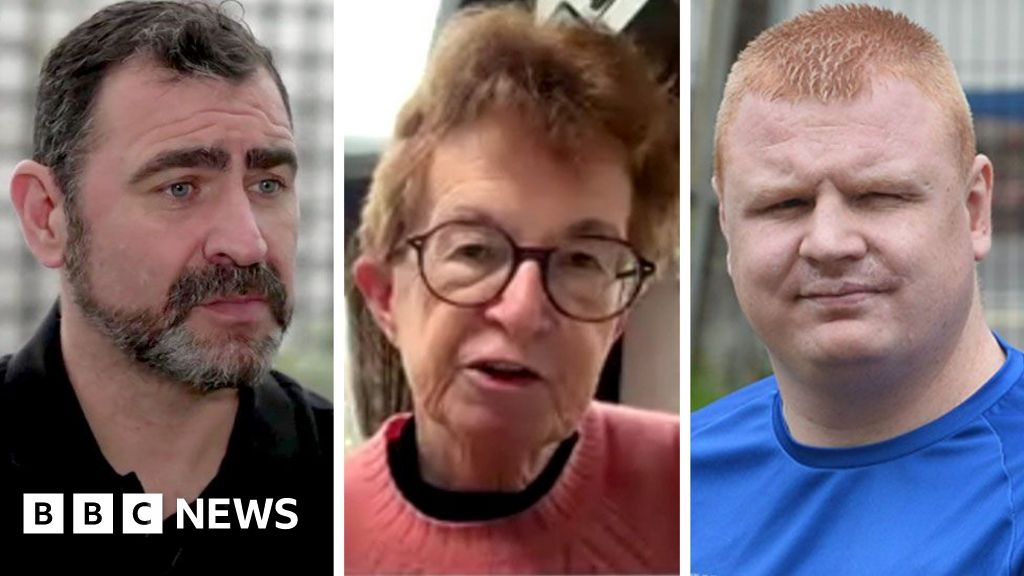
'He should apologise': Anger of veterans and relatives at Trump Nato remarksImage Credit: BBC News
Key Points
- •The Bottom Line: Former U.S. President Donald Trump has sparked a diplomatic and emotional firestorm among America’s closest allies. By claiming that NATO forces "stayed a little back" from the front lines in Afghanistan, Trump has drawn fierce condemnation from British veterans and bereaved families who served in the conflict’s deadliest sectors.
- •Andy Reid: A veteran who lost both legs and an arm to a Taliban IED while on a routine patrol. "I was there on the floor on my back... I knew something bad had happened," Reid recalls. He notes that he worked directly alongside American Explosive Ordnance Disposal (EOD) teams. "If they were on the front line, and we were stood next to them, then clearly we were on the front line as well."
- •Andy Allen: A member of Northern Ireland’s assembly who was 19 when an IED took his right leg and shredded his left. He emphasizes that his comrades put themselves in extreme danger on the front line to extract him to safety.
- •Ben Parkinson: Widely considered the most severely injured British soldier to survive the war. His mother, Diane Dernie, stated her son was "stunned" by the comments, noting he served out of forward operating bases (FOBs) in the thick of the fighting.
- •457 British service personnel were killed in the conflict.
'He Should Apologize': NATO Veterans and Families Rebuke Trump Over Afghanistan Claims
The Bottom Line: Former U.S. President Donald Trump has sparked a diplomatic and emotional firestorm among America’s closest allies. By claiming that NATO forces "stayed a little back" from the front lines in Afghanistan, Trump has drawn fierce condemnation from British veterans and bereaved families who served in the conflict’s deadliest sectors.
The Controversy
In a recent interview, Donald Trump suggested that while NATO allies sent "some troops" to support the U.S. mission in Afghanistan, they largely avoided direct combat. The remarks have been characterized by veterans as a revisionist history of a 20-year conflict that saw thousands of non-U.S. casualties.
Why It Matters
The comments strike at the heart of Article 5, the collective defense clause of the NATO alliance. Following the 9/11 attacks, the U.S. became the first and only member to invoke this clause. Allied nations responded by deploying troops for over a decade, often in high-intensity combat zones.
Voices from the Front Line
For those who sustained life-altering injuries in Helmand Province—the epicenter of the British effort in Afghanistan—the former President’s remarks are viewed as a betrayal of shared sacrifice.
The Human Cost
- Andy Reid: A veteran who lost both legs and an arm to a Taliban IED while on a routine patrol. "I was there on the floor on my back... I knew something bad had happened," Reid recalls. He notes that he worked directly alongside American Explosive Ordnance Disposal (EOD) teams. "If they were on the front line, and we were stood next to them, then clearly we were on the front line as well."
- Andy Allen: A member of Northern Ireland’s assembly who was 19 when an IED took his right leg and shredded his left. He emphasizes that his comrades put themselves in extreme danger on the front line to extract him to safety.
- Ben Parkinson: Widely considered the most severely injured British soldier to survive the war. His mother, Diane Dernie, stated her son was "stunned" by the comments, noting he served out of forward operating bases (FOBs) in the thick of the fighting.
The Ultimate Sacrifice
The statistics provide a stark contrast to the "stayed back" narrative:
- 457 British service personnel were killed in the conflict.
- Thousands more suffered life-changing physical and psychological injuries.
- Heavy losses were also sustained by other NATO allies, including Denmark, Estonia, and Canada.
Context: The UK’s Role in Helmand
The British deployment was not a peripheral support mission. Between 2001 and 2014, the UK maintained the second-largest troop presence in Afghanistan, peaking at approximately 11,000 personnel in 2011.
Key Battlegrounds
- Helmand Province: Initially intended as a redevelopment mission in 2006, it devolved into some of the most intense infantry combat seen by British forces since World War II.
- The IED Threat: The majority of fatalities occurred during foot and vehicle patrols, where soldiers were exposed to makeshift bombs—the same weapons that injured Reid, Allen, and Parkinson.
- Musa Qala & Sangin: These areas became synonymous with high-casualty rates and fierce "front line" engagements against a resurgent Taliban.
A Pattern of Criticism
This is not an isolated incident of friction regarding NATO contributions. The Trump administration and its ideological allies have frequently questioned the value of the alliance.
- The "ISAF" Slur: Pete Hegseth, the current nominee for U.S. Defense Secretary and an Afghanistan veteran, previously told a Senate committee that the NATO ISAF (International Security Assistance Force) badge stood for "I Saw Americans Fighting."
- Financial Leverage: The rhetoric often ties into a broader demand for NATO members to meet the 2% GDP defense spending threshold, using combat participation as a metric of "fairness."
The Reaction: Demands for Accountability
The response from the veteran community has shifted from shock to organized protest.
Expected Actions
- Formal Apology: Andy Reid has publicly called for a formal apology, describing the remarks as "disrespectful, inappropriate, and unexpected."
- White House Correspondence: Andy Allen has announced plans to write to the White House to formally correct the record, emphasizing that NATO members served as "comrades and counterparts" to American soldiers.
- Gold Star Families: Relatives of the fallen, such as Monica Kershaw—whose 19-year-old son Christopher was killed in a Warrior armored vehicle explosion—continue to voice their outrage at the dismissal of their children's sacrifice.
Critical Analysis: The Diplomatic Fallout
The timing of these remarks is particularly sensitive as NATO faces renewed pressure to prove its unity in the face of Russian aggression in Eastern Europe.
- Erosion of Trust: By questioning the historical contribution of allies, the rhetoric risks undermining the "all for one" spirit essential to the alliance's deterrence strategy.
- Political Ammunition: These statements provide domestic critics in allied nations with ammunition to argue against future cooperation with U.S.-led military initiatives.
The Big Picture: While the U.S. undeniably bore the heaviest burden in terms of total numbers and spending in Afghanistan, the "front line" was a shared space. For the veterans of Helmand, the attempt to diminish their role is not just a political talking point—it is an affront to the reality of the scars they carry.
Next Steps
As the story gains traction in international media, the focus moves to:
- The U.S. State Department: Whether they will issue a clarifying statement to soothe relations with the UK and other NATO partners.
- The UK Ministry of Defence: Whether British officials will take a firmer public stance to defend the record of their service personnel.
- NATO Headquarters: How Secretary General Mark Rutte navigates the tension between acknowledging U.S. leadership and protecting the honor of the other 31 member states.
Source: BBC News
Related Articles
Nationwide Protests Against ICE Enforcement Erupt in U.S.
Thousands are protesting ICE after the DOJ declined to investigate a fatal agent-involved shooting in Minneapolis, fueling a national movement and public anger.
Venezuela Amnesty Bill Could Free Political Prisoners
Learn about Venezuela's proposed amnesty bill to release political prisoners. The move could signal a major political shift and affect future economic sanctions
Pokémon Cancels Yasukuni Shrine Event After Backlash
The Pokémon Company has canceled an event at Tokyo's controversial Yasukuni Shrine after facing international backlash from China and South Korea.
US to Lose Measles Elimination Status: What It Means
The U.S. is poised to lose its measles elimination status due to escalating outbreaks. Learn what this downgrade means for public health and the economy.