Trump's Pearl Harbor Remark to Japan's PM Stuns Officials
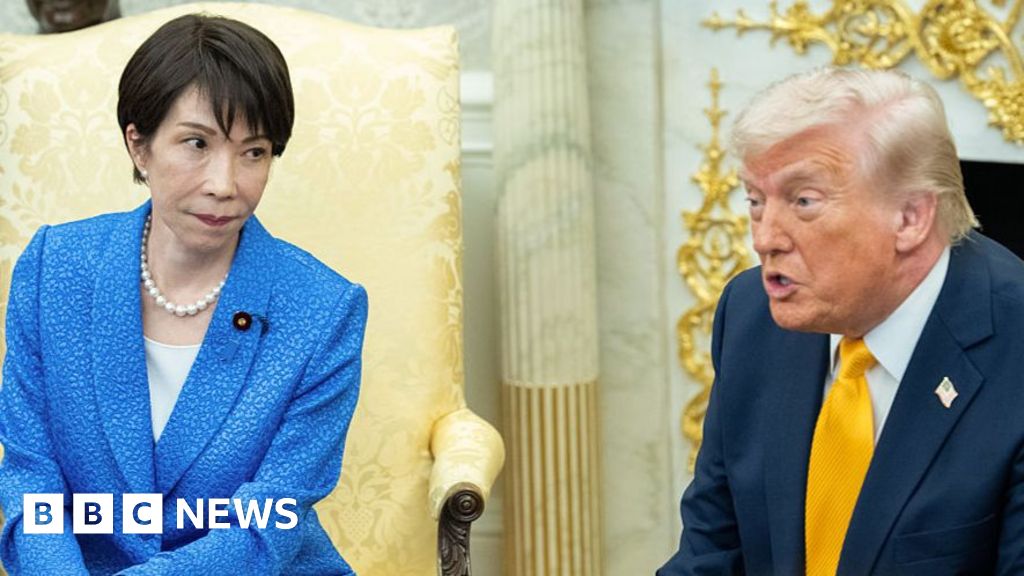
Trump makes Pearl Harbor remark in meeting with Japan's PMImage Credit: BBC News
Key Points
- •Washington D.C. – In a stark departure from decades of carefully calibrated diplomatic language, former President Donald Trump reportedly invoked the 1941 attack on Pearl Harbor during a meeting with Japan's then-Prime Minister Shinzo Abe, a moment that sources say left Japanese officials stunned and highlighted a fundamental shift in the U.S. approach to its most critical Asian ally. The remark, made during sensitive discussions on trade, stands in sharp contrast to the era of reconciliation meticulously cultivated by his predecessors.
- •Obama's Hiroshima Visit: In 2016, President Barack Obama became the first sitting U.S. president to visit Hiroshima. He did not offer an apology but delivered a solemn address, stating his visit was "a testament to how even the most painful divides can be bridged - how our two nations, former adversaries, cannot just become partners, but become the best of friends and the strongest of allies".
- •Abe's Pearl Harbor Visit: Months later, Prime Minister Abe reciprocated with a historic visit to Pearl Harbor, standing alongside President Obama at the USS Arizona Memorial. Abe offered his "sincere and everlasting condolences" for the lives lost, speaking of the "power of reconciliation" that had transformed the two countries into allies with a "deep and strong bond."
- •The Symbolism of Reconciliation: These two events were globally recognized as the closing of a painful historical chapter. They were choreographed to send a clear message: the U.S.-Japan alliance was no longer defined by its wartime past but by a shared future based on common values and strategic interests.
- •Focus on Trade Deficits: A central theme of Trump's presidency was the aggressive pursuit of "fairer" trade deals to reduce U.S. trade deficits. He frequently criticized Japan, along with Germany and China, for what he saw as unfair trade practices that harmed American industries and workers.
Trump makes Pearl Harbor remark in meeting with Japan's PM
Washington D.C. – In a stark departure from decades of carefully calibrated diplomatic language, former President Donald Trump reportedly invoked the 1941 attack on Pearl Harbor during a meeting with Japan's then-Prime Minister Shinzo Abe, a moment that sources say left Japanese officials stunned and highlighted a fundamental shift in the U.S. approach to its most critical Asian ally. The remark, made during sensitive discussions on trade, stands in sharp contrast to the era of reconciliation meticulously cultivated by his predecessors.
The comment underscores the transactional and often historically charged nature of the Trump administration's foreign policy, which frequently prioritized bilateral trade deficits over the symbolic gestures of partnership that have defined the U.S.-Japan relationship since World War II. For Tokyo, the incident was a jarring reminder that the post-war alliance, long considered a bedrock of Pacific stability, was being re-evaluated under an "America First" lens.
A Moment of Diplomatic Friction
The remark, "I remember Pearl Harbor," was reportedly made as the two leaders discussed the significant trade imbalance between the U.S. and Japan. According to sources familiar with the private meeting, the comment was not delivered as a joke but as a pointed barb, linking a 20th-century military conflict to 21st-century economic negotiations.
Japanese officials in the room were said to be visibly taken aback, unsure how to respond to the president's invocation of an event that has been a source of deep historical sensitivity. The Abe government, which had invested significant political capital in building a strong personal relationship with Mr. Trump, chose not to address the comment publicly, adhering to a long-standing Japanese diplomatic strategy of avoiding open confrontation with its primary security guarantor.
A Stark Contrast in Diplomacy
The incident is particularly notable when contrasted with the efforts of the preceding administration, which culminated in powerful symbols of reconciliation. The Obama-Abe years were marked by a deliberate effort to look beyond historical grievances to fortify the modern alliance.
-
Obama's Hiroshima Visit: In 2016, President Barack Obama became the first sitting U.S. president to visit Hiroshima. He did not offer an apology but delivered a solemn address, stating his visit was "a testament to how even the most painful divides can be bridged - how our two nations, former adversaries, cannot just become partners, but become the best of friends and the strongest of allies".
-
Abe's Pearl Harbor Visit: Months later, Prime Minister Abe reciprocated with a historic visit to Pearl Harbor, standing alongside President Obama at the USS Arizona Memorial. Abe offered his "sincere and everlasting condolences" for the lives lost, speaking of the "power of reconciliation" that had transformed the two countries into allies with a "deep and strong bond."
-
The Symbolism of Reconciliation: These two events were globally recognized as the closing of a painful historical chapter. They were choreographed to send a clear message: the U.S.-Japan alliance was no longer defined by its wartime past but by a shared future based on common values and strategic interests.
"America First" Meets a Key Ally
Mr. Trump's approach dispensed with much of this diplomatic subtlety. His administration viewed alliances, including the one with Japan, through a highly transactional framework, where economic metrics and defense spending contributions were paramount.
-
Focus on Trade Deficits: A central theme of Trump's presidency was the aggressive pursuit of "fairer" trade deals to reduce U.S. trade deficits. He frequently criticized Japan, along with Germany and China, for what he saw as unfair trade practices that harmed American industries and workers.
-
Pressure on Security Burdens: The former president consistently called on allies like Japan and South Korea to significantly increase their financial contributions for hosting U.S. troops, arguing that wealthy nations were not paying their fair share for the security umbrella provided by the United States.
-
A Shift in Rhetoric: The Pearl Harbor comment was emblematic of a broader rhetorical style that prioritized bluntness and leverage over diplomatic protocol. This approach was intended to signal a break from past administrations, which he accused of being taken advantage of by allies and rivals alike.
Geopolitical and Economic Stakes
The friction created by such moments has tangible implications for the economic and security architecture of the Indo-Pacific region. The U.S.-Japan alliance is widely seen by analysts as the cornerstone of regional stability.
-
The U.S.-Japan Security Treaty: This treaty obligates the U.S. to defend Japan and allows for the forward deployment of U.S. forces in the region. Its credibility is essential for deterring potential aggressors and reassuring allies. Diplomatic instability risks eroding that credibility.
-
Countering a Rising China: A unified U.S.-Japan front is the central pillar of the strategy to balance China's growing military and economic power. Any perceived rift between Washington and Tokyo can be exploited by Beijing to advance its own regional ambitions.
-
Economic Interdependence: The two nations are among the world's largest economies, with deeply integrated supply chains, massive cross-border investments, and trillions of dollars in bilateral trade. Uncertainty in the relationship creates risk for multinational corporations and global financial markets.
Implications and the Path Forward
While the Trump-Abe relationship was often publicly portrayed as strong, incidents like the Pearl Harbor remark reveal the underlying tensions that tested the alliance's foundations. For Japanese policymakers, it was a lesson in the unpredictability of "America First" diplomacy and the need to navigate a more volatile partnership.
Looking ahead, the resilience of the U.S.-Japan alliance will depend on its ability to withstand such rhetorical shocks. While career diplomats and defense officials on both sides worked to maintain continuity, the episode serves as a case study in how leadership-level communication can either reinforce or undermine decades of strategic partnership. The long-term challenge remains ensuring that the alliance is anchored not just by shared threats, but by a consistent and mutually respectful diplomatic dialogue that acknowledges its past without being imprisoned by it.
Source: BBC News
Related Articles
Nationwide Protests Against ICE Enforcement Erupt in U.S.
Thousands are protesting ICE after the DOJ declined to investigate a fatal agent-involved shooting in Minneapolis, fueling a national movement and public anger.
Venezuela Amnesty Bill Could Free Political Prisoners
Learn about Venezuela's proposed amnesty bill to release political prisoners. The move could signal a major political shift and affect future economic sanctions
Pokémon Cancels Yasukuni Shrine Event After Backlash
The Pokémon Company has canceled an event at Tokyo's controversial Yasukuni Shrine after facing international backlash from China and South Korea.
US to Lose Measles Elimination Status: What It Means
The U.S. is poised to lose its measles elimination status due to escalating outbreaks. Learn what this downgrade means for public health and the economy.