Trump, Petro Hold Talks to Mend Strained US-Colombia Ties
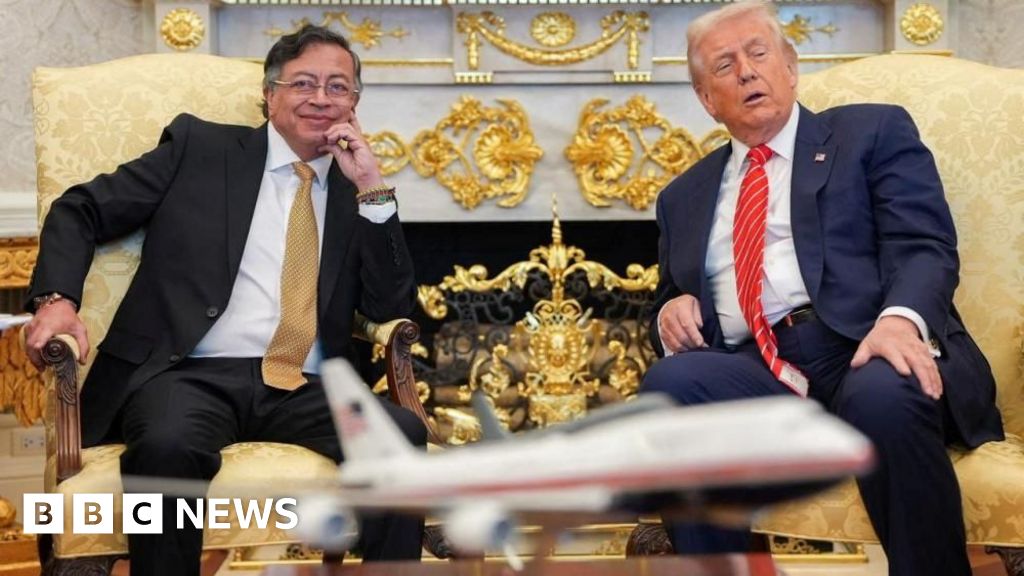
Trump hails White House talks with 'terrific' Petro, after months of mutual insultsImage Credit: BBC News
Key Points
- •WASHINGTON – In a striking diplomatic pivot, U.S. President Donald Trump hosted Colombian President Gustavo Petro at the White House, capping the meeting by calling his counterpart "terrific" and signaling a potential thaw in what has been a deeply chilled relationship. The cordial tone stands in stark contrast to months of public acrimony, suggesting a pragmatic turn toward cooperation between two leaders with vastly different ideological and economic visions.
- •Political Labels: During his campaign, President Trump repeatedly painted Petro as a dangerous radical, warning that his election would turn Colombia into another Venezuela and dubbing him a "new Castro."
- •Counternarcotics Criticism: President Petro has been a vocal critic of the U.S.-led "War on Drugs," calling the decades-long strategy a "total failure." He has advocated for a fundamental shift away from forced coca crop eradication, backed by billions in U.S. aid, toward rural development and voluntary substitution programs.
- •Climate and Energy Clashes: Petro’s ambitious agenda to decarbonize Colombia’s economy and halt new oil and gas exploration directly conflicts with the U.S. focus on energy security and the interests of American energy firms invested heavily in Colombia.
- •Divergence on Venezuela: The two leaders have pursued opposing strategies regarding Venezuela. While the Trump administration maintains a "maximum pressure" campaign of sanctions against the Maduro regime, Petro has moved to normalize diplomatic and commercial relations with his neighbor.
Trump hails White House talks with 'terrific' Petro, after months of mutual insults
WASHINGTON – In a striking diplomatic pivot, U.S. President Donald Trump hosted Colombian President Gustavo Petro at the White House, capping the meeting by calling his counterpart "terrific" and signaling a potential thaw in what has been a deeply chilled relationship. The cordial tone stands in stark contrast to months of public acrimony, suggesting a pragmatic turn toward cooperation between two leaders with vastly different ideological and economic visions.
The meeting, which centered on complex issues from counternarcotics to climate change, represents a critical test for the future of the U.S.-Colombia partnership—a cornerstone of American policy in Latin America for decades. For financial markets and international investors, the shift from confrontation to dialogue provides a welcome, if tentative, signal of stability for a relationship governing billions in trade and investment.
President Petro, Colombia's first leftist leader, encapsulated the new, pragmatic approach. "Some approaches are aggressive, others perhaps more open to being built collectively," he remarked following the discussions. "We try to hold on to what brings us together rather than what separates us." This sentiment underscores a deliberate effort to find common ground amid deep-seated policy disagreements.
A History of Hostility
The unexpected warmth of the White House meeting is best understood against the backdrop of recent and sharp-edged rhetoric between the two administrations. The path to this dialogue was paved with mutual insults and policy clashes that had pushed the strategic alliance to a breaking point.
- Political Labels: During his campaign, President Trump repeatedly painted Petro as a dangerous radical, warning that his election would turn Colombia into another Venezuela and dubbing him a "new Castro."
- Counternarcotics Criticism: President Petro has been a vocal critic of the U.S.-led "War on Drugs," calling the decades-long strategy a "total failure." He has advocated for a fundamental shift away from forced coca crop eradication, backed by billions in U.S. aid, toward rural development and voluntary substitution programs.
- Climate and Energy Clashes: Petro’s ambitious agenda to decarbonize Colombia’s economy and halt new oil and gas exploration directly conflicts with the U.S. focus on energy security and the interests of American energy firms invested heavily in Colombia.
- Divergence on Venezuela: The two leaders have pursued opposing strategies regarding Venezuela. While the Trump administration maintains a "maximum pressure" campaign of sanctions against the Maduro regime, Petro has moved to normalize diplomatic and commercial relations with his neighbor.
The Economic Stakes of Rapprochement
Beyond the political theater, the U.S.-Colombia relationship is anchored by significant economic and financial ties. A more stable and predictable partnership is crucial for investor confidence and sustained growth. The meeting's constructive tone is therefore a matter of material importance.
- Bilateral Trade: The U.S. is Colombia's largest trading partner. In 2023, two-way trade in goods and services exceeded $40 billion, governed by the U.S.-Colombia Trade Promotion Agreement (CTPA). Key Colombian exports include crude oil, coffee, and fresh flowers, while the U.S. exports machinery, petroleum products, and agricultural goods.
- Foreign Direct Investment (FDI): The United States is the largest source of FDI in Colombia, with a cumulative stock of over $15 billion. American companies have major investments in the mining, energy, manufacturing, and financial services sectors. Political stability and regulatory certainty are paramount for protecting and growing these investments.
- Energy Sector Interdependence: While Petro aims to wean Colombia off fossil fuels, the country remains a significant oil producer, with U.S. companies playing a major role. A managed, predictable energy transition is seen by investors as far preferable to abrupt policy shifts that could strand assets and trigger capital flight.
- Development and Security Aid: The U.S. has provided tens of billions of dollars to Colombia, primarily through initiatives like Plan Colombia, aimed at fighting drug cartels and bolstering state institutions. The future direction of this aid—whether it continues to fund traditional security measures or pivots to support Petro’s rural development goals—carries significant financial weight.
Key Topics on the Agenda
The White House discussions reportedly covered the most contentious and vital areas of the bilateral agenda. While concrete agreements were not announced, the willingness to engage marks a significant step. The primary focus areas included:
- A New Drug Policy Framework: The leaders discussed Petro’s proposal to reframe counternarcotics efforts. This involves shifting focus from aerial fumigation and forced eradication to a "holistic" approach that provides economic alternatives to coca farmers and strengthens intelligence-led interdiction of major trafficking networks.
- Navigating the Venezuelan Crisis: The situation in Venezuela was a central topic. While their approaches differ, both nations share an interest in a stable outcome. Discussions likely explored potential avenues for coordinated diplomatic pressure to ensure fair elections and address the regional migration crisis stemming from Venezuela.
- Climate Change and Energy Transition: President Petro sought U.S. support for his climate agenda, including potential financing for clean energy projects and a "debt-for-nature" swap. For the U.S., the conversation balanced climate goals with the immediate need for regional energy security.
- Migration Management: With migration across the hemisphere reaching record levels, the leaders discussed shared responsibility and enhanced cooperation to manage migrant flows, particularly through the dangerous Darién Gap that borders Colombia and Panama.
Implications and The Path Forward
The meeting between Trump and Petro successfully reset the tone of the U.S.-Colombia relationship, replacing public hostility with a commitment to dialogue. For now, words have replaced insults, creating a crucial window for pragmatic negotiation.
However, the fundamental ideological and policy divides remain. The true test of this diplomatic opening will be whether the constructive dialogue translates into tangible action and compromise. Observers will be watching closely for follow-up in several key areas: adjustments to U.S. counternarcotics funding, coordination on Venezuela policy, and potential U.S. investment in Colombia’s green energy transition.
For the financial community, the meeting has lowered the immediate political risk profile associated with Colombia. By choosing pragmatism over confrontation, both leaders have signaled that the foundational economic and security partnership is too important to sacrifice. The road ahead remains complex, but the willingness to navigate it together, as Petro noted, by "hold[ing] on to what brings us together," marks a pivotal and cautiously optimistic development.
Source: BBC News
Related Articles
Nationwide Protests Against ICE Enforcement Erupt in U.S.
Thousands are protesting ICE after the DOJ declined to investigate a fatal agent-involved shooting in Minneapolis, fueling a national movement and public anger.
Venezuela Amnesty Bill Could Free Political Prisoners
Learn about Venezuela's proposed amnesty bill to release political prisoners. The move could signal a major political shift and affect future economic sanctions
Pokémon Cancels Yasukuni Shrine Event After Backlash
The Pokémon Company has canceled an event at Tokyo's controversial Yasukuni Shrine after facing international backlash from China and South Korea.
US to Lose Measles Elimination Status: What It Means
The U.S. is poised to lose its measles elimination status due to escalating outbreaks. Learn what this downgrade means for public health and the economy.