Trump Slams SCOTUS Tariff Ruling, Vows New Strategy
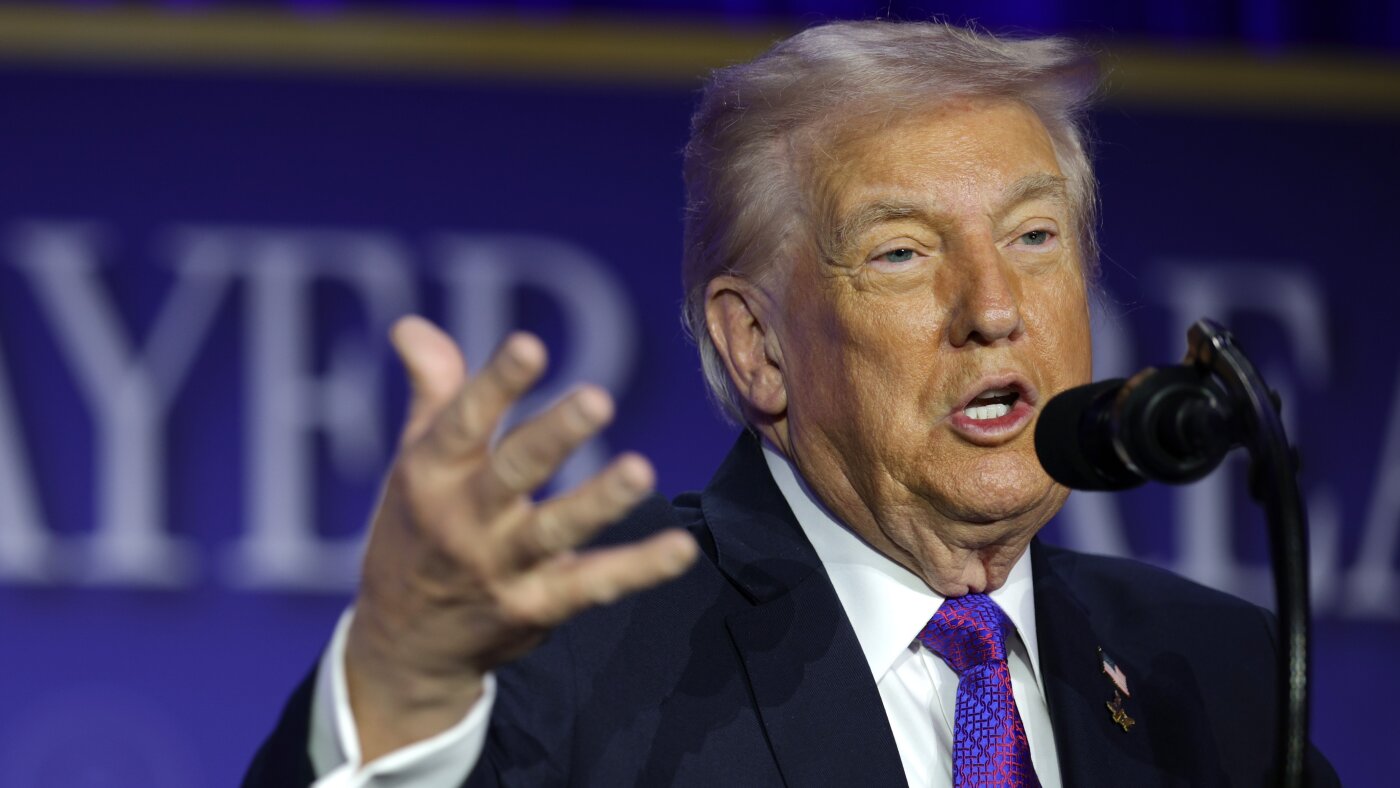
Trump calls SCOTUS tariffs decision 'deeply disappointing' and lays out path forwardImage Credit: NPR Politics
Key Points
- •WASHINGTON – The Supreme Court on Friday dealt a significant blow to President Trump’s trade agenda, ruling that a key law does not grant him the authority to unilaterally impose sweeping tariffs. The President immediately responded with a mix of sharp criticism for the Court and a detailed new strategy, signaling that his administration's aggressive use of trade levies is far from over.
- •Trade Act of 1974: Trump highlighted his intent to use Sections 122, 201, and 301 of this act. Section 122 is particularly notable, as it allows a president to impose tariffs of up to 15% for 150 days to address a balance-of-payments deficit.
- •Tariff Act of 1930: The administration will also explore using Section 338, which provides authority to respond to discriminatory trade practices by foreign countries.
- •Deficit Reduction: A recent Congressional Budget Office (CBO) report projected that existing tariffs were on track to help reduce the federal deficit by an estimated $3 trillion over the next decade.
- •Consumer Cost: The same CBO report found that U.S. consumers and businesses—not foreign exporters—are bearing the vast majority of the financial cost of the tariffs through higher prices.
Trump Calls SCOTUS Tariffs Decision 'Deeply Disappointing' and Lays Out Path Forward
WASHINGTON – The Supreme Court on Friday dealt a significant blow to President Trump’s trade agenda, ruling that a key law does not grant him the authority to unilaterally impose sweeping tariffs. The President immediately responded with a mix of sharp criticism for the Court and a detailed new strategy, signaling that his administration's aggressive use of trade levies is far from over.
The 6-to-3 decision represents the most significant legal defeat for President Trump since his return to office, directly challenging one of the most powerful and frequently used tools in his economic arsenal. While the ruling creates immediate uncertainty for existing and future tariffs, the President moved quickly to re-frame the decision as one that clarifies his path forward, vowing to use alternative legal authorities to continue his agenda.
The Ruling: A Major Setback
The Court’s majority opinion focused on the International Emergency Economic Powers Act (IEEPA), a law the Trump administration had leaned on to justify broad-based tariffs. The justices found that the statute does not authorize the president to implement such tariffs without explicit Congressional approval.
This decision effectively removes a primary legal pillar supporting a cornerstone of Trump's economic and foreign policy. The President has long championed tariffs—calling them his "favorite word in the dictionary"—as a crucial lever for pressuring foreign leaders and, in his view, protecting American industry.
In a fiery response, President Trump called the decision "deeply disappointing" and directed personal criticism at the justices who ruled against him, labeling them "fools" and "lapdogs" motivated by "liberal partisanship." His criticism extended to justices appointed by Republican presidents, including two he appointed himself.
"I'm ashamed of certain members of the court, absolutely ashamed for not having the courage to do what's right for our country," he told reporters.
The New Playbook: Trump's Alternative Authorities
Despite his sharp critique, the President quickly pivoted, outlining a new legal playbook he claims the administration will now use. He asserted that while the Court's decision was "incorrect," it ultimately provides a clearer, if more cumbersome, path for imposing tariffs.
"It doesn't matter, because we have very powerful alternatives that have been approved by this decision," Trump stated, pointing to a dissent written by Justice Brett Kavanaugh.
The President detailed several specific legal avenues he intends to pursue, which were listed in Kavanaugh's opinion as existing statutes Congress has passed to regulate trade.
- Trade Act of 1974: Trump highlighted his intent to use Sections 122, 201, and 301 of this act. Section 122 is particularly notable, as it allows a president to impose tariffs of up to 15% for 150 days to address a balance-of-payments deficit.
- Tariff Act of 1930: The administration will also explore using Section 338, which provides authority to respond to discriminatory trade practices by foreign countries.
Trump argued, "While I am sure that they did not mean to do so, the Supreme Court's decision today made the president's ability to both regulate trade and impose tariffs more powerful and more crystal clear, rather than less."
Immediate Actions and Economic Realities
The President announced he would sign an executive order later on Friday to maintain certain existing tariffs and introduce a new "10% global tariff" under these alternative authorities.
However, this new approach comes with significant constraints. Tariffs imposed under Section 122 of the Trade Act of 1974, for example, automatically expire after 150 days unless Congress votes to approve them. This sets a new political deadline and shifts the battleground from the courts to Capitol Hill.
The economic debate surrounding the tariffs remains contentious.
- Deficit Reduction: A recent Congressional Budget Office (CBO) report projected that existing tariffs were on track to help reduce the federal deficit by an estimated $3 trillion over the next decade.
- Consumer Cost: The same CBO report found that U.S. consumers and businesses—not foreign exporters—are bearing the vast majority of the financial cost of the tariffs through higher prices.
Public sentiment appears to reflect this cost. A recent NPR/Marist poll found that a majority of Americans (56%) believe tariffs and other fees on imported goods ultimately hurt the U.S. economy.
Congress vs. The White House
The Supreme Court's ruling was praised by some in Congress as a necessary reassertion of legislative authority. Former Senate Majority Leader Mitch McConnell, a Kentucky Republican, has repeatedly warned against executive overreach in trade.
"Congress' role in trade policy, as I have warned repeatedly, is not an inconvenience to avoid," McConnell said in a statement. "If the executive would like to enact trade policies that impact American producers and consumers, its path forward is crystal clear: Convince their representatives under Article I" of the Constitution.
This sets the stage for a potential clash. Gaining Congressional approval for broad new tariffs could prove difficult, particularly in an election year, with Republicans facing pressure from constituents over high costs and a business community wary of ongoing economic uncertainty.
What’s Next: A New Era of Trade Uncertainty
The bottom line is that while the Supreme Court has closed one major door for presidential tariffs, President Trump is already working to pry open several others. The legal battle over trade authority is not over; it is simply entering a new, more complex phase.
For businesses and global markets, the ruling does not provide the finality many had hoped for. Instead, it introduces a new set of timelines and political calculations. The 150-day clock on tariffs imposed under the new authorities will create recurring flashpoints between the White House and Congress, injecting sustained volatility into trade-sensitive sectors.
President Trump remains defiant, expressing confidence that he will continue to successfully deploy tariffs. "Foreign countries that have been ripping us off for years are ecstatic," he said. "But they won't be dancing for long. That I can assure you."
The Court’s decision, intended to clarify the separation of powers on trade, has instead guaranteed that tariffs will remain a central and contentious feature of the economic and political landscape for the foreseeable future.
Source: NPR Politics
Related Articles
Nationwide Protests Against ICE Enforcement Erupt in U.S.
Thousands are protesting ICE after the DOJ declined to investigate a fatal agent-involved shooting in Minneapolis, fueling a national movement and public anger.
Venezuela Amnesty Bill Could Free Political Prisoners
Learn about Venezuela's proposed amnesty bill to release political prisoners. The move could signal a major political shift and affect future economic sanctions
Pokémon Cancels Yasukuni Shrine Event After Backlash
The Pokémon Company has canceled an event at Tokyo's controversial Yasukuni Shrine after facing international backlash from China and South Korea.
US to Lose Measles Elimination Status: What It Means
The U.S. is poised to lose its measles elimination status due to escalating outbreaks. Learn what this downgrade means for public health and the economy.