Trump Threatens Tariffs on Countries Trading with Iran
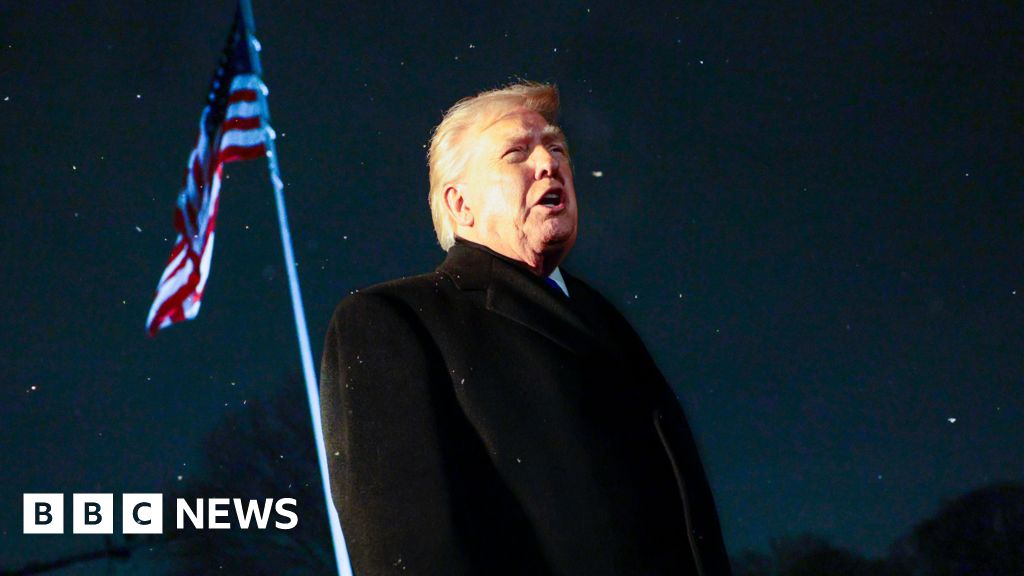
Trump signs executive order threatening tariffs for countries trading with IranImage Credit: BBC News
Key Points
- •WASHINGTON – President Donald Trump has signed a sweeping executive order that dramatically escalates his "maximum pressure" campaign against Tehran, threatening to punish nations that continue to trade with Iran by imposing significant tariffs on their goods entering the United States. The move marks a major expansion of secondary sanctions, shifting the administration's economic weaponry from direct financial penalties to a broader trade war footing.
- •The Tariff Threat: The order does not set a specific tariff rate but explicitly uses 25% as an illustrative example. It states that duties can be applied to goods imported into the U.S. from any nation that "directly or indirectly purchases, imports, or otherwise acquires any goods or services from Iran."
- •Targeted Sectors: The initial focus is on Iran's industrial and raw material sectors. This is a strategic move away from the primary focus on oil exports, which have already been crippled by previous sanctions, toward strangling the domestic industries that support the Iranian regime and its military apparatus.
- •Secondary Sanctions Evolved: This moves beyond traditional secondary sanctions, which typically block entities from the U.S. financial system. By leveraging tariffs, the White House is weaponizing access to the vast American consumer market, a much broader and potentially more disruptive penalty.
- •May 2018: U.S. withdraws from the JCPOA.
Trump Signs Executive Order Threatening Tariffs for Countries Trading with Iran
WASHINGTON – President Donald Trump has signed a sweeping executive order that dramatically escalates his "maximum pressure" campaign against Tehran, threatening to punish nations that continue to trade with Iran by imposing significant tariffs on their goods entering the United States. The move marks a major expansion of secondary sanctions, shifting the administration's economic weaponry from direct financial penalties to a broader trade war footing.
The order, announced by the White House, gives the U.S. Treasury and State Departments the authority to target any individual or entity operating in or trading with key sectors of the Iranian economy, including construction, manufacturing, textiles, and mining. Crucially, it extends the punitive measures to any country that facilitates such trade, creating a stark choice for U.S. trading partners: cease business with Iran or risk facing steep American tariffs.
This action represents the economic component of the administration's response to Iran's recent missile strikes on Iraqi bases housing U.S. troops, which were themselves a retaliation for the American drone strike that killed top Iranian general Qasem Soleimani. While President Trump opted against immediate military reprisal, this executive order signals a profound intensification of economic warfare.
The New Economic Weapon
The executive order functions as a powerful new tool in the administration's arsenal, designed to further isolate Iran and choke off its remaining sources of non-oil revenue. Its mechanism is unprecedented in its potential scope, directly linking a country's trade with Iran to its own trade relationship with the United States.
-
The Tariff Threat: The order does not set a specific tariff rate but explicitly uses 25% as an illustrative example. It states that duties can be applied to goods imported into the U.S. from any nation that "directly or indirectly purchases, imports, or otherwise acquires any goods or services from Iran."
-
Targeted Sectors: The initial focus is on Iran's industrial and raw material sectors. This is a strategic move away from the primary focus on oil exports, which have already been crippled by previous sanctions, toward strangling the domestic industries that support the Iranian regime and its military apparatus.
-
Secondary Sanctions Evolved: This moves beyond traditional secondary sanctions, which typically block entities from the U.S. financial system. By leveraging tariffs, the White House is weaponizing access to the vast American consumer market, a much broader and potentially more disruptive penalty.
Context: Escalation and "Maximum Pressure"
This order is the latest and most aggressive step in a policy that began with the U.S. withdrawal from the Joint Comprehensive Plan of Action (JCPOA), commonly known as the Iran nuclear deal, in 2018. Since then, the administration has systematically re-imposed and expanded sanctions with the stated goal of forcing Iran to negotiate a new, more comprehensive deal covering its nuclear program, ballistic missiles, and regional influence.
A Timeline of Economic Pressure:
- May 2018: U.S. withdraws from the JCPOA.
- November 2018: Sanctions snap back, targeting Iran's energy, shipping, and financial sectors.
- April 2019: The U.S. ends waivers that had allowed major economies like China, India, and Japan to continue importing Iranian oil.
- May 2019: Sanctions are expanded to Iran's industrial metals sector.
- January 2020: The new executive order threatens tariffs on third-party countries, creating a new front in the economic conflict.
The administration argues this "maximum pressure" strategy is necessary to deprive the Iranian government of the funds it uses to support proxy groups across the Middle East and develop its military capabilities. Critics, however, contend that the policy has backfired, empowering hardliners in Tehran and pushing the region closer to a major conflict.
Global Ramifications and The Choice for Allies
The order places U.S. allies and major trading partners in an extremely difficult position. Many global powers, particularly in Europe and Asia, have sought to preserve diplomatic and economic ties with Iran, viewing the 2015 nuclear deal as a cornerstone of regional stability.
-
The European Dilemma: The European Union, led by Germany, France, and the United Kingdom, has actively worked to create a special purpose vehicle (INSTEX) to facilitate non-dollar humanitarian trade with Iran. This new order directly threatens any European company or country using such a mechanism, forcing a choice between their transatlantic alliance and their strategic interests in the Middle East.
-
China's Calculation: As one of Iran's most important remaining economic partners and a primary target of U.S. tariffs in a separate trade dispute, China faces a critical decision. Complying with the U.S. order would mean abandoning a key energy supplier and geopolitical partner. Defiance could trigger a new, punishing round of tariffs on its exports to the U.S., reigniting a trade war that has only recently begun to de-escalate.
-
Supply Chain Uncertainty: For multinational corporations, the order injects a massive dose of uncertainty into global supply chains. A company in South Korea, for example, might source a minor component from an Iranian textile manufacturer. Under this order, that could theoretically expose all of the company's U.S.-bound products to a 25% tariff, creating a compliance and risk-management nightmare.
The Path Forward
The immediate impact of the executive order will depend on its enforcement. The language gives the Treasury Secretary, in consultation with the Secretary of State, significant discretion in identifying and penalizing violators. The key questions now are how aggressively, and against whom, the administration will choose to wield this powerful new authority.
Financial markets are bracing for a period of heightened volatility. The threat of new, unpredictable tariffs could weigh on global growth projections and disrupt trade flows far beyond the Middle East. Oil prices, while initially steady, remain sensitive to any further escalation that could threaten production or transport in the Persian Gulf.
For now, the global community is in a wait-and-see mode. Diplomats will be scrambling for clarification from Washington, while corporate lawyers and compliance officers begin the arduous task of assessing their exposure. With this order, the Trump administration has not only tightened the economic noose around Iran but has also put the entire global trading system on notice. The world must now decide how to respond.
Source: BBC News
Related Articles
Nationwide Protests Against ICE Enforcement Erupt in U.S.
Thousands are protesting ICE after the DOJ declined to investigate a fatal agent-involved shooting in Minneapolis, fueling a national movement and public anger.
Venezuela Amnesty Bill Could Free Political Prisoners
Learn about Venezuela's proposed amnesty bill to release political prisoners. The move could signal a major political shift and affect future economic sanctions
Pokémon Cancels Yasukuni Shrine Event After Backlash
The Pokémon Company has canceled an event at Tokyo's controversial Yasukuni Shrine after facing international backlash from China and South Korea.
US to Lose Measles Elimination Status: What It Means
The U.S. is poised to lose its measles elimination status due to escalating outbreaks. Learn what this downgrade means for public health and the economy.