Trump to Investigate EU Over Fines on US Tech Companies
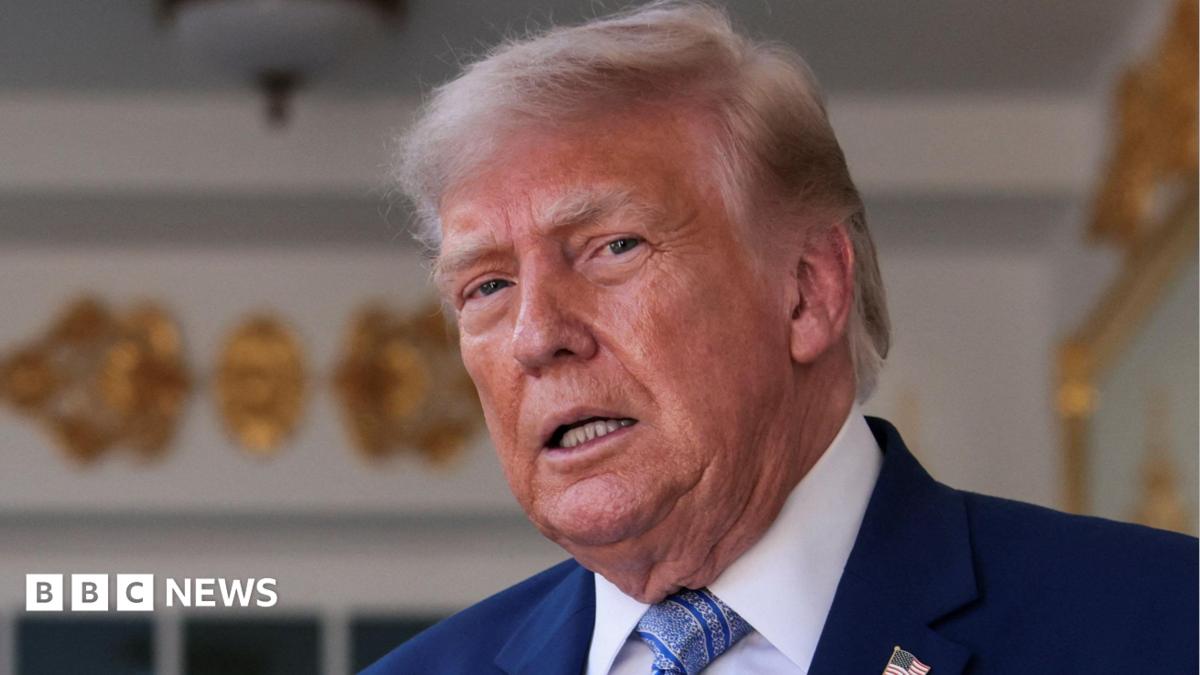
Trump vows to investigate EU over fining of US tech companiesImage Credit: BBC Business (Finance)
Key Points
- •WASHINGTON – President Donald Trump has escalated transatlantic trade tensions, vowing to launch a formal investigation into the European Union and threatening new tariffs over the bloc's sustained regulatory and financial pressure on America's largest technology companies. The move signals a significant new front in the administration's assertive global trade posture and directly challenges the EU's authority to police digital markets.
- •Section 301 Investigation: The president announced the "immediate" launch of a "301 investigation." This refers to Section 301 of the Trade Act of 1974, which grants the Office of the United States Trade Representative (USTR) broad authority to investigate and counteract foreign trade practices deemed unfair or discriminatory. The second Trump Administration has utilized this tool several times since taking office last year to challenge the trade policies of other nations.
- •Threat of "Substantial" Tariffs: Alongside the investigation, Mr. Trump is "considering a substantial TARIFF" on European goods. This threat comes just one day after the administration announced a separate round of tariffs, ranging from 10% to 12.5%, on 60 trading partners, including the EU, UK, and China.
- •Google: The Alphabet-owned company has faced multiple billion-euro fines from the EC for antitrust violations related to its search, advertising, and mobile operating system businesses. A spokesman for Google, José Castañeda, told the BBC the company had "worked hard to comply" with the DMA but expressed "concerns about the impact of recent EC decisions." He added, "We appreciate the engagement by the administration and US government."
- •Apple: While Mr. Trump cited a "$15bn" fine, this likely refers to the EC's 2016 ruling that Apple owed €13 billion (approximately $15 billion at the time) in back taxes to Ireland. Apple and Ireland successfully appealed the order, but the case highlighted the EU's aggressive stance on tax arrangements for multinationals. Shortly before his 2024 election, Mr. Trump said Apple CEO Tim Cook had called him to complain about EU fines.
Trump Vows to Investigate EU Over Fining of US Tech Companies
WASHINGTON – President Donald Trump has escalated transatlantic trade tensions, vowing to launch a formal investigation into the European Union and threatening new tariffs over the bloc's sustained regulatory and financial pressure on America's largest technology companies. The move signals a significant new front in the administration's assertive global trade posture and directly challenges the EU's authority to police digital markets.
The president's declaration, posted on his Truth Social platform, came just days after the European Commission (EC) levied a €890 million ($1 billion) fine against Google. The penalty was imposed for what the EC determined were anti-competitive practices that unfairly disadvantaged rivals to its services, a ruling made under the EU's landmark Digital Markets Act (DMA).
In a forceful statement, Mr. Trump accused the EU of using American corporations as a source of revenue. "The United States of America is not a 'PIGGYBANK' for Europe, nor will we allow it to be!" he wrote. He demanded that any fines against U.S. tech firms be "entirely reversed."
The administration is now preparing to retaliate through a formal trade mechanism, a move that could have far-reaching economic consequences.
The White House Threat
President Trump outlined a two-pronged response to what he described as the EU's practice of "robbing American companies and, in turn, the American taxpayer."
-
Section 301 Investigation: The president announced the "immediate" launch of a "301 investigation." This refers to Section 301 of the Trade Act of 1974, which grants the Office of the United States Trade Representative (USTR) broad authority to investigate and counteract foreign trade practices deemed unfair or discriminatory. The second Trump Administration has utilized this tool several times since taking office last year to challenge the trade policies of other nations.
-
Threat of "Substantial" Tariffs: Alongside the investigation, Mr. Trump is "considering a substantial TARIFF" on European goods. This threat comes just one day after the administration announced a separate round of tariffs, ranging from 10% to 12.5%, on 60 trading partners, including the EU, UK, and China.
A Pattern of EU Scrutiny
The recent Google fine is the latest in a series of major regulatory actions and penalties by Brussels targeting "Big Tech." The companies, which Mr. Trump named directly, have been in the crosshairs of European regulators for years over issues ranging from competition and data privacy to taxation.
-
Google: The Alphabet-owned company has faced multiple billion-euro fines from the EC for antitrust violations related to its search, advertising, and mobile operating system businesses. A spokesman for Google, José Castañeda, told the BBC the company had "worked hard to comply" with the DMA but expressed "concerns about the impact of recent EC decisions." He added, "We appreciate the engagement by the administration and US government."
-
Apple: While Mr. Trump cited a "$15bn" fine, this likely refers to the EC's 2016 ruling that Apple owed €13 billion (approximately $15 billion at the time) in back taxes to Ireland. Apple and Ireland successfully appealed the order, but the case highlighted the EU's aggressive stance on tax arrangements for multinationals. Shortly before his 2024 election, Mr. Trump said Apple CEO Tim Cook had called him to complain about EU fines.
-
Meta: The parent company of Facebook, Instagram, and WhatsApp has been hit with significant fines, primarily for violations of the EU's General Data Protection Regulation (GDPR). These have included penalties for illegal data transfers and breaches of user privacy. Meta is also facing new probes over the allegedly "addictive" nature of its platforms. In a statement last year, the company accused the EU of "attempting to handicap successful American businesses."
-
Amazon: The e-commerce giant has been the subject of several EC investigations into its use of seller data and its position as both a marketplace and a retailer. However, it has largely avoided the scale of fines imposed on its peers, reaching a settlement with regulators in 2022 to alter some of its business practices in Europe.
The figures cited by Mr. Trump in his post—including alleged fines of $3 billion for Meta and $2.5 billion for Amazon—could not be immediately verified and may represent a cumulative or informal tally of various legal battles and regulatory costs.
Broader Trade Context
This latest confrontation is part of a wider and increasingly contentious trade relationship between the U.S. and the EU. The Trump administration has consistently opposed Europe's push for a digital services tax (DST), which imposes levies on the revenues of large technology firms.
Last month, President Trump threatened a punitive 100% tariff on imports from any European country that implements a DST. The threat was made despite several nations, including France, Spain, and Italy, having already had such taxes in place for years, which the U.S. argues unfairly targets American companies.
The political dynamics are also complex. Major technology firms, including Google, Meta, Apple, and Amazon, have been significant financial contributors, donating millions of dollars to political funds supporting Mr. Trump's campaign and presidency.
What Happens Next
The initiation of a Section 301 investigation by the USTR will mark a formal escalation. The process typically involves gathering evidence, holding public hearings, and producing a report with recommended actions, which could include tariffs.
The European Commission, which has so far declined to comment, is likely to view the investigation as an act of political intimidation. Brussels has historically responded to U.S. tariffs with retaliatory measures of its own, raising the prospect of a tit-for-tat trade war that could disrupt supply chains and raise costs for consumers and businesses on both sides of the Atlantic.
For the tech giants caught in the middle, the conflict creates profound uncertainty. While they may welcome the U.S. government's defense, it also places them at the center of a geopolitical battle, complicating their efforts to comply with regulations in one of their most important international markets. The coming months will determine whether this dispute can be resolved through negotiation or if it will spiral into a wider economic conflict.
Source: BBC Business (Finance)
Related Articles
Nationwide Protests Against ICE Enforcement Erupt in U.S.
Thousands are protesting ICE after the DOJ declined to investigate a fatal agent-involved shooting in Minneapolis, fueling a national movement and public anger.
Venezuela Amnesty Bill Could Free Political Prisoners
Learn about Venezuela's proposed amnesty bill to release political prisoners. The move could signal a major political shift and affect future economic sanctions
Pokémon Cancels Yasukuni Shrine Event After Backlash
The Pokémon Company has canceled an event at Tokyo's controversial Yasukuni Shrine after facing international backlash from China and South Korea.
US to Lose Measles Elimination Status: What It Means
The U.S. is poised to lose its measles elimination status due to escalating outbreaks. Learn what this downgrade means for public health and the economy.