Trump wants new Fed chair to be 'totally independent'
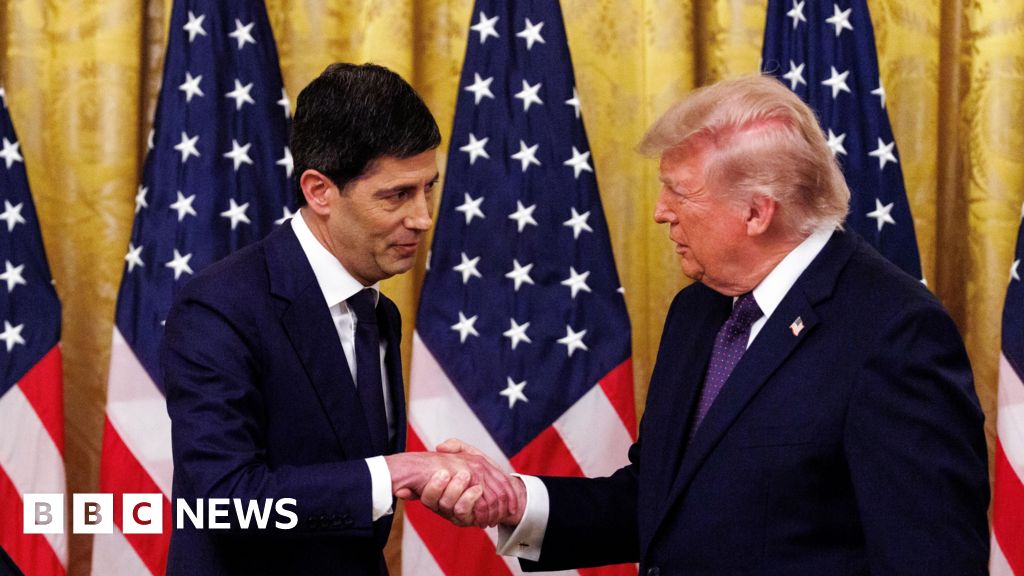
Trump wants new Fed chair to be 'totally independent'Image Credit: BBC Business (Finance)
Key Points
- •WASHINGTON D.C. – In a statement that has captured the attention of Wall Street and global policymakers, former President Donald Trump has publicly stated his desire for the next Federal Reserve chair to be "totally independent," a remark that stands in stark contrast to his frequent and forceful criticism of the central bank during his presidency.
- •Verbal Attacks: Mr. Trump labeled the Fed "crazy," "out of control," and at one point called it a "bigger threat" to the U.S. economy than China.
- •Demands for Easing: He frequently used social media and public remarks to demand sharp interest rate cuts, arguing that lower rates would supercharge economic growth and boost the stock market.
- •Threats of Removal: Reports during his term suggested Mr. Trump had explored the legality of firing or demoting Chair Powell, an action that would have sent shockwaves through the global financial system.
- •Controlling Inflation: The primary rationale is to insulate monetary policy from short-term political pressures. Politicians, facing election cycles, may be tempted to push for artificially low interest rates to create short-term economic booms, at the risk of unleashing long-term inflation. An independent Fed can take a longer view, raising rates to cool an overheating economy even if it is politically unpopular.
Trump wants new Fed chair to be 'totally independent'
WASHINGTON D.C. – In a statement that has captured the attention of Wall Street and global policymakers, former President Donald Trump has publicly stated his desire for the next Federal Reserve chair to be "totally independent," a remark that stands in stark contrast to his frequent and forceful criticism of the central bank during his presidency.
The comment, made during a recent public appearance, introduces a significant new dynamic into the conversation around the future of U.S. monetary policy, should Mr. Trump win the upcoming presidential election.
"I really mean this, I want Kevin to be totally independent. Don't look at me, don't look at anybody, just do your own thing and do a great job, okay," he said.
This declaration immediately raises two critical questions: who is the "Kevin" Mr. Trump referred to, and how does this new stance square with his administration's well-documented history of pressuring the Federal Reserve?
A History of Public Pressure
Mr. Trump's first term was characterized by an unprecedented campaign to influence the Federal Reserve's decisions, primarily targeting its current chair, Jerome Powell, whom Mr. Trump himself appointed.
The former president repeatedly broke with the long-standing tradition of respecting the central bank's autonomy. He publicly attacked Mr. Powell and the Fed board for raising interest rates in 2018, a move intended to normalize policy and head off inflation.
-
Verbal Attacks: Mr. Trump labeled the Fed "crazy," "out of control," and at one point called it a "bigger threat" to the U.S. economy than China.
-
Demands for Easing: He frequently used social media and public remarks to demand sharp interest rate cuts, arguing that lower rates would supercharge economic growth and boost the stock market.
-
Threats of Removal: Reports during his term suggested Mr. Trump had explored the legality of firing or demoting Chair Powell, an action that would have sent shockwaves through the global financial system.
This history makes his recent call for total independence a focal point for investors and economists, who are now trying to decipher whether it signals a genuine policy shift or is simply campaign rhetoric.
The Sanctity of Central Bank Independence
The principle of an independent central bank is a cornerstone of modern economic policy, adopted by most of the world's major economies. Its importance is rooted in several key objectives.
Why Independence Matters
-
Controlling Inflation: The primary rationale is to insulate monetary policy from short-term political pressures. Politicians, facing election cycles, may be tempted to push for artificially low interest rates to create short-term economic booms, at the risk of unleashing long-term inflation. An independent Fed can take a longer view, raising rates to cool an overheating economy even if it is politically unpopular.
-
Market Credibility: Global investors and financial markets rely on the Fed's credibility. When the central bank is seen as a stable, predictable, and data-driven institution, it lowers borrowing costs for the government and private sector, and reduces market volatility. Political interference erodes this trust.
-
Long-Term Stability: By focusing on its dual mandate of maximum employment and stable prices, the Fed aims to create a stable macroeconomic environment that fosters sustainable, long-term growth, rather than a cycle of politically-induced booms and busts.
The "Kevin" Candidates
The identity of the "Kevin" mentioned by Mr. Trump remains unconfirmed, but financial circles have focused on two prominent figures with ties to the former president.
-
Kevin Warsh: A former Federal Reserve governor from 2006 to 2011, Mr. Warsh is a distinguished fellow at Stanford's Hoover Institution. He was a leading candidate for Fed chair in 2017 before Mr. Trump ultimately selected Mr. Powell. Warsh has been critical of the Fed's recent policies and is generally seen as more hawkish, or inclined to favor higher interest rates to combat inflation, than the current leadership. However, his deep experience within the Fed system lends him significant credibility.
-
Kevin Hassett: An economist who served as the Chairman of the Council of Economic Advisers during the Trump administration. Mr. Hassett is a close ally of the former president and has been a key architect of his economic and tax policies. A nomination for Hassett would likely be viewed as an attempt to install a loyalist more directly aligned with Mr. Trump's economic agenda.
Other names, such as economist Arthur Laffer, have also been floated as potential nominees, indicating a potential overhaul of the Fed's leadership and policy direction.
Implications for Markets and the Economy
The prospect of a new Fed chair under a second Trump administration, regardless of their independence, carries significant implications.
What to Watch
-
Monetary Policy Trajectory: A new chair, particularly one seen as more politically aligned with the White House, could face immense pressure to keep interest rates low, even in the face of inflationary pressures. This could risk a repeat of the high inflation seen in the 1970s.
-
Market Volatility: Uncertainty over the Fed's future leadership and policy direction is a recipe for market volatility. Investors will be closely watching for any signals that threaten the central bank's credibility, which could lead to a risk-off sentiment in equity markets and a sell-off in U.S. Treasury bonds.
-
The U.S. Dollar: The dollar's status as the world's primary reserve currency is underpinned by the perceived stability and reliability of U.S. institutions, chief among them the Federal Reserve. Any erosion of the Fed's independence could, over the long term, diminish international confidence in the dollar.
Next Steps
Jerome Powell's term as Fed Chair does not expire until May 2026. However, if Mr. Trump wins the election, the financial world will immediately begin to anticipate his selection for the role.
The Senate confirmation process for any nominee would become a major political battleground, serving as a referendum on the future of central bank independence in America. For now, Mr. Trump's words have laid down a marker, leaving investors and policymakers to weigh his pledge of independence against the substantial weight of his own history.
Source: BBC Business (Finance)
Related Articles
Nationwide Protests Against ICE Enforcement Erupt in U.S.
Thousands are protesting ICE after the DOJ declined to investigate a fatal agent-involved shooting in Minneapolis, fueling a national movement and public anger.
Venezuela Amnesty Bill Could Free Political Prisoners
Learn about Venezuela's proposed amnesty bill to release political prisoners. The move could signal a major political shift and affect future economic sanctions
Pokémon Cancels Yasukuni Shrine Event After Backlash
The Pokémon Company has canceled an event at Tokyo's controversial Yasukuni Shrine after facing international backlash from China and South Korea.
US to Lose Measles Elimination Status: What It Means
The U.S. is poised to lose its measles elimination status due to escalating outbreaks. Learn what this downgrade means for public health and the economy.