Trump Warns Taiwan on Independence After China Talks
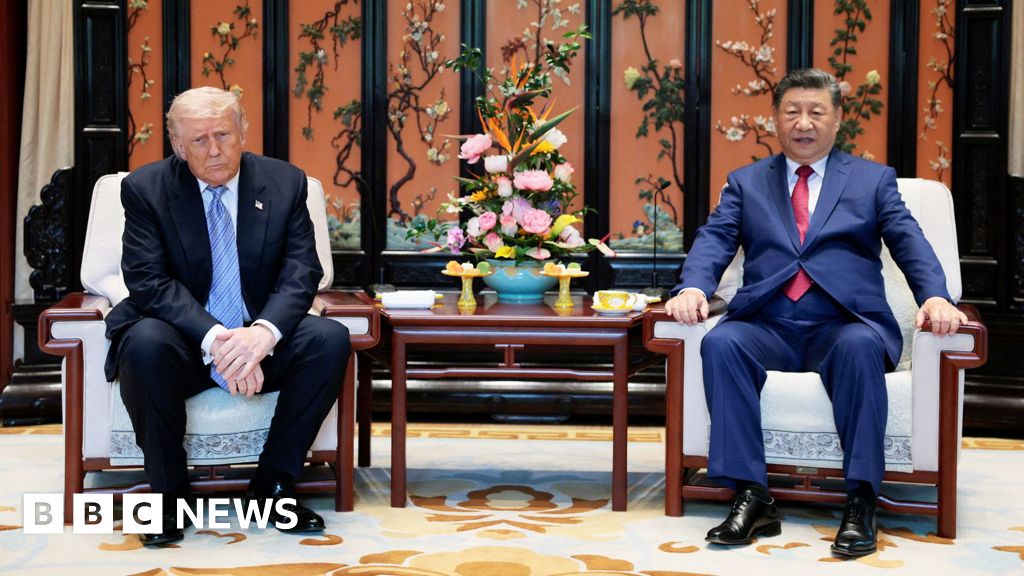
Trump warns Taiwan against declaring independence after China talksImage Credit: BBC News
Key Points
- •Former president's comments on Fox News signal a potential departure from decades of U.S. policy, creating fresh uncertainty in the Indo-Pacific and for global markets.
- •WASHINGTON – In a statement sending ripples through global diplomatic and financial circles, former President Donald Trump has explicitly warned Taiwan against declaring independence, suggesting the United States would not back such a move. The remarks, made during a Fox News interview, represent a significant and potentially destabilizing departure from the long-standing U.S. policy of "strategic ambiguity" regarding Taiwan's defense.
- •The Warning: Trump stated, "We're not looking to have somebody say, 'Let's go independent because the United States is backing us.'" This directly cautions Taipei against any formal declaration of independence, a red line for Beijing.
- •The Rationale: He framed his stance as a measure to avoid conflict, adding, "We're not looking to have wars, and if you kept it the way it is, I think China's going to be OK with that."
- •The Implication: The comments imply that U.S. backing is conditional. While successive administrations have sold arms to Taiwan for self-defense under the Taiwan Relations Act, Trump's statement suggests that a unilateral move toward independence by Taiwan would forfeit American protection.
Trump Warns Taiwan Against Declaring Independence After China Talks
Former president's comments on Fox News signal a potential departure from decades of U.S. policy, creating fresh uncertainty in the Indo-Pacific and for global markets.
WASHINGTON – In a statement sending ripples through global diplomatic and financial circles, former President Donald Trump has explicitly warned Taiwan against declaring independence, suggesting the United States would not back such a move. The remarks, made during a Fox News interview, represent a significant and potentially destabilizing departure from the long-standing U.S. policy of "strategic ambiguity" regarding Taiwan's defense.
The comments come on the heels of recent discussions between Trump's team and Chinese officials, adding a layer of complexity to an already tense U.S.-China relationship. For decades, Washington has deliberately remained vague on whether it would militarily intervene if China were to invade the self-governing island. Trump's statement appears to draw a new, clearer line, one that could reshape the security architecture of the entire Indo-Pacific region.
Why It Matters
This is more than just a political soundbite. It injects a high degree of unpredictability into one of the world's most dangerous geopolitical flashpoints.
Taiwan is not only a flourishing democracy but also the epicenter of the global semiconductor industry. Any shift in the delicate balance of power has immediate and far-reaching consequences for international security, supply chains, and the world economy. Trump's words force allies, adversaries, and global investors to re-evaluate the bedrock assumptions that have underpinned regional stability for nearly half a century.
Diving Deeper: The Core Statement
Speaking to Fox News, the former president laid out his position in direct terms. His remarks appeared to link U.S. support for Taiwan to the island's own actions regarding its formal status.
-
The Warning: Trump stated, "We're not looking to have somebody say, 'Let's go independent because the United States is backing us.'" This directly cautions Taipei against any formal declaration of independence, a red line for Beijing.
-
The Rationale: He framed his stance as a measure to avoid conflict, adding, "We're not looking to have wars, and if you kept it the way it is, I think China's going to be OK with that."
-
The Implication: The comments imply that U.S. backing is conditional. While successive administrations have sold arms to Taiwan for self-defense under the Taiwan Relations Act, Trump's statement suggests that a unilateral move toward independence by Taiwan would forfeit American protection.
A Break from a Decades-Old Doctrine
To understand the gravity of Trump's remarks, one must understand the policy he is challenging: strategic ambiguity.
Strategic Ambiguity Explained
Since the U.S. normalized relations with the People's Republic of China in 1979, its Taiwan policy has rested on a carefully crafted and intentionally vague framework.
-
"One China" Policy: The U.S. acknowledges Beijing's position that there is only one China and that Taiwan is part of China. However, it does not endorse this position.
-
Maintaining Unofficial Ties: Through the American Institute in Taiwan (AIT), the U.S. maintains robust, albeit unofficial, relations with Taipei, providing it with defensive arms as mandated by the Taiwan Relations Act.
-
The Ambiguous Defense Clause: Crucially, the U.S. has never explicitly stated whether it would or would not defend Taiwan in the event of a Chinese invasion. This ambiguity is designed to deter both Beijing from attacking and Taipei from declaring formal independence.
Trump's statement effectively removes a significant portion of that ambiguity, a move that could embolden Beijing while alarming Taipei and other U.S. allies in the region, such as Japan and South Korea.
Economic Tremors: The Semiconductor Factor
The geopolitical stakes are amplified by Taiwan's indispensable role in the global economy. A conflict in the Taiwan Strait would trigger an economic crisis dwarfing recent supply chain disruptions.
Taiwan's Linchpin Role
-
Global Chip Dominance: Taiwan Semiconductor Manufacturing Company (TSMC) alone produces over 60% of the world's semiconductors and about 90% of the most advanced chips. These components are the lifeblood of everything from smartphones and cars to data centers and advanced military hardware.
-
Supply Chain Vulnerability: A blockade or invasion of Taiwan would instantly sever the world's access to these critical components, grinding major industries to a halt. The economic fallout would be immediate and catastrophic, with experts predicting a global recession.
-
Market Reaction: Uncertainty over Taiwan's security directly translates to market volatility. Technology stocks, automotive manufacturers, and any sector reliant on high-end electronics are particularly sensitive to shifts in U.S. policy toward the island. Trump's comments are likely to be scrutinized by investors and corporate boards managing supply chain risk.
Looking Ahead: A Region on Edge
The former president's statement, made in the heat of a presidential campaign, introduces a volatile new element into Indo-Pacific strategy. The key question now is whether this is a durable policy position or transactional rhetoric.
-
For Taipei: This is a deeply alarming development. Taiwan's government will likely seek quiet clarification from Washington and may accelerate efforts to diversify its international partnerships and bolster its own defense capabilities.
-
For Beijing: Chinese leadership will likely view Trump's comments as a tactical victory. It reinforces their narrative that Taiwanese independence is a dangerous path and may encourage them to apply even greater pressure on the island.
-
For Washington and Allies: The Biden administration will likely face pressure to reaffirm its commitment to the Taiwan Relations Act and reassure regional allies who depend on the credibility of U.S. security guarantees. Allies like Japan, whose southern islands are near Taiwan, will be watching with extreme nervousness.
-
For Global Markets: Expect increased risk pricing related to companies with heavy exposure to Taiwan and the semiconductor industry. The comments underscore the profound link between geopolitical rhetoric and global economic stability, a connection that will be a defining feature of the financial landscape for the foreseeable future.
Source: BBC News
Related Articles
Nationwide Protests Against ICE Enforcement Erupt in U.S.
Thousands are protesting ICE after the DOJ declined to investigate a fatal agent-involved shooting in Minneapolis, fueling a national movement and public anger.
Venezuela Amnesty Bill Could Free Political Prisoners
Learn about Venezuela's proposed amnesty bill to release political prisoners. The move could signal a major political shift and affect future economic sanctions
Pokémon Cancels Yasukuni Shrine Event After Backlash
The Pokémon Company has canceled an event at Tokyo's controversial Yasukuni Shrine after facing international backlash from China and South Korea.
US to Lose Measles Elimination Status: What It Means
The U.S. is poised to lose its measles elimination status due to escalating outbreaks. Learn what this downgrade means for public health and the economy.