US-China AI Talks: 'Track Two' Buzzes Amid Official Freeze
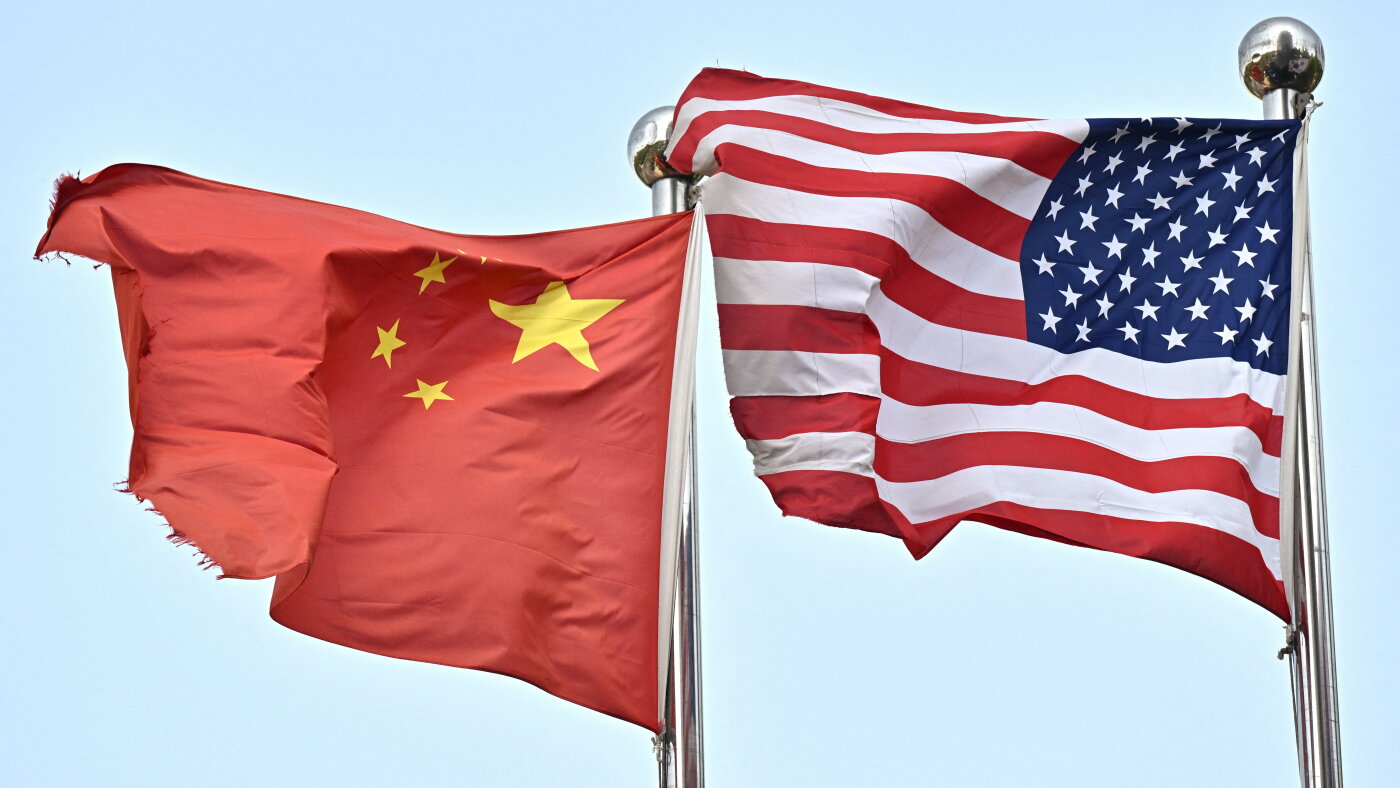
When Trump and Xi meet they will discuss AI. 'Track Two' talks are already buzzingImage Credit: NPR News
Key Points
- •WASHINGTON – As President Trump and Chinese leader Xi Jinping prepare for a high-stakes meeting in Washington next Thursday, artificial intelligence is set to be a central and contentious topic. While official channels are fraught with accusation and mistrust, a parallel, informal dialogue is quietly shaping the contours of potential cooperation on one of the 21st century's most formidable challenges.
- •U.S. Accusations: The Trump administration has recently accused Chinese AI companies of intellectual property theft through "distilling," a process of using a leading U.S. model to train a competitor's model. The threat of sanctions looms over these firms.
- •Chinese Retaliation: Beijing has publicly condemned U.S. restrictions on advanced semiconductor exports, which are vital for training powerful AI systems. It accuses Washington of deploying a "Cold War playbook" designed to stifle China's technological ascent.
- •What It Is: Track Two diplomacy involves informal meetings and conferences, often organized by think tanks, universities, and non-profits. These gatherings bring together former officials, academics, and industry experts from both nations.
- •The Goal: The primary aim is to build mutual understanding, explore complex issues without the pressure of formal negotiation, and develop policy recommendations that can eventually be introduced into official channels.
When Trump and Xi meet they will discuss AI. 'Track Two' talks are already buzzing
WASHINGTON – As President Trump and Chinese leader Xi Jinping prepare for a high-stakes meeting in Washington next Thursday, artificial intelligence is set to be a central and contentious topic. While official channels are fraught with accusation and mistrust, a parallel, informal dialogue is quietly shaping the contours of potential cooperation on one of the 21st century's most formidable challenges.
The public-facing relationship is at a low ebb. The U.S. and China are locked in a cycle of fierce competition over AI, with experts seeing dim prospects for a major breakthrough at the presidential level. Yet, behind the scenes, a sprawling network of non-governmental experts is fostering a crucial, and surprisingly productive, conversation.
The Official Freeze
The atmosphere between the two governments is openly hostile. Recent escalations have poisoned the well for formal negotiations, creating a dynamic where compromise appears distant.
- U.S. Accusations: The Trump administration has recently accused Chinese AI companies of intellectual property theft through "distilling," a process of using a leading U.S. model to train a competitor's model. The threat of sanctions looms over these firms.
- Chinese Retaliation: Beijing has publicly condemned U.S. restrictions on advanced semiconductor exports, which are vital for training powerful AI systems. It accuses Washington of deploying a "Cold War playbook" designed to stifle China's technological ascent.
This cycle of action and reaction underscores the deep-seated fear on both sides of being left behind in a technology that could redefine economic and military power.
The 'Track Two' Thaw
While official "Track One" diplomacy remains gridlocked, a less visible but highly active "Track Two" is buzzing with activity. This channel provides a vital forum for dialogue away from the political glare.
- What It Is: Track Two diplomacy involves informal meetings and conferences, often organized by think tanks, universities, and non-profits. These gatherings bring together former officials, academics, and industry experts from both nations.
- The Goal: The primary aim is to build mutual understanding, explore complex issues without the pressure of formal negotiation, and develop policy recommendations that can eventually be introduced into official channels.
"I think there is no more important topic that the U.S. and China should be talking about than AI," said Sarah Beran, a former top U.S. diplomat for China and the incoming president of the National Committee on U.S.-China Relations. The committee has a long history of facilitating such exchanges, famously sponsoring the "ping pong diplomacy" visit in 1972 that helped thaw relations.
However, Beran acknowledges the immense difficulty. "The fear of chokepoints, being held back, and AI being used as a cudgel on both sides means that this is also one of the most difficult areas to talk about," she noted.
A History of Quiet Success
Track Two dialogues are not merely academic exercises; they have a proven record of laying the groundwork for significant diplomatic breakthroughs, particularly when official lines of communication have failed.
- Restarting Military Dialogue: After then-Speaker of the House Nancy Pelosi's visit to Taiwan in 2022, China severed direct military-to-military communications. Beran, who was then a senior official on the National Security Council, revealed how Track Two was used as a back channel. "We floated some ideas in Track Two dialogues about what resumption of military-to-military communications could look like... And then we took it back into the formal channels," she said. This groundwork led to the formal agreement between the two leaders in 2023 to resume the dialogue.
- Ensuring Human Control of Nuclear Weapons: Jack Shanahan, a retired Air Force general active in military AI dialogues, credits these informal talks for a landmark agreement. The consensus that any decision to use nuclear weapons must be made by a human, not an AI system, "was only possible by years of quiet dialogue at the Track Two level on this very topic," Shanahan stated.
Finding Common Ground on AI
Despite the official friction over chips and IP, experts involved in recent Track Two discussions report a surprising convergence of interests centered on the shared risks of advanced AI.
Samm Sacks, a China tech expert at Johns Hopkins SAIS and New America, described several "very substantive" Track Two discussions on AI she attended in Shanghai and Beijing this summer. The informal setting allows for a level of candor impossible in official meetings.
- Shared Vulnerability: "What I hear in the Track Twos I'm a part of is a sense of shared vulnerability and shared precarity created by AI," Sacks said. This mutual concern about existential risks and loss of control is a powerful, unifying force.
- A Shift in Perspective: General Shanahan has observed a change in the Chinese position. While China often sees itself as an underdog in the AI race, the rapid advancement of the technology has clarified the shared dangers. "For the first time, I'm seeing, like, 'Look, we know we're not at parity in some of these areas, but AI is too important not to have these dialogues,'" he said of his Chinese counterparts.
Still, the two sides often prioritize different risks. The U.S. tends to focus on cyber vulnerabilities and the "loss of control" problem, while China is more concerned with AI's impact on regime stability and achieving self-reliance in hardware. These differences color the dialogues but haven't stopped them.
What to Watch
As Trump and Xi meet, the headlines will focus on public statements and formal agreements. But the true measure of progress on AI may lie in how much of the foundational work done in Track Two can be elevated to the official Track One agenda.
The informal dialogues have built a crucial reservoir of shared understanding and identified potential areas for guardrails. They have established that despite the race for dominance, both sides harbor a deep-seated fear of the technology's unintended consequences.
While a comprehensive treaty on AI is not on the table, the quiet, persistent work of Track Two diplomacy makes modest, incremental steps possible. The summit may not produce a grand bargain, but it could formalize understandings first explored in these private meetings—a critical first step in managing the profound risks of the AI era. The real work, as it has for decades, continues away from the spotlight.
Source: NPR News
Related Articles
Nationwide Protests Against ICE Enforcement Erupt in U.S.
Thousands are protesting ICE after the DOJ declined to investigate a fatal agent-involved shooting in Minneapolis, fueling a national movement and public anger.
Venezuela Amnesty Bill Could Free Political Prisoners
Learn about Venezuela's proposed amnesty bill to release political prisoners. The move could signal a major political shift and affect future economic sanctions
Pokémon Cancels Yasukuni Shrine Event After Backlash
The Pokémon Company has canceled an event at Tokyo's controversial Yasukuni Shrine after facing international backlash from China and South Korea.
US to Lose Measles Elimination Status: What It Means
The U.S. is poised to lose its measles elimination status due to escalating outbreaks. Learn what this downgrade means for public health and the economy.