UK Admits Unlawful Raid on Guantanamo Detainee's Lawyer
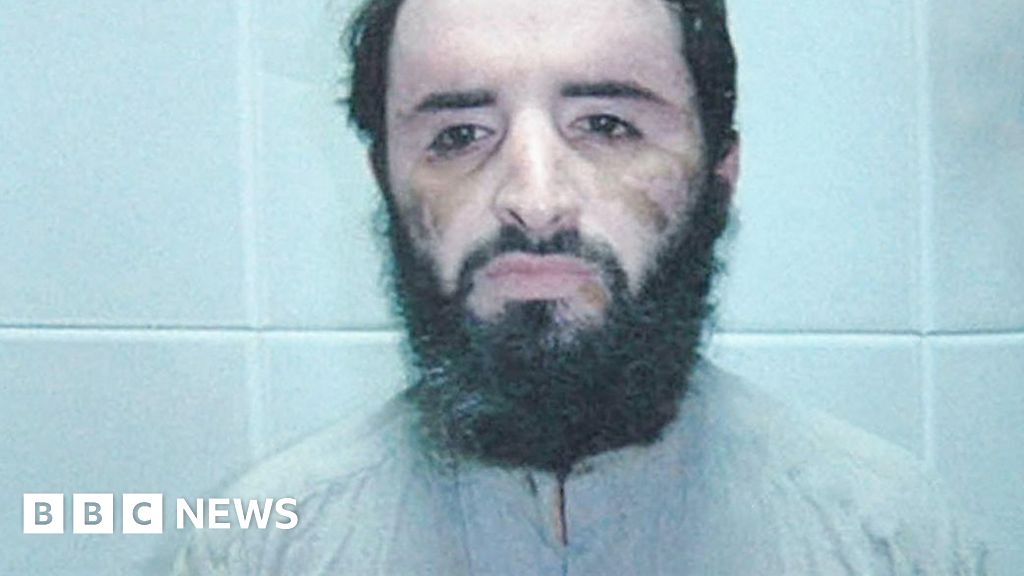
Guantanamo detainee's lawyers claim office raid by UK was unlawfulImage Credit: BBC News
Key Points
- •LONDON – The UK government has made a significant concession in a High Court battle, agreeing to return legally privileged documents seized from the London office of a lawyer representing former Guantanamo Bay detainee Majid Khan. The move follows a legal challenge asserting that the raid, conducted by counter-terrorism police, was an unlawful breach of client-lawyer confidentiality.
- •Key Profile: Khan moved to the Baltimore, Maryland area as a teenager and graduated from a US high school. In 2002, he traveled to Pakistan and became involved with al-Qaeda.
- •Al-Qaeda Activities: He later admitted to becoming a courier for the terrorist group, working directly with Khalid Sheikh Mohammed, the architect of the 9/11 attacks. His activities included plotting to bomb US gas stations and delivering funds for a hotel bombing in Jakarta, Indonesia.
- •Capture and Detention: Khan was captured in Karachi, Pakistan, in March 2003 and subsequently held for three years in the CIA's network of clandestine "black sites." He was subjected to brutal interrogation techniques, which his lawyers and human rights groups have defined as torture. He was transferred to US military custody at Guantanamo Bay in 2006.
- •Cooperation and Release: In 2012, Khan pleaded guilty as part of a cooperation agreement with US authorities. He became a key government witness, providing testimony against other terror suspects. After serving his sentence, he was released in February 2023 and resettled in Belize with his family.
Guantanamo Detainee's Lawyers Claim Office Raid by UK was Unlawful
LONDON – The UK government has made a significant concession in a High Court battle, agreeing to return legally privileged documents seized from the London office of a lawyer representing former Guantanamo Bay detainee Majid Khan. The move follows a legal challenge asserting that the raid, conducted by counter-terrorism police, was an unlawful breach of client-lawyer confidentiality.
In a pivotal development at the Royal Courts of Justice, Mr Justice Chamberlain confirmed that the government had consented to the return of the materials to lawyer Katja Toney. Furthermore, the court has permitted her to use the documents to prepare for a substantive hearing in the case later this month. This reversal came after a closed court session, where sensitive national security information was discussed, suggesting a strategic retreat by government lawyers to avoid a potentially damaging public ruling.
The case places a stark spotlight on the enduring legal and financial complexities stemming from the post-9/11 "War on Terror," and tests the balance between state security powers and fundamental legal principles in the United Kingdom.
The Disputed Seizure
The controversy began when officers from the Metropolitan Police's counter-terrorism command (SO15) executed a search warrant at the London offices of Stirling Law, the firm representing Mr. Khan.
Acting on behalf of the Home Office, the officers seized a substantial volume of case files, digital records, and correspondence. Ms. Toney’s legal team immediately filed for a judicial review, arguing the raid was a "gross violation" of legal professional privilege (LPP)—a cornerstone of the British legal system that protects confidential communications between lawyers and their clients.
Their claim asserted the warrant was overly broad and that the seizure of privileged material, especially pertaining to a high-profile client with a history involving the CIA and Guantanamo Bay, was disproportionate and unlawful.
Context: The Case of Majid Khan
Understanding the significance of this legal battle requires understanding the client at its center. Majid Khan, a Pakistani citizen who grew up in the United States, has one of the most well-documented histories of any former Guantanamo detainee.
-
Key Profile: Khan moved to the Baltimore, Maryland area as a teenager and graduated from a US high school. In 2002, he traveled to Pakistan and became involved with al-Qaeda.
-
Al-Qaeda Activities: He later admitted to becoming a courier for the terrorist group, working directly with Khalid Sheikh Mohammed, the architect of the 9/11 attacks. His activities included plotting to bomb US gas stations and delivering funds for a hotel bombing in Jakarta, Indonesia.
-
Capture and Detention: Khan was captured in Karachi, Pakistan, in March 2003 and subsequently held for three years in the CIA's network of clandestine "black sites." He was subjected to brutal interrogation techniques, which his lawyers and human rights groups have defined as torture. He was transferred to US military custody at Guantanamo Bay in 2006.
-
Cooperation and Release: In 2012, Khan pleaded guilty as part of a cooperation agreement with US authorities. He became a key government witness, providing testimony against other terror suspects. After serving his sentence, he was released in February 2023 and resettled in Belize with his family.
The High Stakes: Legal Precedent and Financial Costs
The government's decision to concede the return of the documents is not merely a procedural step. It carries significant legal, financial, and reputational implications.
-
Legal Professional Privilege: A court ruling that the Home Office unlawfully breached LPP would set a damaging precedent. This privilege is considered absolute and is fundamental to ensuring anyone can seek legal advice without fear of the state seizing those communications. A negative judgment would alarm the entire UK legal profession.
-
Financial Implications: The cost to the British taxpayer is mounting. This includes the expense of the initial police operation, the significant legal fees for the government's top lawyers (KCs) to defend the action, and now, the potential for a future civil claim for damages from Ms. Toney's firm for the disruption and breach of rights. Such a settlement could run into hundreds of thousands of pounds.
-
Reputational Damage: The raid, and the subsequent legal challenge, risks damaging the UK's reputation for upholding the rule of law. For a government department to be seen targeting the privileged materials of a lawyer involved in a case linked to torture and CIA black sites invites international scrutiny and criticism from human rights organizations.
-
The Closed Session: The fact that the government's concession followed a Closed Material Procedure (CMP) is critical. In these secret hearings, government lawyers present sensitive intelligence to a judge that the opposing party and their lawyers are not permitted to see. The government's subsequent capitulation suggests the secret evidence may not have been sufficient to justify the raid in the eyes of the court, forcing a tactical withdrawal to avoid a public defeat.
Next Steps
With the documents now being returned, Ms. Toney and her legal team can proceed with their preparations for the next hearing in this case. That session is expected to address the lawfulness of the warrant and the actions of the police and Home Office more broadly.
While the government has avoided an immediate adverse judgment by returning the materials, it has not admitted any wrongdoing. The core legal question of whether the raid was lawful in the first place remains to be decided. The outcome of the upcoming hearing will be closely watched by legal experts and civil liberties advocates, as it will serve as a crucial barometer for the limits of state power in an era of complex national security threats. This case continues to demonstrate that the legal fallout from Guantanamo Bay is far from over, with its consequences still being litigated in the highest courts, years after the key events took place.
Source: BBC News
Related Articles
Nationwide Protests Against ICE Enforcement Erupt in U.S.
Thousands are protesting ICE after the DOJ declined to investigate a fatal agent-involved shooting in Minneapolis, fueling a national movement and public anger.
Venezuela Amnesty Bill Could Free Political Prisoners
Learn about Venezuela's proposed amnesty bill to release political prisoners. The move could signal a major political shift and affect future economic sanctions
Pokémon Cancels Yasukuni Shrine Event After Backlash
The Pokémon Company has canceled an event at Tokyo's controversial Yasukuni Shrine after facing international backlash from China and South Korea.
US to Lose Measles Elimination Status: What It Means
The U.S. is poised to lose its measles elimination status due to escalating outbreaks. Learn what this downgrade means for public health and the economy.