Ukraine-Hungary Oil Dispute Blocks Critical EU Loan
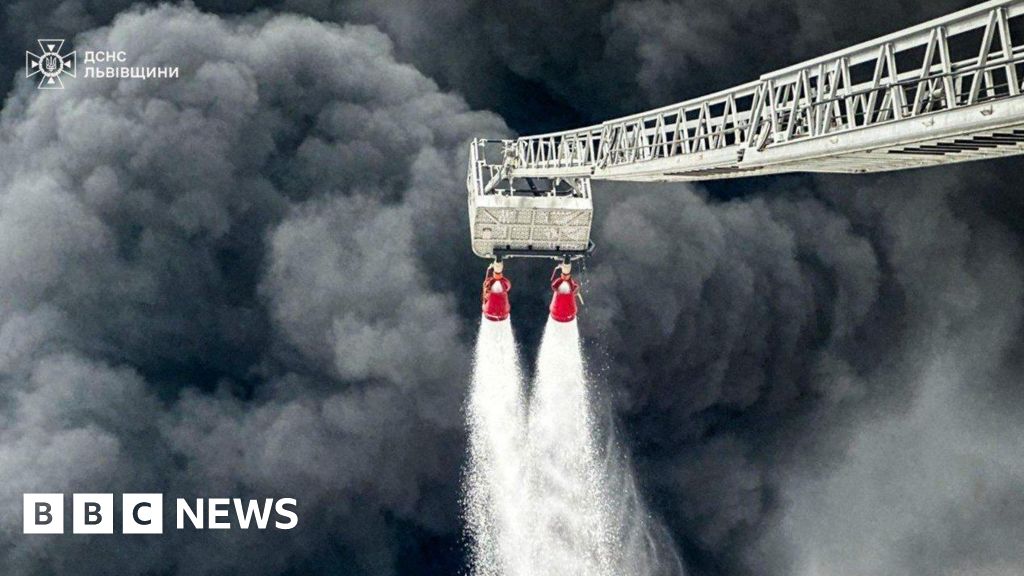
Ukraine-Hungary Druzhba oil pipeline row threatens EU loanImage Credit: BBC News
Key Points
- •BRUSSELS – A deepening financial dispute between Ukraine and Hungary over a shipment of crude oil is now threatening to derail a critical €1.5 billion loan from the European Union to Kyiv, creating a high-stakes geopolitical standoff that intertwines energy security, wartime funding, and national interests.
- •Ukraine's Position: Kyiv's state pipeline operator, Ukrtransnafta, argues that it acted in good faith to secure the pipeline and prevent a catastrophe. It asserts that Hungary's MOL Group received the oil, valued at over $20 million based on current market prices for Urals crude, but has since contested the payment, citing issues of oil quality and contractual terms. Ukraine views this as a breach of trust and an attempt to withhold payment for delivered goods.
- •Hungary's Position: Budapest and the MOL Group have reportedly countered that the oil received was a blend of Russian and Ukrainian crude that did not meet the technical specifications required by its refineries. They argue that processing this "substandard" oil incurs additional costs and risks. From their perspective, the issue is not a refusal to pay, but a commercial dispute over the quality and value of the product delivered under emergency circumstances.
- •The Loan: The €1.5 billion ($1.6 billion) is part of the EU's larger Ukraine Facility, a multi-year financial support package designed to help Kyiv cover its budget deficit, maintain essential public services, and fund initial reconstruction efforts amid the ongoing war. Delays in these disbursements can have immediate and severe consequences for Ukraine's financial stability.
- •The Veto: EU financial support packages require unanimous approval from all member states. Hungary's lone dissent is enough to halt the entire process. Officials in Brussels are reportedly scrambling to mediate a solution, viewing Budapest's tactic as an unacceptable use of leverage that politicizes humanitarian and financial aid.
Ukraine-Hungary Druzhba oil pipeline row threatens EU loan
BRUSSELS – A deepening financial dispute between Ukraine and Hungary over a shipment of crude oil is now threatening to derail a critical €1.5 billion loan from the European Union to Kyiv, creating a high-stakes geopolitical standoff that intertwines energy security, wartime funding, and national interests.
At the center of the row are 35,000 tons of crude oil and a disagreement over payment and transit protocols, which has prompted Budapest to wield its veto power over the EU's financial aid package for Ukraine.
The Heart of the Dispute
The conflict stems from an emergency operation involving the southern leg of the Druzhba pipeline, a vital artery carrying Russian crude to Central Europe. The pipeline, which transits Ukraine, is a primary source of oil for Hungary's landlocked economy.
Ukrainian officials state that after a reported Russian attack near pipeline infrastructure, they requested their Hungarian counterparts at the MOL Group to urgently accept a large volume of oil to prevent a potential environmental disaster.
A source familiar with the Ukrainian pipeline operator's position described the urgency of the situation. "Ukrainian colleagues …asked us to quickly take over this crude [from the tank] to prevent further escalation and avoid an even larger fire," the source said. "We took over 35,000 tons of Ukrainian-origin crude, which flowed through the Druzhba pipeline without issue. Oil continued to arrive through the pipeline for at least two to three days."
The core of the disagreement now lies in the financial settlement for this emergency transfer, with both sides presenting conflicting accounts.
A Tale of Two Narratives
The impasse is rooted in two starkly different interpretations of the event and the subsequent financial obligations.
-
Ukraine's Position: Kyiv's state pipeline operator, Ukrtransnafta, argues that it acted in good faith to secure the pipeline and prevent a catastrophe. It asserts that Hungary's MOL Group received the oil, valued at over $20 million based on current market prices for Urals crude, but has since contested the payment, citing issues of oil quality and contractual terms. Ukraine views this as a breach of trust and an attempt to withhold payment for delivered goods.
-
Hungary's Position: Budapest and the MOL Group have reportedly countered that the oil received was a blend of Russian and Ukrainian crude that did not meet the technical specifications required by its refineries. They argue that processing this "substandard" oil incurs additional costs and risks. From their perspective, the issue is not a refusal to pay, but a commercial dispute over the quality and value of the product delivered under emergency circumstances.
High-Stakes Diplomacy
This commercial dispute has rapidly escalated into a major diplomatic flashpoint, with Hungary linking the resolution of the oil payment to its approval of crucial EU aid for Ukraine.
The move is characteristic of Prime Minister Viktor Orbán's government, which has frequently used its veto power within the 27-member bloc to extract concessions or advance its national agenda, often putting it at odds with Brussels and other member states.
The Financial Leverage
Hungary's blockade of the loan places immense pressure on both Kyiv and Brussels, turning a pipeline disagreement into a test of EU solidarity.
-
The Loan: The €1.5 billion ($1.6 billion) is part of the EU's larger Ukraine Facility, a multi-year financial support package designed to help Kyiv cover its budget deficit, maintain essential public services, and fund initial reconstruction efforts amid the ongoing war. Delays in these disbursements can have immediate and severe consequences for Ukraine's financial stability.
-
The Veto: EU financial support packages require unanimous approval from all member states. Hungary's lone dissent is enough to halt the entire process. Officials in Brussels are reportedly scrambling to mediate a solution, viewing Budapest's tactic as an unacceptable use of leverage that politicizes humanitarian and financial aid.
Background: The Druzhba Lifeline
Understanding the strategic importance of the Druzhba pipeline is key to grasping the sensitivities involved in this dispute.
-
A Soviet-Era Artery: Translating to "Friendship," the Druzhba pipeline is one of the world's longest oil pipeline networks. Built in the 1960s, its southern branch supplies Hungary, Slovakia, and the Czech Republic, making them highly dependent on its continuous operation.
-
A Sanctions Exception: Recognizing this dependency, the EU granted these landlocked nations an exemption from its embargo on seaborne Russian oil imports. This carve-out makes the Druzhba pipeline an irreplaceable piece of their energy infrastructure and gives both Russia (as the supplier) and Ukraine (as the transit country) significant leverage. Ukraine earns vital transit fees, while Hungary secures crude oil that is technically difficult and expensive to replace.
The Bottom Line
The standoff illustrates the fragile intersection of commerce and conflict. A dispute over a single oil shipment, worth tens of millions of dollars, has metastasized into a political crisis jeopardizing billions in aid and threatening to fracture EU unity.
For Ukraine, it highlights the vulnerability of its revenue streams and its reliance on the goodwill of its neighbors. For Hungary, it is a demonstration of its willingness to prioritize its own economic and political grievances, even at the cost of straining relations with the EU and a nation at war.
What's Next
The focus now shifts to diplomatic channels in Brussels, as EU officials work to untangle the commercial dispute from the critical financial aid package.
-
EU Intervention: European Commission officials are expected to intensify mediation efforts between Kyiv and Budapest to find a resolution to the oil payment issue, hoping to remove the justification for Hungary's veto.
-
Energy Security Risks: The conflict raises concerns about the future reliability of the Druzhba pipeline. Any prolonged dispute could lead to further transit interruptions, impacting energy markets in Central Europe and potentially forcing MOL to seek more expensive alternative supplies.
-
A Precedent for Disputes: How this impasse is resolved will set a precedent for future commercial disagreements arising from the war. If leveraging EU aid becomes a standard tactic for settling bilateral disputes, it could undermine the bloc's ability to act decisively in its support for Ukraine.
Source: BBC News
Related Articles
Nationwide Protests Against ICE Enforcement Erupt in U.S.
Thousands are protesting ICE after the DOJ declined to investigate a fatal agent-involved shooting in Minneapolis, fueling a national movement and public anger.
Venezuela Amnesty Bill Could Free Political Prisoners
Learn about Venezuela's proposed amnesty bill to release political prisoners. The move could signal a major political shift and affect future economic sanctions
Pokémon Cancels Yasukuni Shrine Event After Backlash
The Pokémon Company has canceled an event at Tokyo's controversial Yasukuni Shrine after facing international backlash from China and South Korea.
US to Lose Measles Elimination Status: What It Means
The U.S. is poised to lose its measles elimination status due to escalating outbreaks. Learn what this downgrade means for public health and the economy.