US and Iran to Resume Nuclear Talks in Oman This Friday
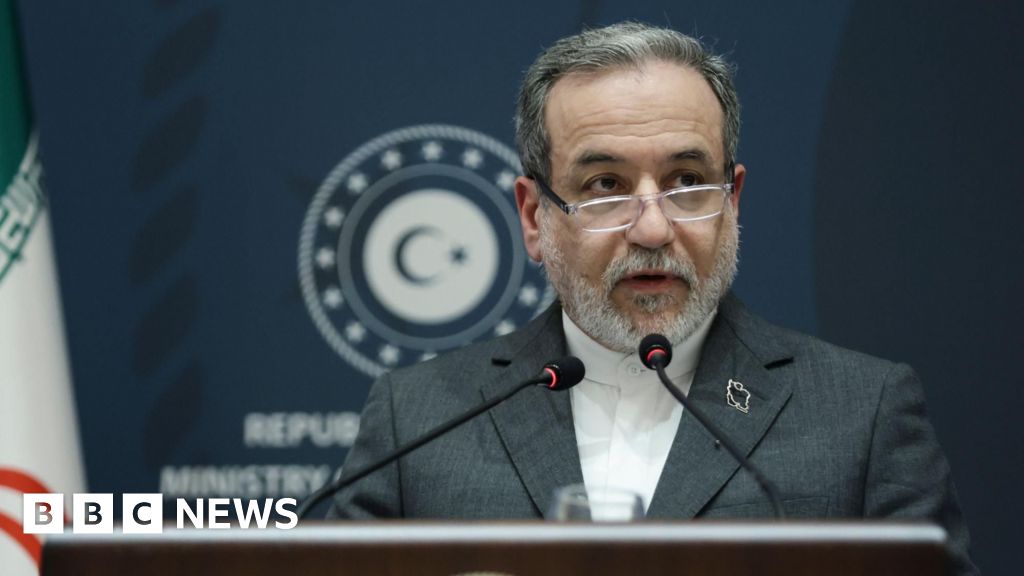
US and Iran agree to nuclear talks in Oman on FridayImage Credit: BBC News
Key Points
- •MUSCAT, OMAN – The United States and Iran are set to resume high-stakes, indirect talks in Oman this Friday, a critical diplomatic maneuver aimed at de-escalating tensions that have roiled the Middle East and sent ripples through global energy markets. The meeting, brokered by the historically neutral Sultanate of Oman, represents the most significant effort in months to find a path back from the brink of both nuclear proliferation and wider regional conflict.
- •The Format: The talks will be indirect, with Omani officials shuttling between the US and Iranian delegations. This format allows both sides to engage without the political complication of a direct, face-to-face meeting.
- •The Key Players: While high-level names have not been officially released, delegations are expected to include senior diplomats and national security officials who have been central to the nuclear file for years.
- •The Immediate Goal: To prevent the current standoff from spiraling into open conflict. This involves finding an "off-ramp" to Iran's accelerating uranium enrichment in exchange for potential, limited sanctions relief.
- •Iran's Advancement: Tehran has since enriched uranium to 60% purity, a level perilously close to the 90% considered weapons-grade. International Atomic Energy Agency (IAEA) inspectors have also faced increasing restrictions on their access to key sites.
US and Iran agree to nuclear talks in Oman on Friday
MUSCAT, OMAN – The United States and Iran are set to resume high-stakes, indirect talks in Oman this Friday, a critical diplomatic maneuver aimed at de-escalating tensions that have roiled the Middle East and sent ripples through global energy markets. The meeting, brokered by the historically neutral Sultanate of Oman, represents the most significant effort in months to find a path back from the brink of both nuclear proliferation and wider regional conflict.
The discussions are expected to be fraught with complexity, tackling a slate of contentious issues that extend far beyond Tehran's nuclear program. For international markets, the outcome of these talks carries immense weight, holding the potential to either unlock vast new oil supplies and ease sanctions or heighten geopolitical risk to a level not seen in years.
High-Stakes Diplomacy in Muscat
The choice of Muscat as the venue is deliberate. Oman has long served as a discreet and trusted intermediary between Washington and Tehran, facilitating the back-channel communications that ultimately led to the landmark 2015 nuclear deal.
Officials are framing Friday's meeting as exploratory, designed to gauge the political will on both sides for a more structured diplomatic process. The primary goal is to establish a framework for de-escalation, addressing the immediate crisis of Iran's advancing nuclear program while laying the groundwork for broader negotiations.
- The Format: The talks will be indirect, with Omani officials shuttling between the US and Iranian delegations. This format allows both sides to engage without the political complication of a direct, face-to-face meeting.
- The Key Players: While high-level names have not been officially released, delegations are expected to include senior diplomats and national security officials who have been central to the nuclear file for years.
- The Immediate Goal: To prevent the current standoff from spiraling into open conflict. This involves finding an "off-ramp" to Iran's accelerating uranium enrichment in exchange for potential, limited sanctions relief.
The Shadow of the JCPOA
These talks do not occur in a vacuum. They are haunted by the collapse of the 2015 Joint Comprehensive Plan of Action (JCPOA), an agreement that now serves as both a blueprint and a cautionary tale.
The original deal, signed between Iran and the P5+1 (the US, UK, France, Russia, China, and Germany), strictly limited Iran's nuclear activities in exchange for the lifting of crippling international sanctions. The accord was seen as a landmark achievement in non-proliferation.
However, the US unilaterally withdrew from the agreement in 2018 under the Trump administration, launching a "maximum pressure" campaign of reinstated and intensified sanctions. In response, Iran methodically began to breach the JCPOA's limits.
- Iran's Advancement: Tehran has since enriched uranium to 60% purity, a level perilously close to the 90% considered weapons-grade. International Atomic Energy Agency (IAEA) inspectors have also faced increasing restrictions on their access to key sites.
- Failed Revival Attempts: Multiple rounds of talks in Vienna aimed at reviving the JCPOA have stalled, largely due to disagreements over the scope of sanctions relief and Iran's insistence on guarantees against future US withdrawal.
Billions on the Line: The Economic Calculus
For a global economy grappling with inflation and energy security concerns, the financial stakes of the US-Iran standoff are enormous. The talks in Oman will be monitored intensely by oil traders, investment banks, and multinational corporations.
A successful diplomatic outcome could reshape the global energy landscape. Iran holds the world's fourth-largest proven crude oil reserves, but sanctions have kept most of its supply off the legal international market.
- Oil Market Impact: A deal that lifts oil sanctions could see Iran gradually return 1 to 1.5 million barrels per day (bpd) to the market. This influx of supply would exert significant downward pressure on global oil prices, providing relief to consumers but posing a challenge to other producers within the OPEC+ alliance.
- Sanctions Relief: A breakthrough would reopen Iran's $450 billion economy to the world. Sectors from aviation and automotive to banking and shipping, long frozen out by secondary sanctions, could see a rush of new investment and trade.
- Market Volatility: Conversely, a failure of these talks would likely increase the "geopolitical risk premium" on oil prices. The threat of military action in the Strait of Hormuz, a chokepoint for nearly a fifth of the world's oil supply, would drive market volatility and could push energy prices sharply higher.
Beyond Uranium: Missiles and Militias
A core challenge for negotiators is that US demands now extend well beyond the original scope of the JCPOA. Washington is seeking a "longer and stronger" agreement that addresses its broader security concerns in the region.
This was highlighted on Sunday when Iran's foreign minister was asked directly in a CNN interview about US demands. The core issues remain the primary obstacles to any lasting agreement.
- Ballistic Missiles: The US and its regional allies, particularly Israel and Saudi Arabia, view Iran's advanced ballistic missile program as a direct threat. They are demanding strict curbs on its development and proliferation. Iran, however, considers its missile arsenal a vital and non-negotiable component of its national defense.
- Proxy Forces: Washington is demanding that Iran halt its financial and military support for a network of proxy militias across the Middle East, including Hezbollah in Lebanon, the Houthis in Yemen, and various groups in Iraq and Syria. Tehran views these alliances as a core part of its regional foreign policy and a deterrent against its adversaries.
- Enriched Uranium: The central issue remains Iran's stockpile of enriched uranium. The immediate US goal is to see Iran end the production of highly enriched uranium and dilute or ship out its existing stockpile, effectively pushing its "breakout time"—the time needed to produce a nuclear weapon—back from a matter of weeks to many months or more.
The Path Forward: A Narrow and Perilous Road
The talks in Oman represent a fragile opportunity, not a guaranteed solution. Both Washington and Tehran are navigating immense domestic political pressure, and trust between the two sides is virtually non-existent.
For the Biden administration, a diplomatic success would validate its strategy of engagement over confrontation. For Iran's hardline government, securing economic relief without appearing to capitulate on national security is a delicate balancing act.
The immediate next step will be to assess the outcome of Friday's meeting. Any positive signal of a "less-for-less" interim agreement—where Iran freezes some nuclear work in exchange for access to some frozen assets—would be seen as a major step forward. Failure, however, will leave the international community facing a stark choice between a nuclear-armed Iran or a potentially catastrophic regional war, with all the economic turmoil that would entail. Global markets will be holding their breath.
Source: BBC News
Related Articles
Nationwide Protests Against ICE Enforcement Erupt in U.S.
Thousands are protesting ICE after the DOJ declined to investigate a fatal agent-involved shooting in Minneapolis, fueling a national movement and public anger.
Venezuela Amnesty Bill Could Free Political Prisoners
Learn about Venezuela's proposed amnesty bill to release political prisoners. The move could signal a major political shift and affect future economic sanctions
Pokémon Cancels Yasukuni Shrine Event After Backlash
The Pokémon Company has canceled an event at Tokyo's controversial Yasukuni Shrine after facing international backlash from China and South Korea.
US to Lose Measles Elimination Status: What It Means
The U.S. is poised to lose its measles elimination status due to escalating outbreaks. Learn what this downgrade means for public health and the economy.